Shopify Freelancer vs Agency: What’s the Right Fit for You?
Launching a Shopify store is easy, but making it truly convert is a different challenge. Many entrepreneurs struggle with design flaws, clunky setups, or missing features that hold back sales. That’s when Shopify experts step in.
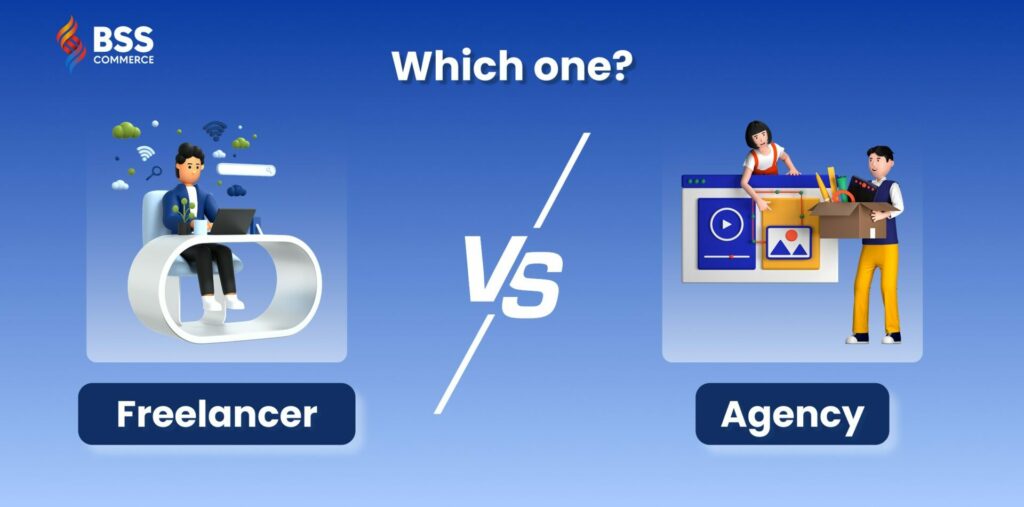
But here’s the question that always comes up: Shopify Freelancer vs Agency: which should I choose? This decision can significantly impact the quality of your store, from the quality of its design to how quickly you can launch and how much you’ll invest along the way.
In this article, instead of skimming the surface with generic tips, we will dive into the real differences, the pros and cons, and how to choose the right option for your needs. By the end, you’ll have a clear checklist to guide your decision. Now, let’s scroll down!
1. Getting to Know Shopify Freelancer vs Agency
Before jumping into a head-to-head comparison, it’s important to understand what these two options actually mean in practice. Each type has its strengths and weaknesses, so understanding these differences will save you a lot of headaches later.
- A Shopify freelancer is an independent professional who works directly with clients on a project basis. They might specialize in design, development, or a specific Shopify skill, and often have flexible schedules. You’ll usually communicate directly with them, which can make the process more personal and agile.
- Meanwhile, a Shopify agency is a team of experts, including designers, developers, marketers, and sometimes SEO specialists, all working under one company. Agencies tend to have structured workflows, a clear division of responsibilities, and the capacity to handle multiple aspects of a project at once. They operate like a one-stop shop for your Shopify needs.

Special Deal: Try Shopify for $1/month
Enjoy a 3-day free trial, then get 3 months of Shopify for just $1/month. Enjoy Shopify’s advanced sales features and resources to launch your store quickly.
2. The Main Comparison: Shopify Freelancer vs Agency
To give you a quick overview, here is a summary table that highlights the key differences at a glance before we get into the detailed comparison:
| Criteria | Freelancer | Agency |
|---|---|---|
| Cost | Lower | Much higher |
| Expertise | Strong in one or a few areas | Team covers multiple skill sets |
| Speed | Fast for small jobs, slower if overloaded | Can move quickly on large projects |
| Workflow | Flexible, direct communication | Structured process, multiple layers |
| Post-launch Support | Support depends on individual availability | Formal support agreements with guaranteed response times |
| Reliability | Risk of overbooking or disappearing | Legally bound, higher accountability |
Now let’s unpack each of these so you can see what they mean in real situations.
2.1. Cost
When it comes to cost, freelance Shopify designers are often the more budget-friendly choice. They work independently, have minimal overhead, and can usually offer a basic Shopify store setup for anywhere between $200 and $1,000, depending on their experience and the scope of work. The main advantage is the lower upfront investment. However, a lower cost can sometimes mean that important features are skipped or that the store lacks a strong foundation for scaling later. In those cases, you may need to spend more in the future to fix or upgrade the site.
Agencies, on the other hand, operate as a team with designers, developers, marketers, and project managers working together on your store. This collective expertise often comes at a higher price, sometimes going beyond $5,000 for complex or highly customized projects. While the initial investment is higher, the result is usually a store that is stronger, more scalable, and built with long-term growth in mind.
2.2. Turnaround Time
Freelancers can sometimes deliver faster, especially if they have few ongoing projects and can focus on yours. In the best cases, an experienced and well-organized freelancer might complete a store in as little as one week. However, because they work alone, unexpected delays such as personal emergencies or overlapping commitments can easily slow the process.
Agencies follow a structured workflow where specific team members handle different stages. Designers pass the work to developers, developers send it to testers, and so on. This system reduces the risk of sudden delays because there are multiple people involved, but it also means the process can take longer. A well-built agency project often takes more than two weeks from start to finish.
2.3. Quality of work
A talented freelancer can produce a store that is both visually attractive and functional. The advantage here is a personal, hands-on approach where one person manages every detail. However, because freelancers typically specialize in only a few areas, you might end up with strong design but weaker SEO or a less refined user experience.
Meanwhile, agencies have specialists for each area, including design, development, SEO, UX, and marketing. This usually results in a store that is not only visually appealing but also optimized for performance, conversions, and scalability. The team approach ensures that no aspect is overlooked, from coding quality to the user journey.
2.4. Flexibility
Freelancers can be more flexible in responding to change requests. If you need a quick adjustment, you can often contact them directly and have the change implemented within hours. However, this flexibility depends entirely on their availability. If they are busy with other projects or unavailable, your work might have to wait.
Agencies tend to have a more formal process for making changes. This might feel less spontaneous, but it ensures that every revision is properly tested before going live. While they may not be able to accommodate last-minute requests as quickly, their approach usually leads to greater stability and fewer errors.
2.5. Support & Maintenance
Freelancers may or may not offer post-launch support. Some provide ongoing help for a small fee, while others consider the project complete once the final payment is made. If you find a reliable freelancer, you can build a close working relationship that lasts for years. However, if they move on to other work or become unavailable, you might be left without support at critical times.
However, agencies usually provide formal support packages that cover troubleshooting, updates, and feature enhancements. Because they have a team, the risk of losing access to support is much lower. While this ongoing service is often more expensive than hiring a freelancer, it is generally more reliable and consistent.
>> Read more: Shopify Checklist Before Launching An Online Store
3. Checklist to Find the Right Fit for Your Store Setup
Now that we’ve gone through a detailed analysis of both freelancers and agencies, it’s time to narrow things down to what works best for you! Based on our own hands-on experience helping businesses set up their Shopify stores, we’ve created this practical checklist to guide your decision-making process and make sure you don’t overlook the essentials:
- Budget range: Define how much you can realistically spend without putting too much pressure on your cash flow.
- Project scope: List exactly what you need: store design, product upload, integrations, custom coding, or all of the above.
- Timeline: Decide your ideal launch date and how flexible you can be if delays occur.
- Desired involvement: Consider if you want to be closely involved in day-to-day decisions or prefer to delegate to a full team.
- Future growth plans: Think about how much you expect to scale in the next 6–12 months and whether your partner can support that growth.
- Support needs: Be clear about whether you need one-time setup help or ongoing maintenance and optimization.
- Portfolio and reviews: Always check past work and client feedback to verify the quality and reliability of your potential partner.
From our experience, for small businesses or first-time store owners, a freelancer can be a good option if you only need quick tasks or a simple setup. They offer direct communication and flexibility, which can work well for straightforward projects.
However, when your goal is to build a store that’s reliable, scalable, and aligned with long-term growth, an experienced agency becomes the stronger choice. Agencies not only bring together a team of specialists but can also tailor their services to your specific needs. This means you get both professional quality and the flexibility to scale at a pace that fits your business.
>> You may interested: Shopify Issues And How To Solve Them
4. BSS Commerce: Your Ideal Choice for Shopify Store Setup Services
As a trusted Shopify partner with 13+ years of experience and 100,000+ international clients, BSS Commerce goes beyond simply building stores; we craft fully-branded Shopify experiences with a clear voice and a smooth customer journey that feels authentic to your brand. Every storefront we create is high-conversion ready, designed to turn visitors into loyal customers from day one.
Our expertise goes far beyond technical setup or simple theme customization. We combine the skills of developers, designers, content creators, and ecommerce strategists to deliver stores that not only look great but also perform strategically. From compelling content and brand storytelling to business consulting, every element is tailored to connect deeply with your audience and support your growth.
Thus, whether you need a complete store built from scratch or want to customize and redesign specific parts of your existing Shopify business, we have you covered. With our free consultant service, you’ll have expert guidance every step of the way, ensuring your store aligns perfectly with your vision and goals. Schedule a FREE call with our experts now!
5. Final Thoughts
Choosing between a Shopify freelancer and an agency really comes down to what best fits your unique situation. Each has its strengths and trade-offs, so the right choice depends on your project size, budget, and goals. The ideal partner is someone who truly understands your vision, communicates clearly, and supports your growth.
If you’re about to start a project and still wondering which path is right, take this as your sign to define your needs today. The sooner you decide, the sooner your store will be ready to sell. And don’t forget to follow BSS Commerce Shopify for more expert tips, success stories, and practical guidance to help you grow your online store.

Finn Nguyen
Finn is a Shopify expert with 5+ years of experience helping new business owners launch and grow online stores. Specializing in store setup, theme selection, and optimization, he provides practical guidance to turn ideas into successful eCommerce businesses