Shopify Pricing Pakistan 2025: How Much It Really Costs
Launching an online store in Pakistan? You’ve likely heard of Shopify, but does its pricing make sense for Pakistani merchants? In this guide, I break down the Shopify pricing plans in Pakistan, hidden fees, payment challenges, and real-world examples so you can choose
Understanding Shopify Pricing in Pakistan
Shopify uses a subscription pricing model. That means you will be charged around the same amount each month for operating your business.
The platform offers three core plans include Basic, Grow, and Advanced. I will also introduce you to 2 other plans: Starter and Plus.
Because of conversion and bank fees, your effective cost in PKR often ends up higher than straightforward multiplication (often about 2–3% foreign-exchange or processing fees).
How Pakistani Merchants Pay
Here are some key considerations before using Shopify for Pakistanis:
- Shopify Payments is not supported in Pakistan yet, so you must use third-party payment gateways.
- Local gateways like XPay and UnumPay are emerging to allow on-site card payments in Pakistan.
- International credit/debit cards can still work, depending on your bank’s policies.
Shopify Plans Overview (2025 Updated)
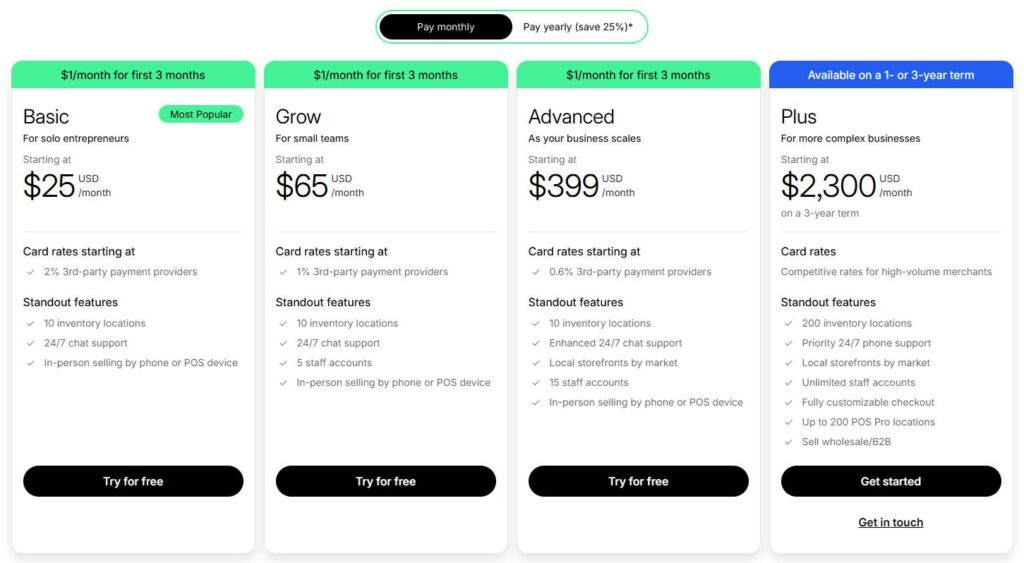
| Plan | USD / month | PKR / month | Key Features | Suitable For |
| Starter | $5 | ~ PKR 1,400 | Social selling, simple checkout | Sellers on social media |
| Basic | $25 | ~ PKR 7,400 | Full store, basic reports | New and small ecommerce ventures |
| Grow | $65 | ~ PKR 18,300 | Advanced reporting, more staff, better tools | Medium and growing businesses |
| Advanced | $399 | ~ PKR 112,000 | Lower fees, international tools, analytics | Scaling or export businesses |
| Plus | from $2,300 | ~ PKR 647,000+ | Enterprise support, custom features | Large businesses, high volume |
Here’s a side-by-side breakdown of Shopify’s main plans and who they suit.
(USD = U.S. dollars; PKR equivalents are approximate and subject to bank/FX costs.)
Take advantage of Shopify’s “$1 for 3 months” promo
Start with a free trial, and enjoy Shopify for $1 per month in your first 3 months.
Shopify Starter (Best for beginners)
At only $5 (~ PKR 1,400) per month, Shopify Starter is the simplest way to begin selling online in Pakistan. Perfect for sellers who rely on Instagram, WhatsApp, or Facebook, this plan lets you share product links directly in chats or posts and receive payments through supported gateways like PayFast or XPay.
You won’t get a full website or storefront, but it’s enough for you to showcase your products and let customers purchase. It’s best used to test demand before investing in a full store.
Who should use Shopify Starter?
If you sell handmade crafts, clothing, or local services, use Starter to validate your audience first. Once sales are consistent, upgrade to Basic for a complete store setup.
>>> Read our detailed review on Shopify Starter plan.
Shopify Basic (Best for small businesses)
Priced at $25 (~ PKR 7,400) per month, Shopify Basic is where most Pakistani entrepreneurs should start. It’s the first plan offering a complete online store, with customizable themes, blog pages, secure checkout, and key analytics.
The standout advantage is its balance between cost and functionality. Basic supports unlimited products, integrates with payment gateways like PayFast, and gives access to Shopify POS Lite for physical shop owners.
Who is Shopify Basic for?
Small or new online businesses that don’t need fancy features and just want to start selling their products & services, see how things go. Many businesses have used Basic Plan for a long time, showing how efficient it is.
>>> Read our detailed review on Shopify Basic Plan.
Shopify Grow Plan (Best for growing SME Businesses)
At $65, or ~ PKR 18,300 per month, Shopify Grow is a serious step up for expanding businesses. It unlocks professional reports, advanced staff permissions, and improved discount control – crucial for merchants managing higher order volumes or team operations.
Pakistani brands exporting to international markets particularly benefit from real-time exchange rate tools and advanced shipping options, allowing smoother cross-border fulfillment.
If your monthly sales exceed PKR 300,000–400,000, upgrading to Grow usually pays off through better insights and lower time spent managing operations.
Who is Shopify Grow Plan for?
Mid-sized Pakistani stores growing steadily, hiring staff, or handling multiple sales channels.
>>> You can try Shopify Grow Plan for $1 in your first 3 months.
Shopify Advanced (Best for large businesses)
Shopify Advanced is built for businesses that have outgrown mid-tier tools and need more control over reporting, pricing, and international sales. At around $399/month, it’s an investment — but one that pays off once your store handles consistent, high-volume orders.
The most valuable feature is Advanced Report Builder, which lets you customize reports to track what truly matters — such as performance by region, profit margins by product, or conversion trends. Another standout is international pricing control. You can set different prices for global markets without needing separate stores.
Shopify Plus (for enterprises)
Shopify Plus is the enterprise-grade version of Shopify, designed for large brands that need scalability, customization, and dedicated support. Unlike other plans, pricing is custom (starting from $2,300/month) and requires a direct consultation with Shopify’s sales team.
What sets Plus apart is API access and automation power. Businesses can build custom integrations with ERPs, CRMs, or logistics systems. Plus merchants can also run multiple storefronts under one account, great for brands operating in different markets or languages.
>>> Beside pricing, you can learn more about Shopify’s key features with our detailed Shopify review article.
Hidden Costs to Consider (in PKR)
Shopify pricing in Pakistan doesn’t stop at the plan fee. Merchants should plan for additional operational costs that often get overlooked. Understanding these helps avoid surprises once your store goes live.
1. Transaction fees
Transaction fees depend on your Shopify plan. Because Shopify Payments isn’t available in Pakistan, sellers must use third-party payment gateways like UnumPay, EasyPaisa, or Payoneer Checkout. Each plan has different transaction fee rates when using third-party providers.
| Shopify Plan | Transaction Fee (per order) |
| Starter | ~ 5.0% |
| Basic | 2% (3rd-party payment providers) |
| Shopify (Grow) | 1% (3rd-party payment providers) |
| Advanced | 0.6% (3rd-party payment providers) |
| Shopify Plus | Custom (usually <2.0%) |
2. Domain registration
Estimated cost: ~ PKR 3,000-5,000 per year
A professional domain builds credibility and trust. You can register one directly through Shopify or use providers like GoDaddy or Hostinger.
3. Premium themes (optional)
Estimated cost: from 28,000 PKR (one-time payment)
Shopify offers both free and paid themes. Free themes work fine for startups, but premium themes add unique design options, better conversion optimization, and mobile responsiveness.
You can check out our list of best free Shopify themes and best premium Shopify themes for reference.
4. Paid apps (optional)
Estimated cost: $10–100/month per app
Apps extend your store’s functionalities, such as marketing automation, advanced shipping, or accounting integrations. However, many are paid monthly, and costs can stack up.
💡 Tip: Audit your apps quarterly. Many merchants install multiple apps that overlap in features, driving unnecessary costs.
5. Email hosting
Estimated cost: ~ PKR 2,000/month for professional email accounts
Shopify doesn’t include branded email hosting (like [email protected]). You’ll need a separate service such as Google Workspace or Zoho Mail.
How to Start Shopify Free Trial in Pakistan
Follow these steps to begin:
1. Click Start Free Trial: shopify.com/free-trial-offer
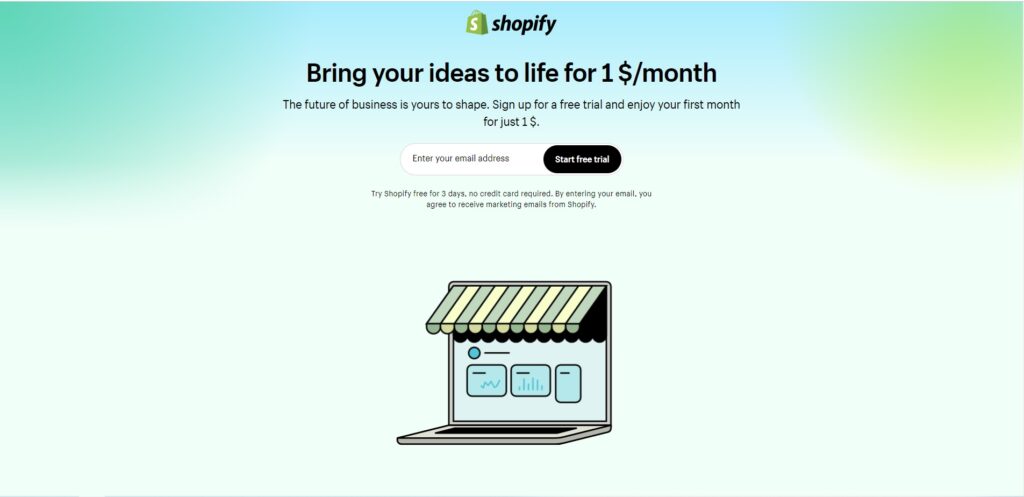
2. Follow the instructions: Enter email, store name, password
You should start building your Shopify store and test different features during trial before picking a paid plan.
Real Examples: Shopify Stores from Pakistan
To understand how Shopify pricing and features work in real life, let’s look at three successful Pakistani businesses running on Shopify.
A popular women’s fashion brand using Shopify to manage high-traffic seasonal launches and seamless mobile shopping. Their clean layout and fast page load demonstrate how Shopify themes can support large inventories while keeping user experience smooth.
Known for premium eastern wear, Baroque’s store shows the power of Shopify — such as handling international customers, offering multi-currency checkout, and managing multiple regional storefronts under one system. Its localized content and shipping integrations make it a model for export-oriented fashion brands.
The official Xiaomi distributor in Pakistan, MiStore uses Shopify’s robust backend to manage tech product catalogs, warranties, and promotions.
These examples show that Shopify isn’t limited to one niche. From small fashion startups to enterprise-level electronics retailers, Shopify’s flexibility allows Pakistani businesses to scale efficiently while keeping management simple.
You can check our article for more examples of great Shopify stores from Pakistan.
FAQs about Shopify Pricing Pakistan
Can I pay Shopify in PKR?
No. Shopify invoices in USD. Your bank handles the currency conversion when you pay.
Is there a Shopify partner in Pakistan?
Yes. Certified agencies help with setup, theme customization, and marketing.
What happens after the free trial ends?
You must pick a paid plan to activate your store and start selling.
Is Shopify worth it in Pakistan?
Yes, Shopify is worth it in Pakistan for sellers targeting local or global markets. It offers user-friendly tools, professional themes, and reliable hosting. However, since Shopify Payments isn’t available, merchants must rely on third-party gateways like Paymob or 2Checkout, which can add extra fees.
Final Thoughts
Shopify pricing in Pakistan is more than just plan fees. Conversion, gateway costs, apps, and hidden charges matter. But once you understand the full picture, you can plan wisely. BSS Commerce hopes this article has provided you with relevant information and helped you make a decision.

Finn Nguyen
Finn is a Shopify expert with 5+ years of experience helping new business owners launch and grow online stores. Specializing in store setup, theme selection, and optimization, he provides practical guidance to turn ideas into successful eCommerce businesses