How to Start a Chocolate Business from Home in 2025 (5 Key Steps & Guide)

Starting your own chocolate business from home is easier than ever in 2025. According to research, global specialty chocolate enjoys an annual growth rate of around 8 percent, reflecting rising interest in premium confectionery. Pair that with flexible e-commerce platforms like Shopify, and you have a recipe for success.
So, how to start a chocolate business from home? This guide walks you step by step: research, planning, compliance, e-commerce setup, branding, and marketing – so you can launch confidently and sustainably.
Understanding the Chocolate Market
Chocolate’s appeal spans demographics, cultures, and economic conditions – making it a product with consistently strong demand. On top of that, trends like organic ingredients, ethically sourced cocoa, and creative flavor combinations are making customers willing to pay extra for something special.
For chocolate market value, Statista forecasts global chocolate confectionery revenue to reach around USD 140.12 billion in 2025, and consumption volumes expected to rise further by 2030.
Moreover, e-commerce platforms make it easier for small chocolate makers to sell to customers worldwide. Anyone can start their chocolate business from home.
>>> Ready to kickstart your business? If you are considering Shopify as your website builder, don’t forget to subscribe with promotional pricing: $1/month for new accounts.
How to Start a Chocolate Business from Home – 5 Key Steps
Step 1 – Research and Planning Your Chocolate Business
Before investing in production, packaging, or marketing, take time to understand the chocolate market you plan to enter. This process will help you spot opportunities, avoid costly mistakes, and position your products effectively.
Choose your niche
Specializing in a segment can help smaller brands stand out. It allows you to target a specific audience and build brand loyalty faster than competing head-on with mass-market brands. These focus areas also serve as anchors, guiding product development, branding, pricing.
Study the competition
Analyze both global giants like Ferrero, Mars, Nestlé, and Hershey’s, and smaller local brands that may appeal to your same audience. Identify what they do well and where customers feel dissatisfied – these gaps can become your competitive edges.
Check out our list of small business names for your new chocolate venture.
Step 2 – Create a Business Plan
A clear business plan is essential to turn your chocolate idea into a structured, profitable operation. It helps you allocate resources wisely, minimize risks, and stay on track as you scale. Key points to cover:
- Product range – Types of chocolate (bars, truffles, drinking chocolate), flavor options, and unique selling points like organic or single-origin.
- Target market – Who you’re selling to, such as gift buyers, health-conscious consumers, or event planners.
- Pricing – Calculate costs, research competitors, and position your brand as premium, mid-range, or budget-friendly.
- Suppliers and production – Source quality cocoa, decide on in-house production or outsourcing, and outline packaging plans.
- Sales channels – Choose between online store (Shopify), farmers’ markets, wholesale to retailers, or corporate gifting.
- Marketing – Seasonal campaigns, partnerships with cafes or event venues, social media visuals, and sampling at local events.
- Financial forecast – Estimate startup cost (ingredients, equipment, packaging, permits), monthly breakeven point, expected sales volume over first 6–12 months.
Tips: Business plans are often designed to help you understand the market and define your business. You can be flexible with the things you want to lay out in your plan, taking our prepared business plan as an example:
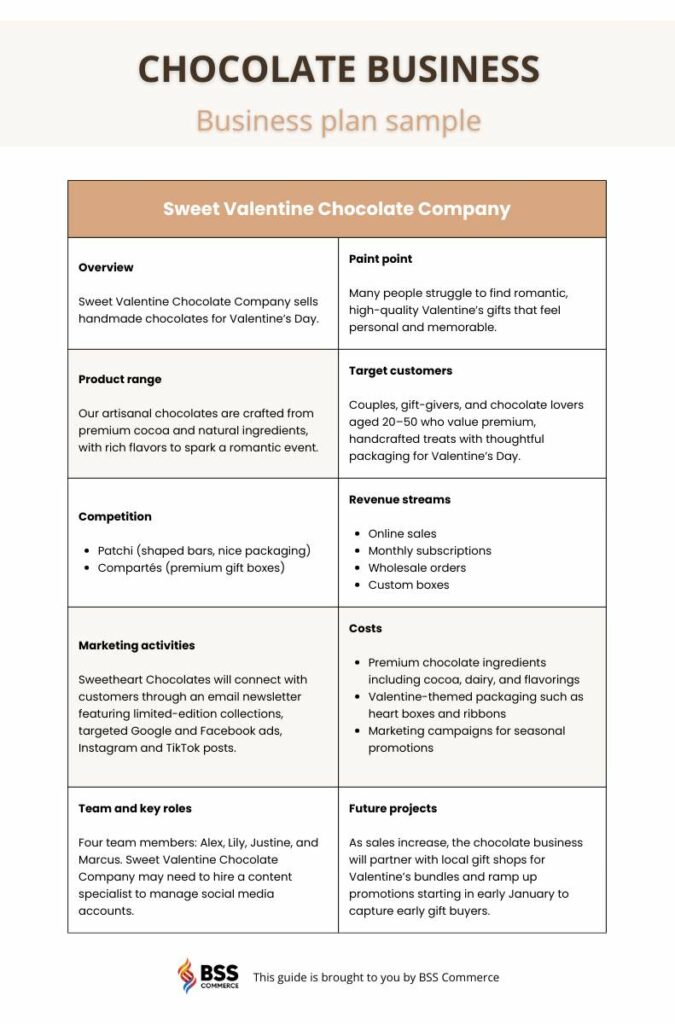
You can also check our Business Model Canvas Examples for a more detailed explanation.
Step 3 – Meeting Legal, Licensing, and Health Requirements
Regulations vary by region. These laws dictate what you can sell, where, and under what preparation standards., so always consult your local industry department website. For example:
- FDA registration (U.S.) – If selling in the U.S., register your facility with the Food and Drug Administration.
- FSSAI license in India – Obtain a Food Safety and Standards Authority of India license (Basic, State, or Central depending on turnover and distribution).
- Food business registration in UK – Mandatory with local council at least 28 days before operations.
Skipping these steps risks fines or forced business closure, so you should consider them seriously if you want to build a long-term chocolate business.
Step 4 – Setup Your E-Commerce Store
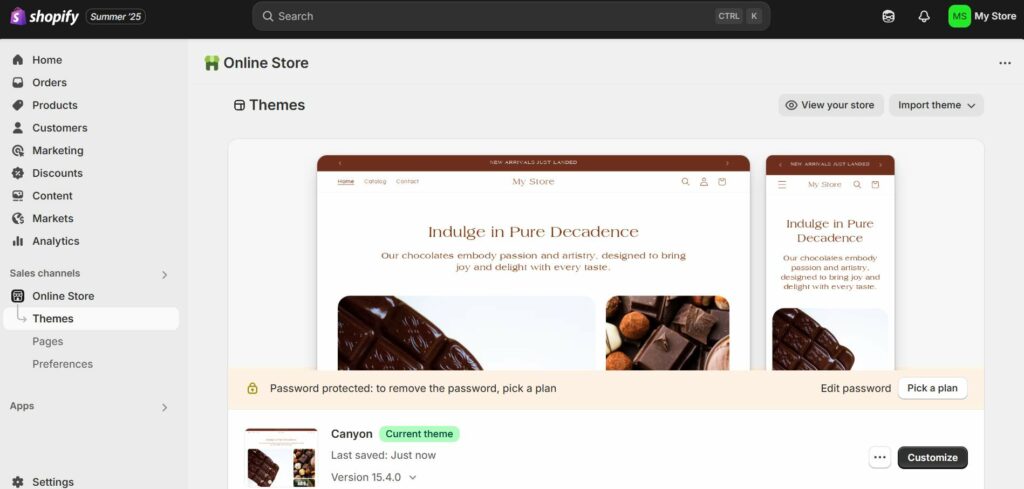
Now comes the exciting part: getting your chocolate shop online. There several platforms to choose from: Shopify, Wix, Squarespace or Marketplaces (Etsy, Amazon).
If you are selling in masses, choosing a marketplace will help you reach a wider range of customers.
In case you want to establish your own website, we recommend Shopify as one of the easiest and most reliable platforms for food-based businesses, and you can have a fully functional store up and running in days.
Here is the action plan:
1. Create Shopify account. Apply any plan for $1/month here: https://www.shopify.com/free-trial-offer
2. Select a mobile-friendly Shopify theme suited for food products and visually aligned with your chocolate business’s branding
3. Add core pages: Home, Shop (product categories), About (your story), Contact, FAQs, Policies.
4. Upload product listings: Use clear titles, rich descriptions, multiple images, and note dietary details.
5. Configure Shopify Settings: payment gateway, shipping options (flat rate, local pickup, courier integration), taxes.
6. Install helpful apps: email capture pop-ups, abandoned cart recovery, referral programs.
7. Test checkout: Place a trial order to confirm a smooth process.
>>> Wanna know more about Shopify and see if the platform suit your business goals? Check our detailed review here.
Step 5 – Marketing Your Chocolate Business from Home
Your chocolates may be delicious, but customers won’t find them unless you spread the word.
Before diving in, make sure your store is ready to impress: fast-loading, mobile-friendly, and stocked with irresistible product photos. Also, confirm that your order emails and delivery details are clear and easy to find.
For home-based food businesses, trust is everything. Add visible local food licenses, hygiene certifications, and clear ingredient lists to your store. This not only reassures customers but also sets you apart from unverified sellers.
Once your store’s ready, you can start with our recommended marketing channels:
| Channel | Why It Works for Chocolate Businesses |
| Instagram & TikTok | Showcase chocolate-making videos, packaging reveals, and seasonal gift boxes. |
| Influencer gifting | Food bloggers or lifestyle creators can post authentic reviews. |
| Local ads | Facebook or Google Ads targeting nearby customers help with faster delivery and fresher perception. |
| SEO & blogging | Share chocolate recipes, pairing ideas, and gifting tips for long-term organic traffic. |
Examples of Real-Life Chocolate Business Online
Looking at how other chocolatiers have built their brands online can spark ideas for your own home-based chocolate business. Here are three inspiring cases from around the world.
1. Sugar Plum Sweetery – Ireland
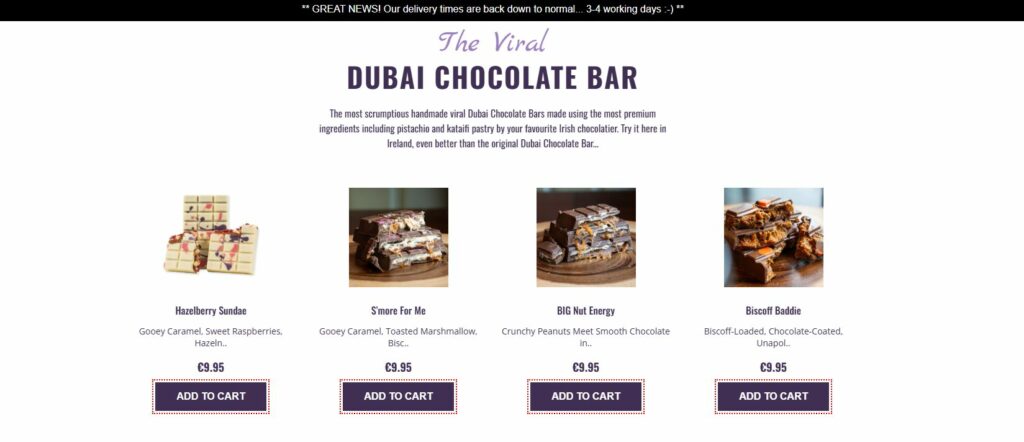
From a small shop in Mullingar, Sugar Plum Sweetery turned a social media trend into a major sales driver. Their take on “Dubai chocolate” — rich bars filled with pistachio crémeux and wrapped in kataifi — gained viral attention on Instagram. This sudden popularity led to staffing increases, a move into larger production space, and an exclusivity deal with premium retailer Avoca. It’s a strong example of how responding quickly to trends can open high-end retail opportunities.
2. Chocilo – Australia
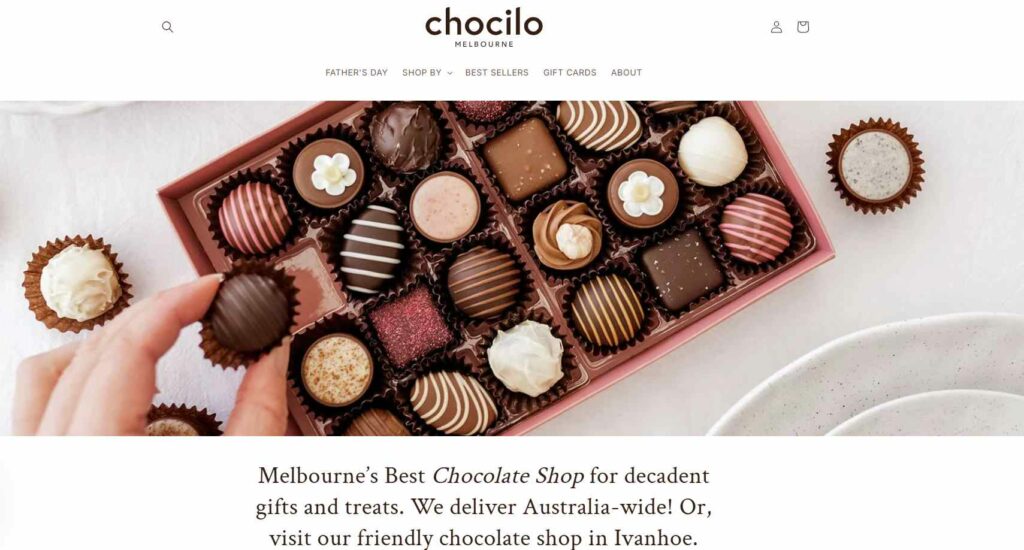
Based in Melbourne, Chocilo has built a loyal following with playful creations such as “chocolate smash cakes.” Despite facing steep increases in cocoa prices, they’ve maintained quality while expanding through e-commerce and wholesale channels. Their adaptability and unique product concepts show how small chocolate brands can weather industry challenges without losing their identity.
3. Moon Kids Chocolate – USA
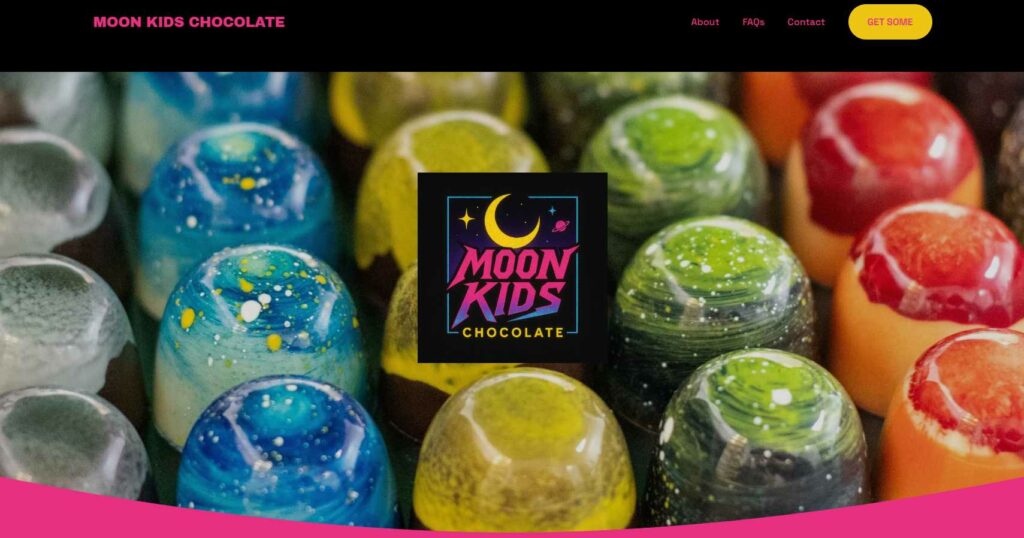
San Francisco’s Moon Kids Chocolate, run by former Tartine pastry chef Michael Tabatabai, operates entirely online. Each week, just 30 boxes of hand-painted bonbons are released — each piece a miniature edible planet crafted with colored cocoa butter. Orders sell out quickly, and local deliveries are made personally with insulated packaging. This business shows how exclusivity, artistry, and meticulous presentation can elevate a small-batch chocolate brand.
>>> Relevant reading: Top 17 Inspirational Shopify Website Examples For Each Industry
Common Mistakes for Chocolate Business from Home
Even skilled chocolatiers can make mistakes when running a home-based business. Watch out for these common pitfalls:
1. Skipping food safety laws
Not having the right permits, hygiene practices, or allergen labels can lead to trust issues and legal trouble. Always comply with local food business regulations.
2. Overcomplicating the menu
Offering too many flavors or products early on can drain resources. You should start small, perfect a few flavors that are trending or are generally loved, and expand once demand grows.
3. No clear holiday strategy
Seasonal demand is high for chocolate. Missing out on Valentine’s Day, Christmas, or Mother’s Day promotions can mean losing your biggest sales opportunities.
Successful sellers prepare seasonal collections months in advance, allowing time for recipe testing and packaging design. Marketing begins early through countdowns and pre-order offfers, with a production calendar in place to balance stock levels and avoid overproduction.
4. Underestimating delivery logistics
Melted or broken chocolates can turn customers away for good, and many new businesses fail by treating shipping as an afterthought.
You should test different packaging materials helps find the best insulation for your climate and shipping range, while partnering with couriers that offer faster delivery or temperature-controlled options. Also, including care instructions in each box encourages customers to store their chocolates correctly as soon as they receive them.
Frequently Asked Questions (FAQs)
How much do I need to start a chocolate business?
Startup costs vary. Many home businesses launch between $3,000 USD and $8,000 USD, covering equipment (melter, molds, spatulas), ingredients, packaging, licensing, initial marketing.
Can you dropship chocolate?
You can dropship chocolate with a supplier that can handle perishable goods and comply with food safety regulations in your target market.
See some chocolate suppliers here.
What type of chocolate sells the most
Milk chocolate consistently leads in global sales, especially in markets like the U.S. and Europe; its global market value was $63.2 billion in 2018 and rising. Meanwhile, demand for premium, high-cocoa-content chocolate is growing as consumers prioritize quality, health-conscious ingredients, and ethical sourcing
Conclusion
Starting a chocolate business from home in 2025 is an attainable goal with the right planning, compliance, and creativity. BSS Commerce hopes our articles and additional resources help you know how to start a chocolate business from home, thus taking the right course of action.
Contact us for more consultation regarding business ideas and Shopify store setup.

Finn Nguyen
Finn is a Shopify expert with 5+ years of experience helping new business owners launch and grow online stores. Specializing in store setup, theme selection, and optimization, he provides practical guidance to turn ideas into successful eCommerce businesses