10 Best Omnichannel Platforms in 2025 (Pricing, Pros & Cons)
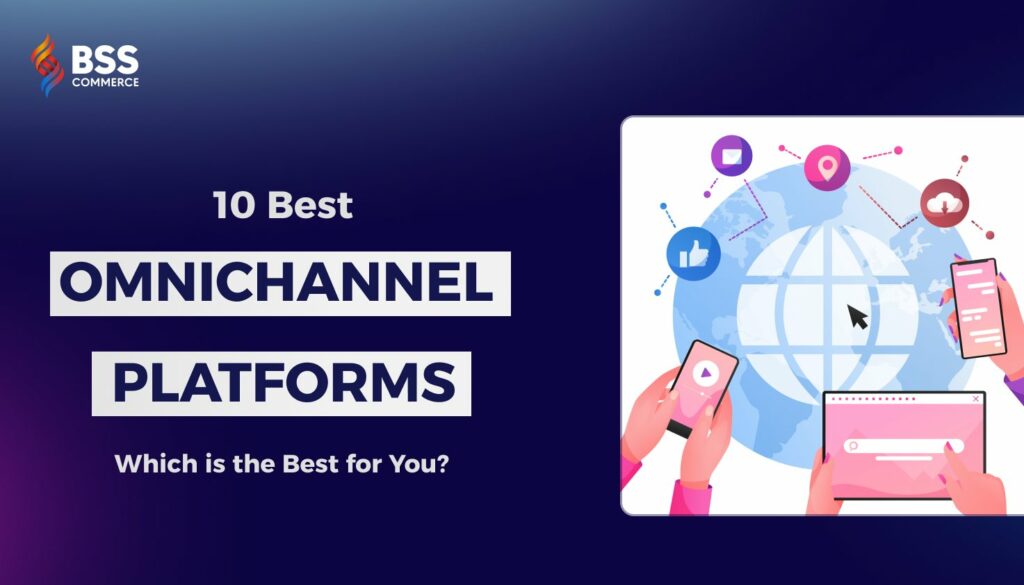
Customer expectations have shifted. Shoppers research on mobile, purchase via social feed, collect in store, or return via courier. They expect brand behaviour to adapt accordingly. Best omnichannel platforms would connect all touchpoints into a unified customer journey. By 2025, such platforms are no longer optional; they’re strategic essentials.
This guide explains what omnichannel platforms are, highlights must-have features, reviews the top solutions, and helps you pick the right one for your business.
What Are Omnichannel Platforms?
Definition
An omnichannel platform is a software that delivers consistent and integrated experiences across all channels: physical and online store, email, social media, marketplaces, and more.
In contrast with “multichannel” where each channel works in its own lane, omnichannel ensures those lanes merge into a seamless highway for the customer.
One research found only 17 % of specialty retailers considered their unified commerce capabilities mature in 2025. Yet those that advanced saw 27 % lower fulfilment costs and 18 % fewer cart-abandonments. This shows how investing in true omnichannel integration can directly improve both customer experience and operational efficiency.
Common Types of Omnichannel Platforms
Different businesses face different challenges. It helps to break omnichannel platforms into types:
- Omnichannel platforms for ecommerce: Focus on online store, POS, marketplace sync, cross-channel checkout. Examples include Shopify and BigCommerce.
- Omnichannel platforms for marketing: Focus on customer profile, segmentation, campaigns, automation. Top platforms include HubSpot and Klaviyo.
- Omnichannel platforms for communication: Focus on chat, voice, messaging, help desks unified across channels (e.g., Zendesk, Intercom).
Combining these omnichannel platforms can bring the best results, such as improving customer retention and increasing online sales.
Key Features of Top Omnichannel Platforms
These features determine how well a platform connects multiple sales channels, manages customer data, automates marketing, and scales with business growth. Understanding them provides a solid foundation for comparing options objectively.
Below, we’ll explore the essential features every top-tier omnichannel platform should offer:
1. Channel Integration
Channel integration connects online stores, mobile apps, physical shops, and social platforms into one system. When all touchpoints share the same inventory, orders, and loyalty data, customers experience smooth, consistent shopping journeys.
2. Customer Data Unification (CDP/CRM integration)
Customer data unification brings information from every interaction into one centralized profile. This integration between CDP and CRM systems gives businesses a complete view of customer behavior across online, in-store, and social touchpoints. Unified data enables accurate personalization, stronger segmentation, and faster support. Reports indicated that brands using unified data strategies see an exponential increase in customer satisfaction.
3. Marketing Automation and Personalization
Marketing automation and personalization help brands deliver the right message at the right time, across every channel. Advanced omnichannel platforms now use AI to segment audiences, predict buying intent, and tailor recommendations based on browsing or purchase history. McKinsey’s research shows that personalization can lift revenue by up to 15% and improve marketing ROI by 20% when powered by data-driven automation.
For instance, automated product suggestions sent via email or push notifications based on recent interactions often result in higher engagement and repeat purchases.
4. Scalability and Ease of Use
Your business will evolve: more SKUs, more regions, more channels. If platform doesn’t scale or becomes overly complex, you’ll get locked in or stuck.
Scalability lets a platform grow with business needs, handling more products, orders, and channels without slowing down. Many modern omnichannel platforms now support headless commerce, separating the front end from the back end for greater flexibility.
5. Support and Ecosystem
Even best platforms rely on plugins, third-party integrations, and developer tools. Quality customer support helps businesses resolve technical issues quickly, while a wide ecosystem of apps, partners, and developers extends platform capabilities. Platforms like Shopify Plus and Salesforce Commerce Cloud thrive because of their active partner networks, certified experts, and third-party integrations.
Top Omnichannel Platforms in 2025
Below are leading platforms across ecommerce, marketing/service, communication. Each review includes introduction, rating overview, core omnichannel features, pricing summary and pros & cons.
| Platform | Best For | Core Strengths |
| Shopify Plus | DTC + Retail brands | POS + integrations with other platforms |
| Adobe Commerce (Magento) | B2B, Custom workflows & headless | High customization |
| BigCommerce Enterprise | Fast-scaling growing brands | Marketplace + API connectivity |
| HubSpot CRM + Marketing Hub | Marketing-driven businesses | Integrated marketing-sales stack |
| Zoho CRM Plus | Mid-market value brands | Cost-effective omnichannel stack |
| Klaviyo Unified Platform | DTC brands focused on growth | Deep personalized and data-driven marketing |
| Zendesk Suite | Brands with heavy support load | Unified service across channels |
| Intercom Platform | Brands focus on product quality and chat services | Conversational commerce & support |
| Twilio Flex | Large scale custom service ops | Highly customizable omnichannel support |
Omnichannel Platforms for Ecommerce
Ecommerce platforms today go far beyond simple online storefronts. The following platforms stand out for helping brands unify online stores, physical outlets, and social channels:
1. Shopify Plus
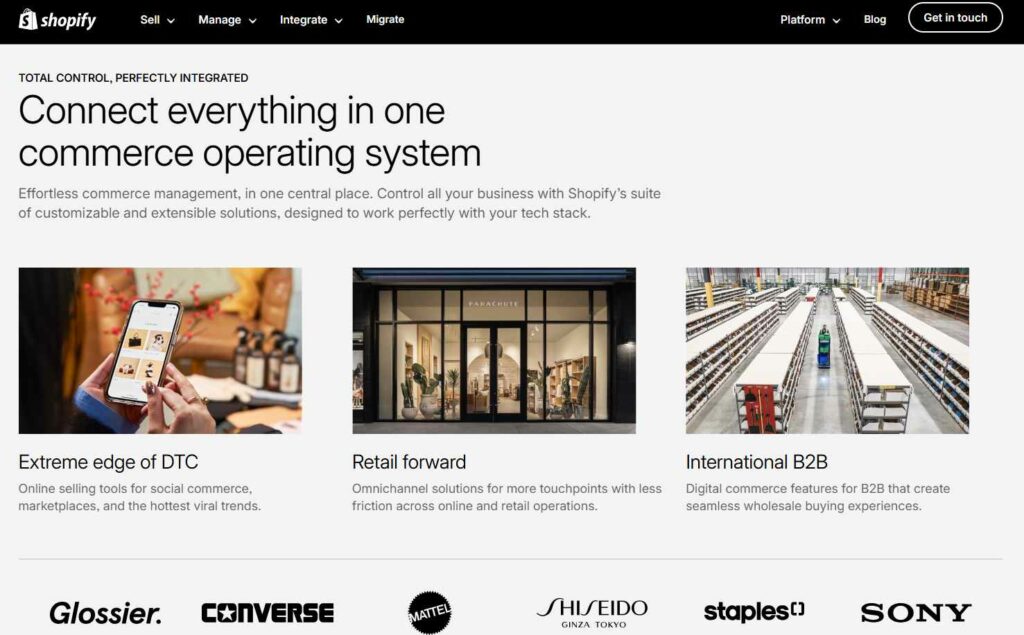
Source: Shopify Plus official page
Shopify Plus is one of the most recognized omnichannel platforms today, built for high-volume brands and enterprises.
How does Shopify work? The platform shines in flexibility and speed. Teams can manage multiple storefronts, track global inventory, and automate repetitive tasks without needing deep technical skills. I especially appreciate its strong ecosystem: thousands of apps, certified partners, and integrations with major tools like Klaviyo, HubSpot, and Google Merchant Center. This gives brands plenty of room to experiment and grow.
However, Shopify Plus isn’t perfect. While it’s user-friendly, customization can be limited compared with open-source systems.
Key omnichannel features:
- Advanced API access for custom integrations
- Unified B2B and DTC tools
- Built-in automation through Shopify Flow
- 24/7 priority merchant support
- Multi-store and expansion store management
Pricing: Custom pricing begins around $2,500 per month, depending on contract length and sales volume.
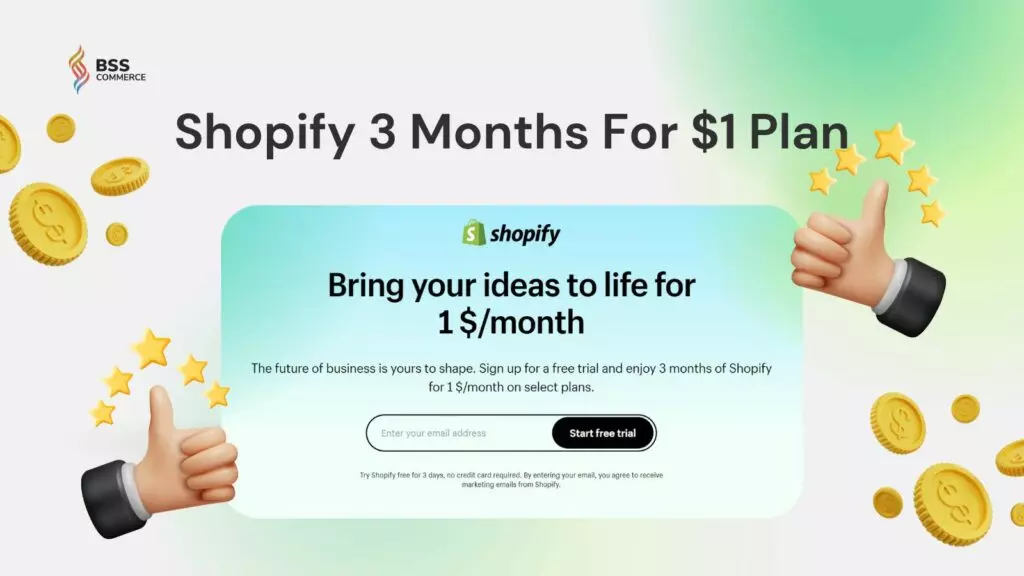
In my experience, Shopify Plus headless commerce is a powerful tool yet easy to navigate and get used to without deep technical skills, giving teams confidence to scale across every channel. Before that though, you may want to experience Shopify dashboard by applying for the 3-day free trial or the $1 trial.
You can learn more in my Shopify Plus review.
Start your online business for $1
Start with a free trial, and enjoy Shopify for $1 per month in your first 3 months.
2. Adobe Commerce (Magento)
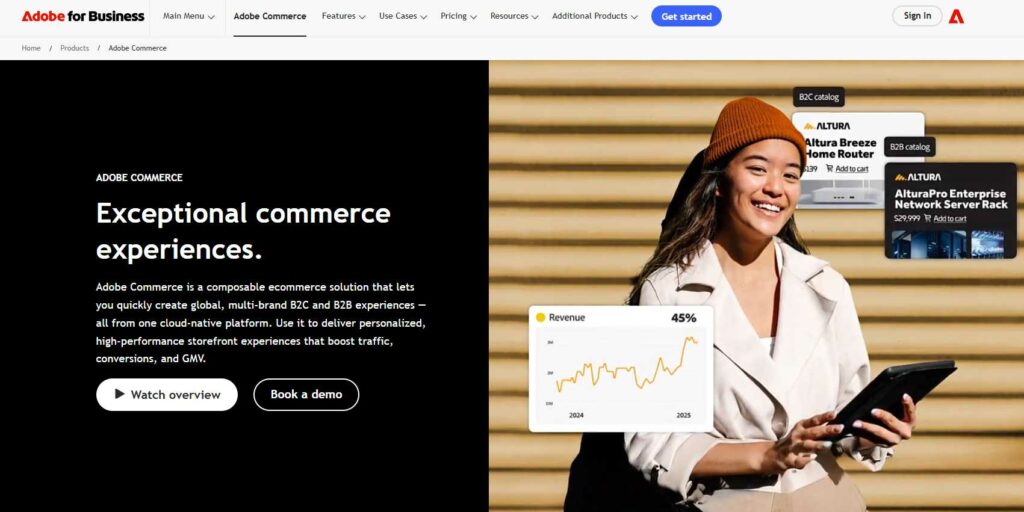
Adobe Commerce, previously known as Magento, is one of the most powerful omnichannel commerce platforms there is.
What I love most about Adobe Commerce is the B2B commerce optimization and over 3,000 Magento extensions, making it ideal for complex businesses.
That said, Adobe Commerce isn’t for everyone. I’ve found that while it’s incredibly powerful, it also requires a skilled development team and a higher budget. So, while the flexibility is fantastic, it comes at the cost of convenience.
Still, for big enterprise businesses that want total customization and already have IT resources, Adobe Commerce delivers world-class scalability and integration options.
Key omnichannel features:
- Open-source flexibility with headless commerce support
- Advanced B2B analytics and multi-store management tools
- Built-in AI-powered product recommendations
- Deep integration with Adobe Experience Cloud
- Supports global, multilingual, and multicurrency operations
Pricing: Adobe Commerce offers custom pricing based on annual revenue, typically starting from $22,000 per year.
If I had to sum it up, I’d say Adobe Commerce is best for enterprises that want complete creative and technical freedom. It’s not the easiest platform to manage, but it’s one of the most capable omnichannel systems available.
3. BigCommerce Enterprise
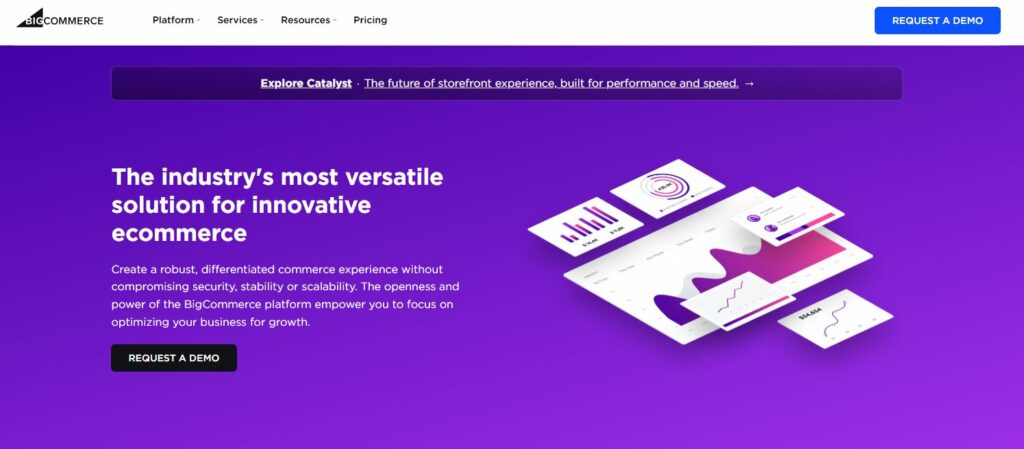
BigCommerce Enterprise is another strong omnichannel solution I’ve seen perform well for fast-scaling brands. The platform gives users full control over customization, integrations, and storefront management — something I always appreciate when helping retailers tailor their customer experience.
Where BigCommerce shines most is performance and scalability. It’s built to handle high traffic and complex catalogs without slowing down. The native multi-storefront feature lets teams manage different brands or regions from one dashboard, which is a real time-saver.
However, I’ve also found the learning curve a bit steeper compared with Shopify Plus. Customization often requires more technical know-how, and support can feel less hands-on unless you’re on an enterprise plan. Still, BigCommerce remains one of my top recommendations for businesses.
Key omnichannel features:
- Open SaaS framework with full API access
- B2B integrations and multi-storefront support
- Seamless integration with leading marketplaces and POS systems
- Strong SEO and site speed performance
- No additional transaction fees
Pricing: BigCommerce Enterprise offers custom pricing, typically starting at around $1,500 per month, depending on sales volume and service tier.
Aside from Big Commerce, you can check out more CMS e-commerce platforms.
Omnichannel Platforms for Marketing and Customer Service
Omnichannel platforms for marketing and customer service connect all customer touchpoints: email, chat, social media, and stores in one place. They help teams manage customer journeys more efficiently, improving satisfaction and retention.
4. HubSpot CRM + Marketing Hub
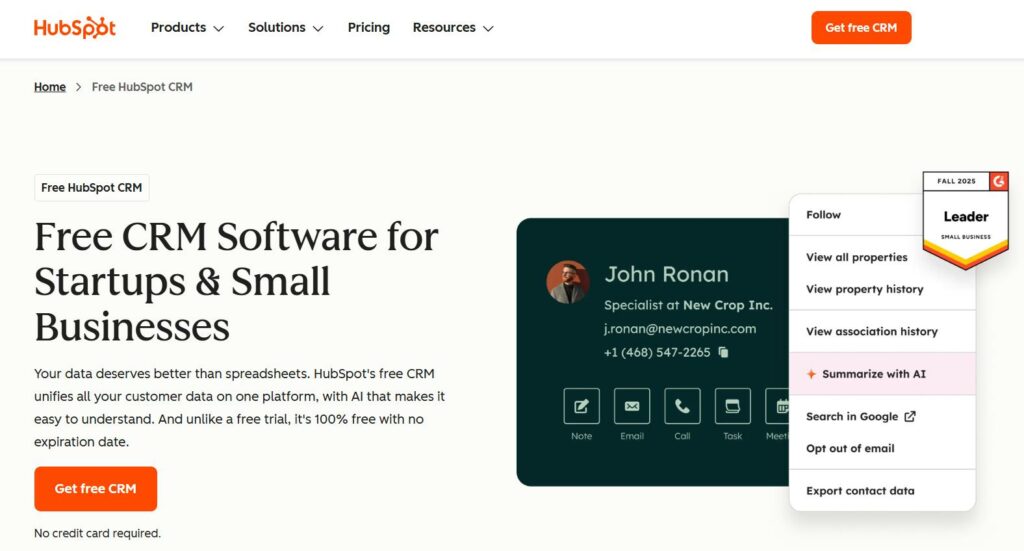
HubSpot combines CRM, marketing automation, and customer engagement in one easy-to-use platform. It helps businesses connect email, ads, social media, and website interactions into a single system, so teams can see exactly how customers move through the funnel—from first touch to conversion.
What makes HubSpot stand out is its focus on simplicity and scalability. You can set up automated email campaigns, lead nurturing workflows, and targeted ads without coding knowledge. HubSpot’s contact records update in real time, ensuring every message feels personal and relevant. It also integrates with major ecommerce tools like Shopify, WooCommerce, and Stripe, making it a great fit for online stores.
While HubSpot’s free CRM offers plenty of functionality, its paid marketing tools can get expensive as contact lists grow. Still, its all-in-one structure often saves time and reduces the need for multiple separate tools.
Key Omnichannel Features:
- Unified CRM for digital marketing, sales, and customer data
- Automated email, social, and ad campaigns
- Behavior-based lead scoring and segmentation
- Seamless integration with ecommerce platforms like Shopify and WooCommerce
- Built-in analytics and performance tracking
Pricing: HubSpot’s Marketing Hub starts at $20/month (Starter) and scales with features and contact volume. The Professional and Enterprise tiers add advanced automation, AI tools, and deeper reporting.
5. Zoho CRM Plus
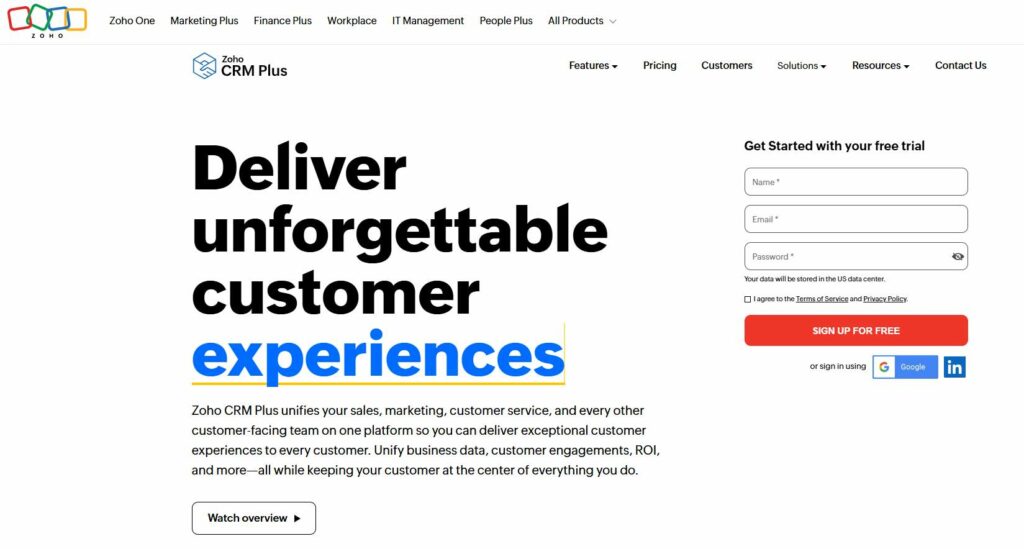
Zoho CRM Plus combines sales, marketing, and customer service into one connected platform. Its main strength lies in giving teams a full view of every customer interaction across email, chat, phone, and social channels, helping them respond faster and more effectively.
Although the interface can feel less polished than high-end enterprise tools, Zoho CRM Plus offers impressive functionality for small to mid-sized businesses seeking affordable, all-in-one omnichannel management.
Key Omnichannel Features:
- Unified workspace for sales, marketing, and support teams
- Multichannel engagement via email, social media, live chat, and phone
- AI assistant “Zia” for predictive insights and workflow suggestions
- Real-time analytics for tracking customer behavior and satisfaction
Pricing: Under annual billing, the list rate starts at around US $57 per user per month for CRM Plus.
6. Klaviyo
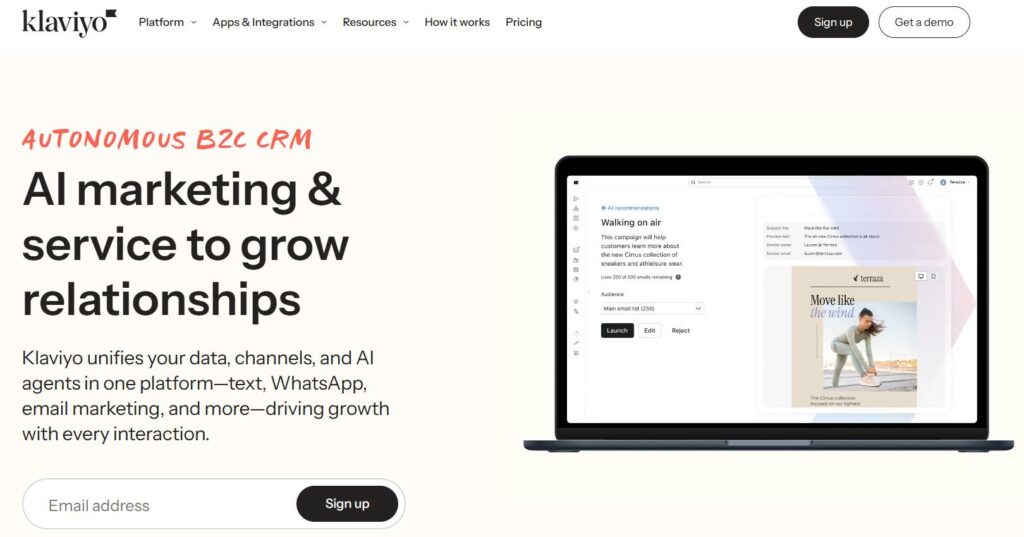
Klaviyo has earned its place as one of the top omnichannel marketing platforms, especially for data-driven personalization. What I find impressive about Klaviyo is how easily it connects with online stores on Shopify or other platforms to turn customer data into automated, personalized campaigns across email, SMS, and mobile push notifications.
Its biggest strength lies in segmentation. Klaviyo helps businesses target audiences based on behavior, purchase history, and engagement level. With a user-friendly platform, brands can build flows and track performance with clear analytics makes it easier for marketing teams to refine strategies without needing technical expertise.
Overall, Klaviyo shines for businesses seeking to personalize marketing at scale without overcomplicating setup or management.
Key omnichannel features:
- Centralized customer data sync from ecommerce, apps, and in-store systems
- Automated email, SMS, and push campaigns tailored by behavior
- Real-time segmentation for personalized product recommendations
- Seamless integration with Shopify, BigCommerce, and other major platforms
Pricing:
- Free plan available for up to 250 contacts
- Paid plans start at $45/month (based on contact count)
7. Freshworks CRM
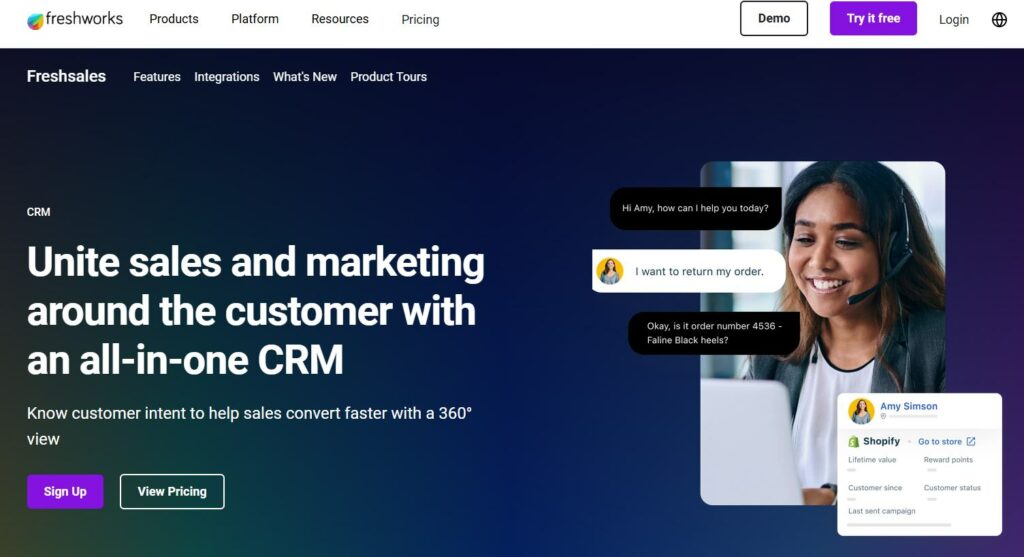
Freshworks CRM brings together sales, marketing and customer-service channels in one platform. With a single customer view, your team can respond to messages from chat, email, phone or social media without jumping between systems. For example, you can see a lead’s website visits, chat history and support tickets all in one timeline.
Automation tools help schedule follow-ups, priority-score leads with its AI assistant “Freddy” and run campaigns across email, SMS or WhatsApp. On the flip side, you’ll find fewer deep-customisation options compared to large-scale enterprise platforms, but you trade some complexity for ease of use and affordability.
Key Omnichannel Features:
- Unified inbox combining chat, email, and social conversations
- Built-in phone and WhatsApp integration for direct communication
- AI assistant “Freddy” for lead scoring and predictive insights
- Automated workflows for sales and marketing alignment
Pricing: Freshsales Suite pricing starts at $19 per user per month (Growth plan) and goes up to $59 per user per month (Pro plan) when billed annually. A free trial is available.
Omnichannel Platforms for Communication
Omnichannel communication platforms unify conversations across channels, such as email, SMS and live chat. They help teams respond faster, maintain full context, and keep every interaction consistent across channels
8. Zendesk
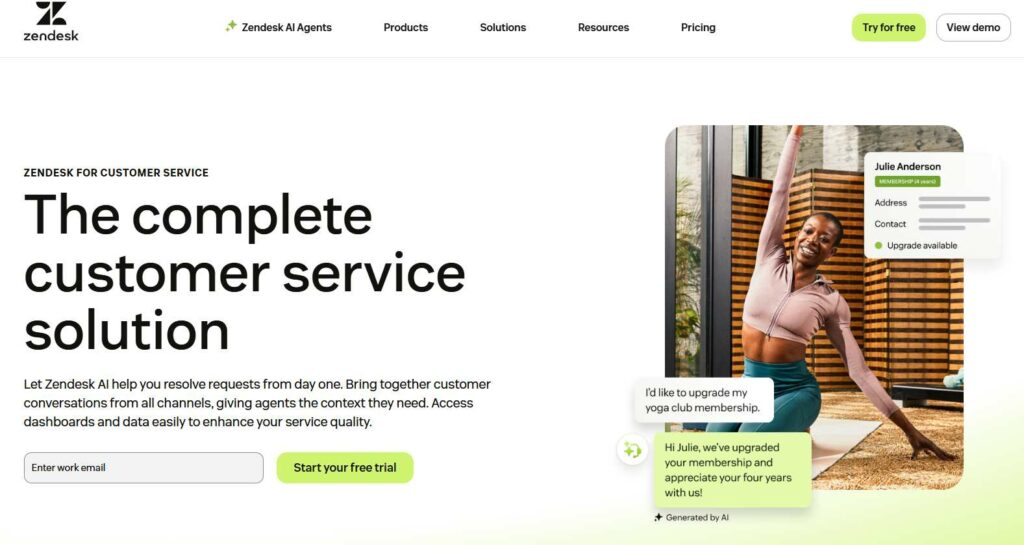
Zendesk Suite is one of the most recognized customer service solutions for managing multi-channel support operations. It brings together live chat, email, voice, and social messaging into a single workspace, helping agents resolve issues faster without switching tools.
What sets Zendesk apart is its seamless operation. Teams can build custom workflows, automate repetitive tasks, and integrate with tools like Slack, Salesforce, or Shopify to keep customer data in sync. Its AI-powered features, including intent detection and automated ticket triage, also enhance efficiency and response accuracy.
The platform is highly scalable and customizable, which makes it suitable for both growing startups and large enterprises with complex service workflows.
Key Omnichannel Features:
- Unified inbox: Emails, chats, calls, and social messages appear in a single timeline.
- AI-powered automation: From triage to routing, repetitive tasks get handled-often-before an agent even engages.
- Workflow depth: Internal collaboration tools, workforce-management features, and integrations allow teams to scale operations.
Pricing: Zendesk Suite pricing starts at $55 per agent per month (Suite Team plan) and scales up to $115 per agent per month (Suite Enterprise plan), billed annually. A 14-day free trial is available.
9. Intercom Platform
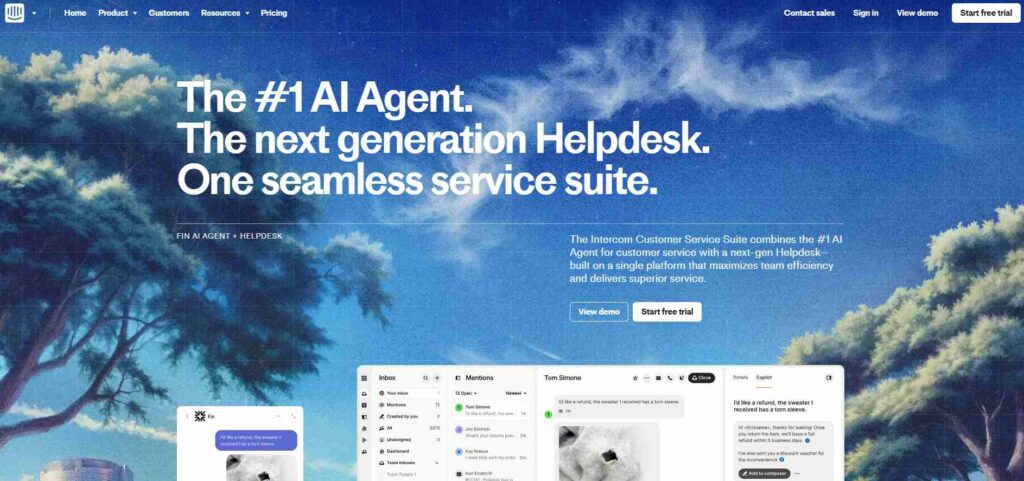
Intercom is a modern customer communication platform built around messaging. It brings together live chat, email, and in-app messaging into one dashboard, allowing businesses to deliver support, marketing, and onboarding messages seamlessly.
Its strength lies in automation and personalization. With Intercom’s “Resolution Bot” and workflow builder, teams can automate common responses, route inquiries to the right agents, and trigger personalized messages based on user behavior.
The platform also integrates with popular CRMs and ecommerce systems, helping teams maintain context throughout the customer journey. Intercom’s interface is intuitive, which makes it easy for non-technical teams to use.
Key Omnichannel Features:
- Unified inbox for chat, email, and in-app messages
- AI-powered chatbot for automated replies
- Behavior-based triggers for personalized communication
- Integration with Shopify, HubSpot, Salesforce, and other CRMs
Pricing: Intercom pricing starts at $39 per seat per month for the Essential plan and can exceed $99 per seat per month for advanced features like automation, AI bots, and analytics. Custom enterprise pricing is also available.
10. Twilio Flex
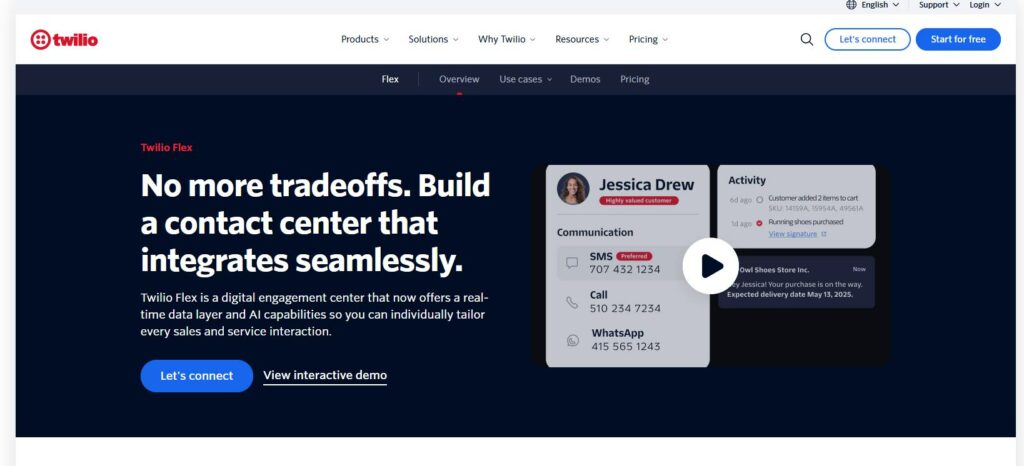
Twilio Flex is a cloud-based contact center platform that gives businesses full control over how they build and manage customer interactions. Unlike pre-set customer service tools, Flex is built for customization. Companies can tailor everything — from routing logic to interface design — to match specific workflows.
One standout capability of Twilio Flex is its native support for multiple communication channels, including voice, SMS, WhatsApp, and web chat. Teams can manage all interactions within a single interface while syncing customer data in real time.
However, Twilio Flex requires more technical setup than plug-and-play solutions like Zendesk or Freshworks. Businesses without in-house developers might find the initial configuration time-consuming, though the customization potential is unmatched once deployed.
Key omnichannel features:
- Programmable contact center supporting voice, SMS, WhatsApp, and chat
- Real-time customer data sync and routing customization
- Open API ecosystem for deep integrations with CRMs and analytics tools
- AI-ready infrastructure for automation and sentiment detection
Pricing: Twilio Flex offers pay-as-you-go pricing at $1 per active user hour or a fixed plan at $150 per user per month, with volume discounts for enterprise deployments.
Which Omnichannel Platform Is Best for Your Business?
Now that you know all the best platforms, which one is suitable for your business? Each tool I’ve covered excels in a particular area, so here’s a concise breakdown to help you match the right platform to your goals:
- Best e-commerce platform: Shopify is the most versatile solution Shopify is the most versatile solution with built-in omnichannel tools, all managed from one dashboard.
- Best marketing platform for e-commere stores: Klaviyo is the go-to for data-driven, personalized marketing and customer service.
- Best for end-to-end CRM and automation: HubSpot Service Hub with unified sales, marketing, and service data in one ecosystem.
- Best for scalable customer service operations: Zendesk is perfect for support-heavy businesses that need robust ticketing and workflow automation.
- Best for conversational engagement: Intercom is great for SaaS or digital-first brands that rely on chat-based support.
Most of these platforms offer free trials or demos, so the best move is to test them with real workflows. You’ll quickly see which aligns best with your team’s rhythm and your customers’ expectations.
FAQs About Omnichannel Platforms
What is the difference between multichannel and omnichannel?
Multichannel means selling across many channels (store, web, app). Omnichannel means those channels are fully integrated, sharing data, inventory, customer profiles and experience so the transition between channels feels seamless.
Is omnichannel a CRM tool?
No, a CRM focuses on customer data and interactions. Omnichannel platforms include CRM integration but also cover commerce engine, inventory, POS, marketing, fulfilment and channel orchestration. Think of CRM as one part of the broader omnichannel machinery.
Do omnichannel platforms support both B2B and B2C?
Yes, many modern platforms support both models. For example, enterprise systems like Adobe Commerce or Salesforce can cater to B2C storefronts and B2B portals with role-based pricing and workflows.
Which omnichannel tools integrate best with social commerce?
Platforms like Shopify Plus and BigCommerce have native integrations with Instagram Checkout, TikTok Shop, Facebook Shops. For marketing side, Klaviyo and HubSpot excel at leveraging social and messaging in unified campaigns.
How can small businesses implement omnichannel without large budgets?
Start modestly: pick a platform with built-in integrations (e.g., Shopify Plus), use existing channels (web + social) before expanding into physical store. Focus on core customer data unification, one storefront, one POS. Once you establish that, you scale.
Conclusion: The Future of Omnichannel Commerce
The best omnichannel platforms in 2025 combine commerce engine, marketing, service and data into one fluid ecosystem. As you choose your platform, focus on your current needs and future growth: ensure flexibility, strong ecosystem, and alignment with business model.
In coming years features like AI personalisation, AR/VR storefronts and predictive fulfilment will define winners. Start your omnichannel journey with clarity, choose wisely, and build for tomorrow—as the commerce landscape evolves, your platform should evolve too.
Follow BSS Commerce to get more e-commerce guide and tips.

Finn Nguyen
Finn is a Shopify expert with 5+ years of experience helping new business owners launch and grow online stores. Specializing in store setup, theme selection, and optimization, he provides practical guidance to turn ideas into successful eCommerce businesses