12 Proven Strategies to Promote Your Shopify Store For Free
Building a Shopify store is the first step of your eCommerce journey. But once you have your online store, it is more difficult to market your store. You need to build a strong foundation for your online presence, raise your brand awareness, and bring sales to your store.
You might be confused about how to promote your Shopify store for free to drive conversion and boost your sales. So, if you are in this situation, follow us to discover the 12 top marketing strategies to grow your brand.
Let’s dive in!
How To Promote Your Shopify Store For Free: 12 Strategies
Search Engine Optimization (SEO)
Search engine optimization, or SEO, is the key strategy to promote your business online, driving organic traffic to your Shopify store without spending money on ads. SEO is the top-of-mind solution for those who are wondering how to promote your Shopify store for free.
Here’s how to effectively optimize your store for search engines:
- Keyword Research: Explain to organize the keywords and expressions that your focus on clients are probably to look for an item. Using research tools such as Google Trends, Google Keyword Planner, Ahrefs, or SEMrush to find high-traffic keywords, estimate search volume, and determine how competitive those keywords are.
- On-page optimization: On-page elements include product titles, product descriptions, meta tags, and URLs. Therefore, incorporate your keywords throughout your site; optimize your product pages, collection pages, and blog posts with informative and keyword-rich content to level up your ranking in search engine results.
- Optimize image and alt tags: For images, try to use descriptive file names and alt text that will make it easier to understand their content for visually impaired audiences, in addition to providing more context for search engines.
- Site Structure and Navigation: Make sure your shop is well-organized and easy to navigate. So, in order to do that, break down your product into specific categories and sub-categories and link the pages in your website, if they are related, using internal linking.
- Link building: Backlinks from websites with authority or working with influencers is another way to increase your Shopify store’s credibility. These backlinks are considered pubs of evidence that demonstrate your site has been confirmed and is complete, which means that it promotes your Shopify sale campaign even better. We recommend tools like Ahrefs, Semrush, Moz Pro, and Serpstat for conducting backlinks.
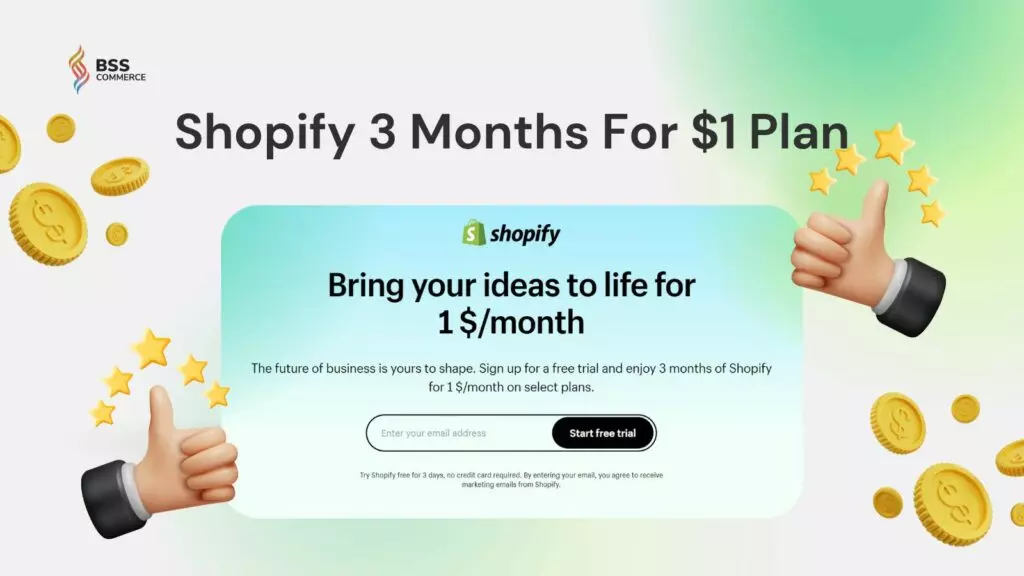
Looking to finally start that online store you’ve been dreaming of? Right now, Shopify has an incredible deal that makes it easier than ever. You can launch a fully functional store with the Shopify 3-month free trial just $1 – 3 days free trial following with 3 months for $1 per month. It’s the perfect, low-cost way to get your business off the ground.
Social Media Advertising
Apart from SEO, almost every Shopify merchant uses social media regularly which generates higher digital engagement with the store. This is a fabulous way of getting to your target customers and establishing credibility of your brand. Some social media platforms have their own unique features, including Instagram, Facebook, Twitter, Pinterest, LinkedIn, and TikTok, to promote your brand and connect with your audience.
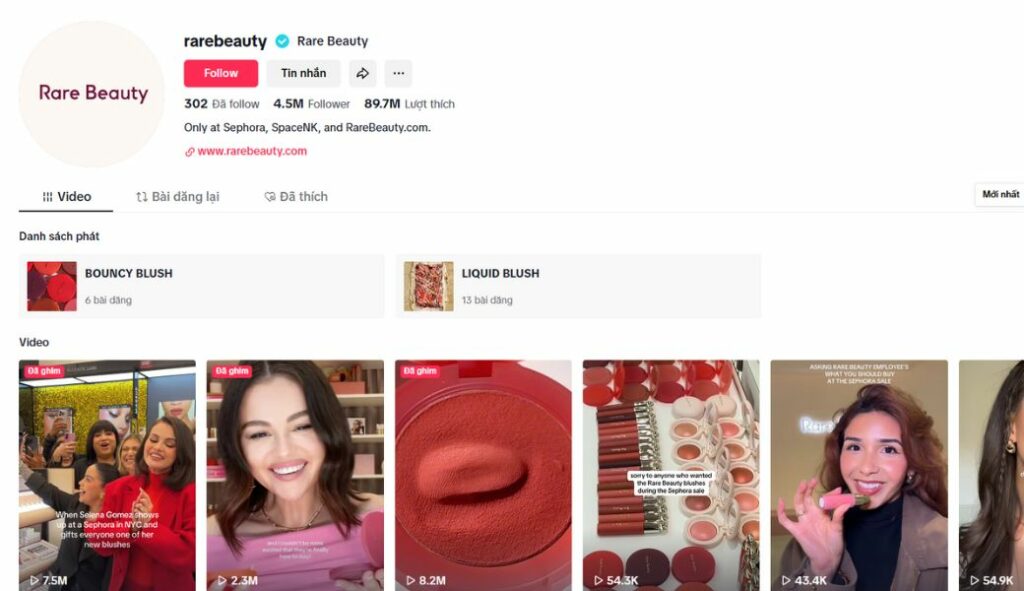
We provide you with some free social media marketing strategies to drive organic growth:
- Post regularly on your social media to maintain engagement
- Interact with followers such as answering the audience’s questions, commenting or reposting your followers’ brand mentions, encouraging your customers to share feedback on your products, and addressing negative comments.
- Create consistency in the content to resonate with audience expectations
- Research and use relevant hashtags specific to your niche, your products, and your brand name
>> Read more: Best 10 Shopify Get Traffic Apps to Drive More Customers
Besides the free approach, you can also use paid social media advertising to expand your reach. To leverage your social media ads, follow these quick tips:
- Target your ideal audience: To spread your products to the right audience, remember to analyze your customer demographics based on age, gender, location, interests, behavior, income level,… By identifying your target customers and understanding their interests and behaviors, you can set the ad campaign perfectly for your target customers’ behavior.
- Choose the right ad formats: Social media platforms offer various ad formats such as image ads, video ads, carousel ads, collection ads, and story ads. You can conduct A/B testing to figure out what drives the best outcome for your business.
- Create compelling ad creatives: When creating social media ads, focus on visually appealing content to highlight your product benefits, and a strong CTA to encourage them to take action
- Monitor and refine: Make sure you track the effectiveness of your social media advertising and make adjustments as you see results if you want to maximize their potential. It will enable you to get the most out of your investment. It is advisable to get started with a small budget to test different ad formats and audience segments, then scale the best one.
Email Marketing
For many years, email marketing has remained as a powerful e-commerce tool for driving repeat purchases and fostering customer loyalty. That said, email marketing lets you send tailored messages and valuable information to your audience.
Now, let’s go through the steps of how to promote your Shopify store for free with email marketing:
- To begin, you need to collect email addresses at every opportunity. You can gather email addresses from website visitors, customers, or social media followers, or use tools like Mailchimp or Klaviyo to automatically scan the email address and automate your email campaign.
- Divide your email list into specific segments based on demographics, behaviors, order history, or engagement level
- Based on your customer segments, create compelling content for each group (product announcements, promotions, educational content,…).
- Set up automated email campaigns to save time and boost results. Some critical automations include welcome emails, abandoned cart reminders, personalized recommendations, post-purchase or follow-up emails, and win-back emails.
- Measure and analyze key metrics like open rates, click-through rates, and conversion rates to evaluate your marketing campaign’s performance, gain insight, and adjust your strategies to improve results for the next campaign.
Content Marketing
Content marketing covers everything from blog posts to infographics to videos – all of these things can help you raise your brand awareness, create stronger connections with your audience, drive traffic, and increase sales through valuable and entertaining content.
Blogging is a powerful way to share in-depth information, address your audience’s common problems, establish your expertise, and build brand authority. You can publish how-to guides, listicles, product reviews, tutorials, case studies, industrial news, personal stories, interviews, or roundup posts and post them across multiple channels that can reach your target audiences. Mixing different types of content and optimizing images, infographics, and videos can make your site more helpful and impressive to the audience, making them your regular visitors and turning them into customers.
>> You may concern: 12 Best Upsell App for Shopify: Top Picks to Boost Your Sales
Google Ads
Google Ads allow you to bid on specific keywords and phrases that a specific audience segment searches for the most, so your Shopify store can show up high on the Google search results. Google will cost advertisers a small fee every time someone clicks that ad, which is called “pay per click or CPC”. The lower the CPC is, the more likely your ad campaign will be successful. The average Google Ads CPC rate (search) is $2.69.
In fact, there are 22 “flavors” of Google ads, but the most relevant types for Shopify merchants are:
- Shopping ads: appear in Google’s search and shopping tabs, filled with information gleaned from product feeds that advertisers have supplied via the Google Merchant Center.
- Display ads: These are visual ads that appear within Google’s Display Network, focused on building brand awareness rather than boosting immediate sales.
- Video ads: pop up on YouTube or on sites across Google’s Display Network, ideal for raising brand awareness.
- Performance Max campaigns: an automated type that uses machine learning to identify the best-performing combination of assets and placements.
So, how to promote your Shopify store through paid ads? Explore the simple 3-step process.
- Keyword research: Identify the words or phrases that your target customers are interested in and most use in searching for your product. You can start with your business name or your competitors.
- Set a budget: Budgeting for ads is the most important thing, so you need to control your investment effectively to make sure you get what you pay for. We suggest you start with a small daily budget to see the performance and adjust it based on your outcomes.
- Generate compelling ad copy: Your advertising content needs to be clear, engaging, and help to highlight your unique selling point to pursue the audience place an order. Concentrate on what makes your brand unique and your product special.
Influencer Marketing
To get the most from influencer marketing, it is crucial to partner with influencers whose followers align with your target market and whose content style matches your brand identity. The core purpose of influencer marketing is creating authentic connections that provide value to both parties and the followers (your potential customers), so focus on your relationship and product quality to get a boom in sales from your partnership with influencers.
There are several influencer marketing formats that can work well for your brand, including:
- Product reviews and recommendations
- Unboxing and demonstration
- Collaborative limited edition products and collections
- Tutorial or how-to content
- Exclusive discount codes
- Live and Q&A sessions
- Giveaways and contests
Track metrics like engagement rates, click-through rates, and conversion rates of social media posts to measure campaign success and optimize for other collaborations in the future.
Affiliate Marketing
Affiliate marketing is much more cost-effective than influencer marketing. With this strategy, you only need to pay when your affiliate agents make a sale. To increase sales, Shopify has an affiliate program. Affiliate schemes are also available for VPN providers like NordVPN and hosting companies like GoDaddy.
Referral & Loyalty Programs
Referral and loyalty programs are marketing strategies that reward your customers and help improve sales and retention. That said, customers earn points with every purchase. When the points reach a specific level, you can redeem them for free products, cash back, or other reward perks.
Referral programs incentivize customers to share a brand or product with their friends and family. Every customer that becomes a part of your referral program is given a unique referral code that you can use to track all their shares and their referrals. All they need to do is tell some friends about the brand, and if one of their referrals makes a first purchase, everyone involved (customer + referred friend) gets rewarded.
Keep your referral program as simple and user-friendly as possible. Provide your current customers with a special discount code or a link to share with their social networks. Use a Shopify app like BLOOP Shopify Referral Program & Affiliate App or BLOY Loyalty Program & Rewards to set up these programs.
Partnerships & Collaborations
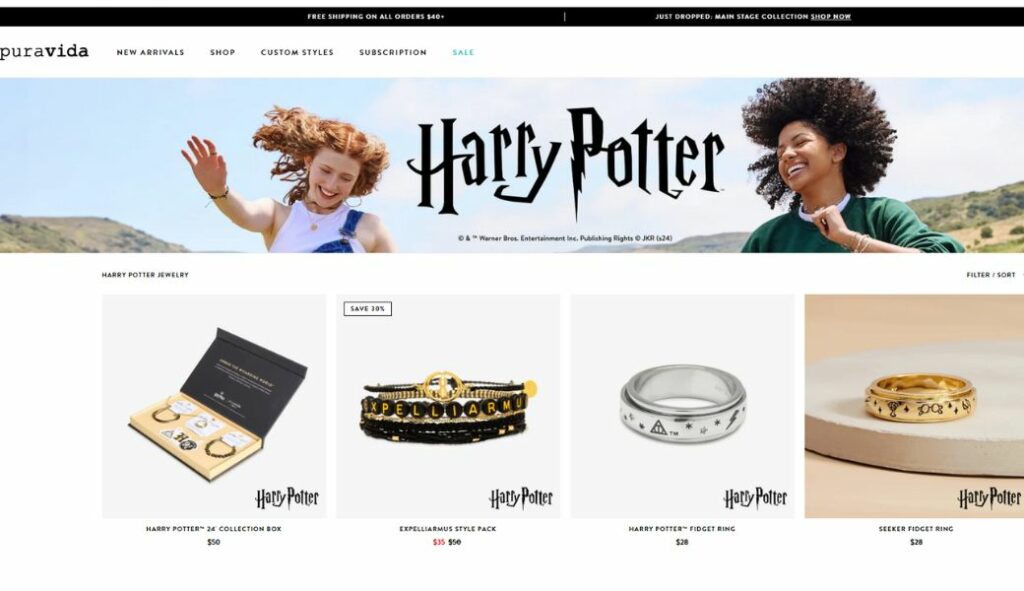
Brand partnerships are a straightforward technique to tap into new audiences and grow your reach. Find a company that targets a similar audience and offers a complementary product (they should not sell competing products). In this way, you can reach a completely new yet still relevant audience base.
Here is how you can promote your Shopify store with partnerships and collaborations
- Offer co-branded products that capitalize on the strengths of each brand.
- Engage in cross-promotion
- Collaborate to introduce events, offers, and captivating content that reflect the principles of both organizations
Create a Google Business Profile
Benefits of a strong, optimized Google Business Profile include:
- Visit Google Search, Google Maps , and Google Assistant for local queries
- Engage with customers through posts, offers, direct messages, FAQs, etc.
- Display your products, services, reviews, and more on your profile
- Learn more about how customers find and interact with your business
- Get orders, reservations, bookings, and quotes through your profile
Follow the process below to build out your business profile.
- Access google.com/business
- Log in with your Google account
- Enter your Shopify store
- Choose whether you’re a storefront or a service provider
- Select your primary business category
- Add your phone number and website
- Verify your local listing
- Finish populating your Google Business Profile listing
Web Push Notifications
The benefit of web push notifications is that they let you engage with potential customers wherever they are online. To make the most of web push notifications, it is essential for you to get the prospect’s consent, which can be acquired by using a small prompt below the search bar when your site records a new visitor. After that, the user will receive push notifications whenever they are online. Push notifications can also be used to target prospective customers based on the products they viewed on your website and to run promotions, issue discounts, and provide free shipping.
For your successful web push notifications campaign, do not forget these key tips:
- Make sure that you get the prospects’ consent
- Write compelling content to encourage visitors to sign up for the push notifications
- To prevent spam, properly time your push alerts.
- Monitor and modify your campaign as necessary.
>> Discover more: Top 10 Best Push Notification Apps for Shopify in 2025
Go Offline
Online marketing can help you drive more sales, but it does not mean that it is your only choice. Offline marketing is still a highly effective marketing strategy that drives valuable leads and real sales.
So, how can you conduct offline marketing to advertise your Shopify store?
- Print promotional materials such as newspapers, posters, banners, catalogs, or personalized letters
- Billboard advertising
- Radio and TV advertising.
- Branded merchandise.
- Events, tradeshow, exhibitions
Pre-Promotion Checklist
- Build a mobile-friendly design: Choose a mobile-responsive theme to make sure your store performs well on all devices, especially mobile, to offer a smooth experience for your visitors.
- Optimize loading speed: Site speed is the key element to keep your visitors staying longer in your store. You can enhance your site loading speed by compressing images, minimizing HTTP requests, and leveraging browser caching.
- Use high-resolution product images and descriptions: Make sure your product listings are well-written, have high-quality images, and include all the necessary information so that customers can make an informed purchasing decision. Create content that informs, entertains, and connects with your audience. Write blog articles, product guides, videos, or social media posts that give your customers value and establish you as an expert in your niche.
- Clear call-to-actions (CTAs): An effective CTAs should stay concise, create a sense of urgency, and urge the audience to take action. You should use exciting words like “buy,” “explore,” and “start” to attract the visitors’ attention and drive them toward a conversion
FAQs
1. What is the fastest way to promote my Shopify store?
The quickest way to drive traffic is through paid ads (Facebook, Instagram, Google Shopping) and influencer marketing. However, for long-term growth, combine paid strategies with SEO and organic social media marketing.
2. How can I promote my Shopify store for free?
You can use organic methods like SEO optimization, Social media marketing (Instagram, TikTok, Pinterest, Email marketing (abandoned cart emails, newsletters), and Content marketing (YouTube videos, guest posts)
3. Which social media platform is best for promoting a Shopify store?
Each platform has its own unique characteristic, which is ideal for different requirements. For example, Instagram & TikTok are the best for visual products, Facebook is great for targeted ads and community building, and Pinterest is ideal for evergreen traffic.
4. How much should I spend on ads to promote my Shopify store?
Start with a small test budget to find the best method for your store. You can spend around $5-$20 per day on Facebook or Google Ads until you find out the winning ads that have positive ROI.
5. How long does it take to see results from Shopify store promotion?
With paid ads, you can see the result immediately through the traffic your store gains and the conversion rate. Email marketing can generate sales within days if you have an engaged list, while SEO & organic social media may take much time, about 3–6 months, to show significant results.
Conclusion
Now that you have many answers for the question “How to promote your Shopify store for free”, and it’s time for the execution. You do not need to implement all 12 strategies right away; just do it step-by-step based on your brand’s needs and budget. Choose one or some that you find are most relevant and essential for your Shopify store, build a plan, implement, and adjust your results to see how effective the marketing strategies are in promoting your store.
Start small and smart, measure the results, and adjust to drive the best results. Share with us your marketing journey below!

Finn Nguyen
Finn is a Shopify expert with 5+ years of experience helping new business owners launch and grow online stores. Specializing in store setup, theme selection, and optimization, he provides practical guidance to turn ideas into successful eCommerce businesses