Why Shopify BFCM Success Depends on More Than Discounts
Every BFCM season, retailers rush to slash prices, hoping deep discounts alone will drive record-breaking sales. While promotions attract attention, true success during Black Friday Cyber Monday depends on more than price cuts.
Let’s see through the trap and find out how to optimize your Shopify BFCM sales.
The Discount Trap
Black Friday and Cyber Monday (BFCM) are always monumental moments for Shopify stores and B2B sellers. Whether you’re in the U.S., Europe, Asia-Pacific, LATAM or the Middle East, you might invest heavily in marketing, promotions, and steep discounts to grab attention.
But here’s what many merchants discover: the spike in sales doesn’t always translate into long-term growth. The discount becomes the show, and once it ends, customers often drift away.
If you treat Shopify BFCM like a sprint—not a relay—you risk burning out margins, exhausting resources, and gaining little in recurring or long-term revenue. To truly succeed, you must think beyond discounts.
Why Discounts Alone Aren’t Enough
Discounts have their place. They create urgency, lower friction, and for many consumers they’re a key motivator. But there are several reasons relying on discounts exclusively is risky:
- Devalued brand perception: In markets such as Germany, Nordics, Japan, and even Australia, consumers often associate frequent, large discounts with lower quality. If every sale feels like a “clearance,” your normal pricing may feel inflated.
- Discount fatigue: Shoppers become desensitized. If your baseline is “50 % off sales,” then future “30-% off” feels disappointing.
- Margin erosion: Heavy discounting can cut into profit margins severely—especially in high cost areas (shipping, duties, returns). In APAC, for example, cross-border costs and logistics mean that a deep discount may leave little profit.
- Customer acquisition cost (CAC) spikes: During BFCM, ad costs, shipping surcharges, and logistics strain can escalate. Discounts must offset those high costs, which is unsustainable without retention.
The Hidden Costs of Over-Discounting Across Regions
Let’s look regionally how the hidden costs manifest.
| Region | Key Challenge | Discount Cost Impact |
| U.S. & Canada | Highly saturated markets; steep ad competition during BFCM. | Rising CAC, higher returns, pressure on customer support. |
| Europe (UK, EU-West, Nordics) | Strong consumer protection laws; high VAT & duties on returns; value perception is high. | Demand for free returns, risk to margin; frequent discounting harms brand trust. |
| APAC (Australia, Southeast Asia, Korea, Japan) | Cross-border logistical costs; localized customer expectations (payment methods, speed). | Deep discounts may not be enough to overcome shipping or payment friction. |
| LATAM & Middle East | Currency volatility; import/duties; wary customer trust due to fraud/returns. | Discounts may be needed to draw in trust, but consequences on margin are large. |
Thus, while discounting can drive a short-term boost, the “cost hidden beneath” poor retention, lower repeat purchase, higher returns, diminished brand value—often offsets gains unless you have other levers in play.
Retention: The Real Growth Engine
If discounts bring customers in, retention is what builds business sustainably. Retention includes:
- Encouraging repeat purchases
- Building loyalty and advocacy
- Creating predictable revenue via subscriptions or recurring orders
- Reducing churn, returns, and customer support costs
In many markets, data shows that increasing customer retention by even 5 % to 10 % can double profitability over time.
So, if your BFCM strategy ends when the discount ends, you’re leaving growth on the table.
3 Strategies to Win Beyond Discounts for Shopify BFCM
Build Loyalty Programs That Last with AI
A strong loyalty program does more than reward spending—it creates emotional connection, recurring engagement, and increases lifetime value. Key features to consider:
- Tiered VIP levels (e.g., bronze, silver, gold) with escalating perks. Many EU-based consumers love tiers with exclusive access or early releases.
- Point systems for actions beyond purchase: referrals, reviews, social shares, subscription signups. In Asia, “gamification” (tiers, badges) works well.
- Rewards that aren’t just discounts: free shipping, exclusive content, sampling, limited-edition products. These often carry higher perceived value than an equivalent discount.
- Localized rewards: For example, in LATAM, offering local courier shipping, in APAC, supporting mobile payments as part of loyalty benefits.
With Akohub AI Marketing tool, Shopify merchants can put all of these loyalty strategies into action—without the complexity of managing them manually. Akohub’s AI-powered loyalty and retention platform allows you to:
- Launch customizable VIP tiers with flexible rules, so you can reward different customer groups in ways that resonate with their region.
- Reward a wide range of actions, not just purchases—customers can earn points for birthdays, social follows, reviews, referrals, and even subscription sign-ups.
- Offer non-discount rewards like store credits, early access to collections, or free samples—keeping your margins intact while increasing customer delight.
- Localize incentives automatically: Akohub integrates with local payment and fulfillment options, so merchants in APAC, LATAM, Europe, and North America can adapt rewards to cultural expectations.
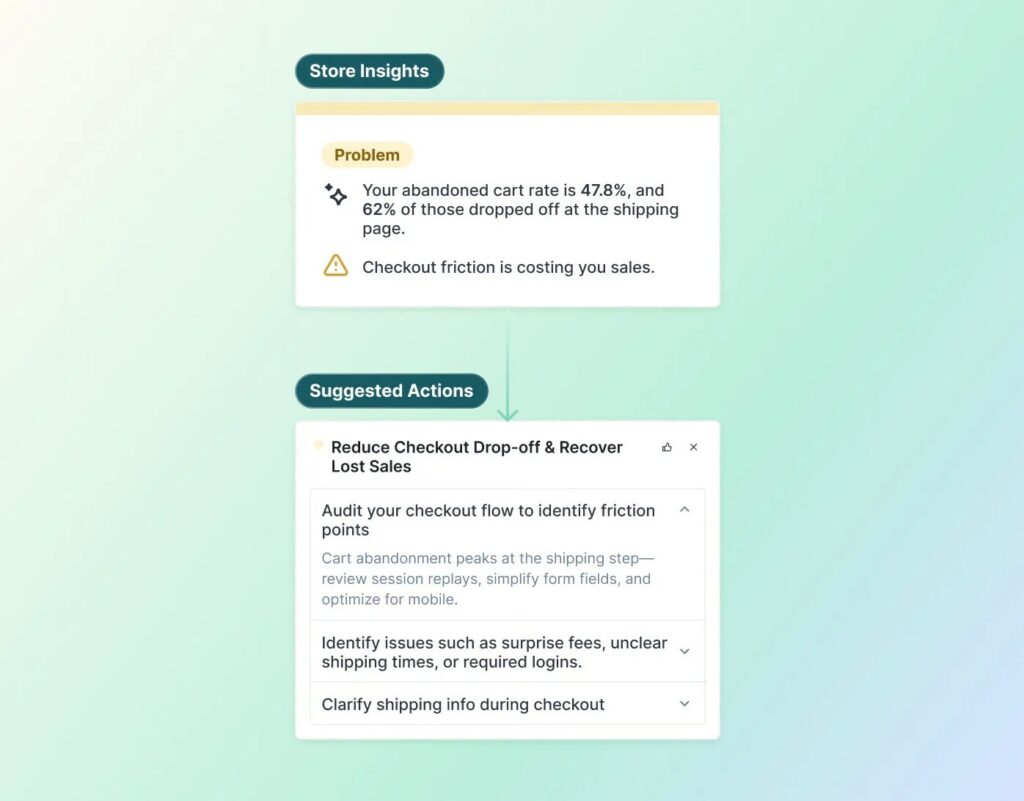
- Get weekly insights dashboards that highlight which loyalty members are most engaged, which are slipping away, and what actions to take to re-engage them.
Smart Cross-Sell & Upsell (Value-Add, Not Push)
Upselling and cross-selling are not about squeezing more dollars—they’re about helping customers discover useful complementary products or better versions. When done right, it enhances the experience and builds trust.
- Suggest add-ons that solve a problem (e.g., protective cases, accessories) instead of random products.
- “Bundle” offerings during BFCM with future value (e.g., buy socks + shirt + get a discount off next month’s order). Helps to build orders now and encourages return visits.
- Use dynamic pricing for bulk or variant upsells—especially in B2B with B2Bridge helping set wholesale or volume pricing.
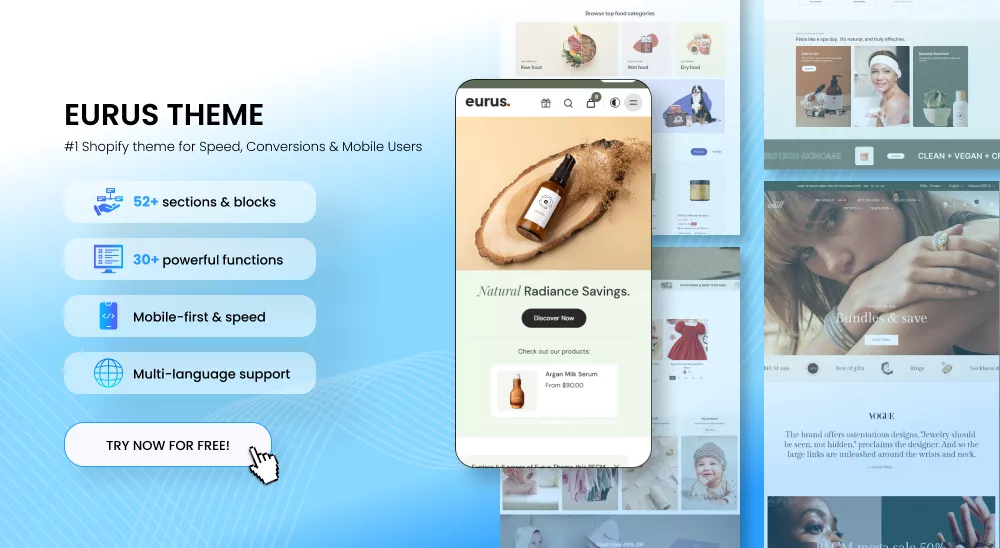
You may concern: Essential Store Sections With Black Friday Shopify Theme
Automate Retention Campaigns with AI
Manual campaigns are error-prone, especially across multiple regions. AI helps you scale, personalize, and anticipate what customers need.
- Post-purchase journeys: Thank you emails, how-to guides, product care, review requests. Helps reinforce satisfaction and prepare the customer for repeat purchases.
- Abandoned cart and browse-abandon triggers: In the U.S. and Europe, timely reminders; in APAC, maybe via SMS or messaging apps.
- Predictive churn detection: AI tools like Akohub can identify customers who haven’t purchased in a while and re-engage them with special perks.
- Subscription models: Use tools to offer “subscribe & save” or recurring orders. Transparency in delivery schedules, pricing, and terms is especially important in LATAM and the EU.
Further reading: Shopify Black Friday Tips 2025: Apps, Strategies & More
How Akohub + B2Bridge Help Merchants Win After BFCM
Here’s how the combination of Akohub (loyalty & retention/AI marketing tool) and B2Bridge (B2B & wholesale infrastructure for Shopify) can help merchants convert the BFCM surge into lasting growth.
What B2Bridge Offers
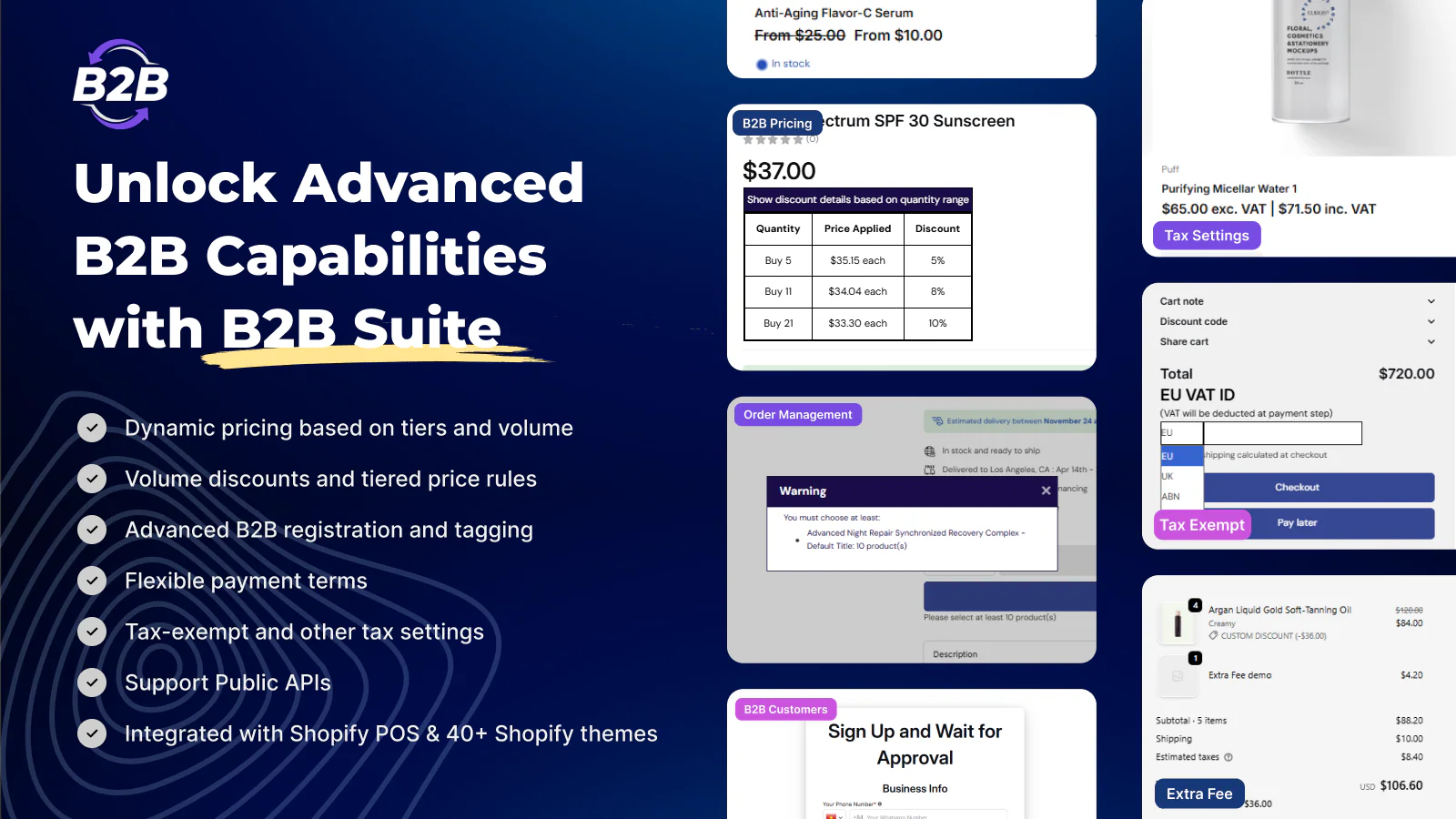
- Wholesale / B2B features: custom pricing per variant, volume discounts, minimum order quantities, dynamic wholesale pricing, flexible net payment terms.
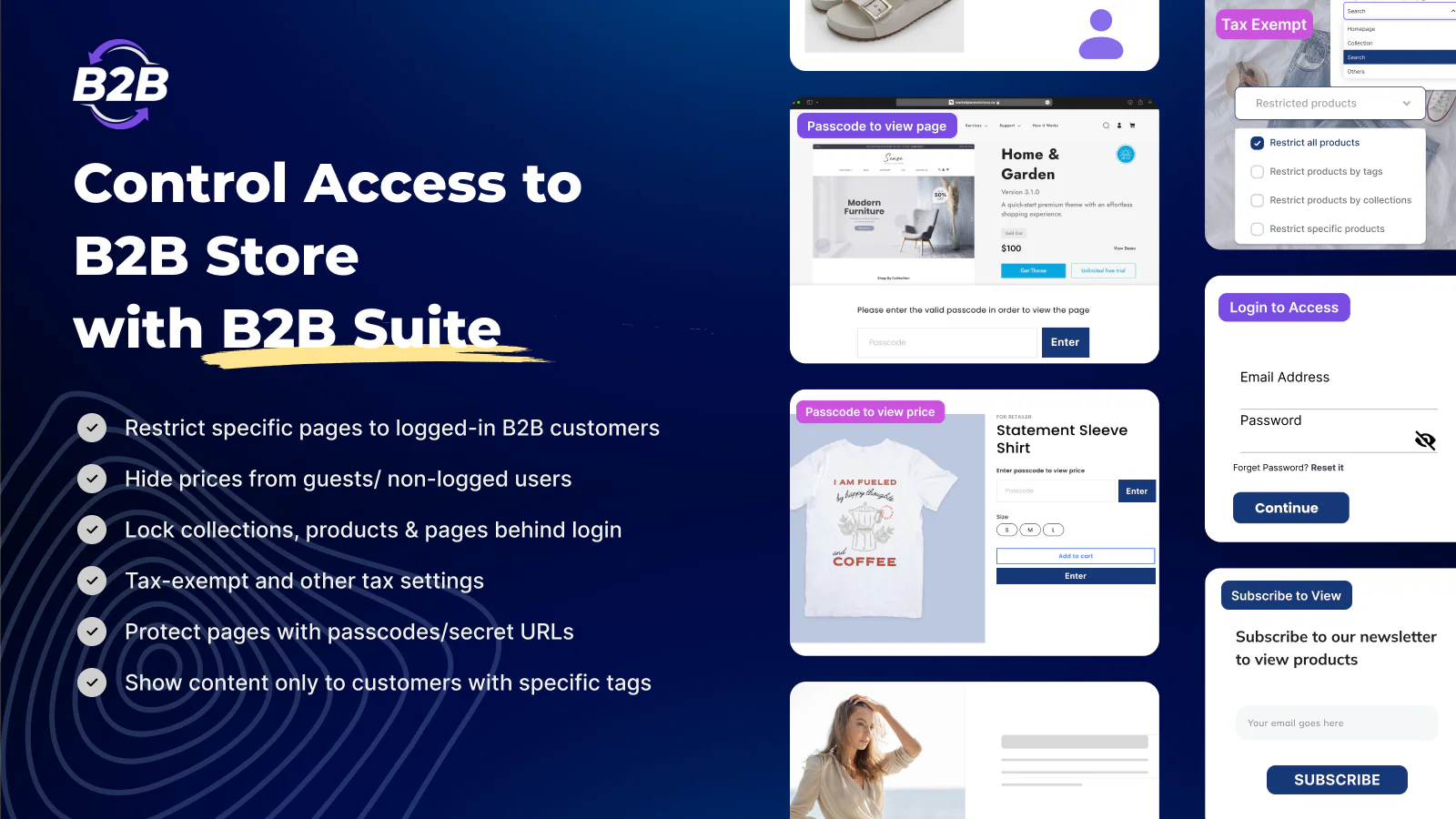
- Wholesale application & verification: ensures only qualified B2B customers access wholesale pricing.
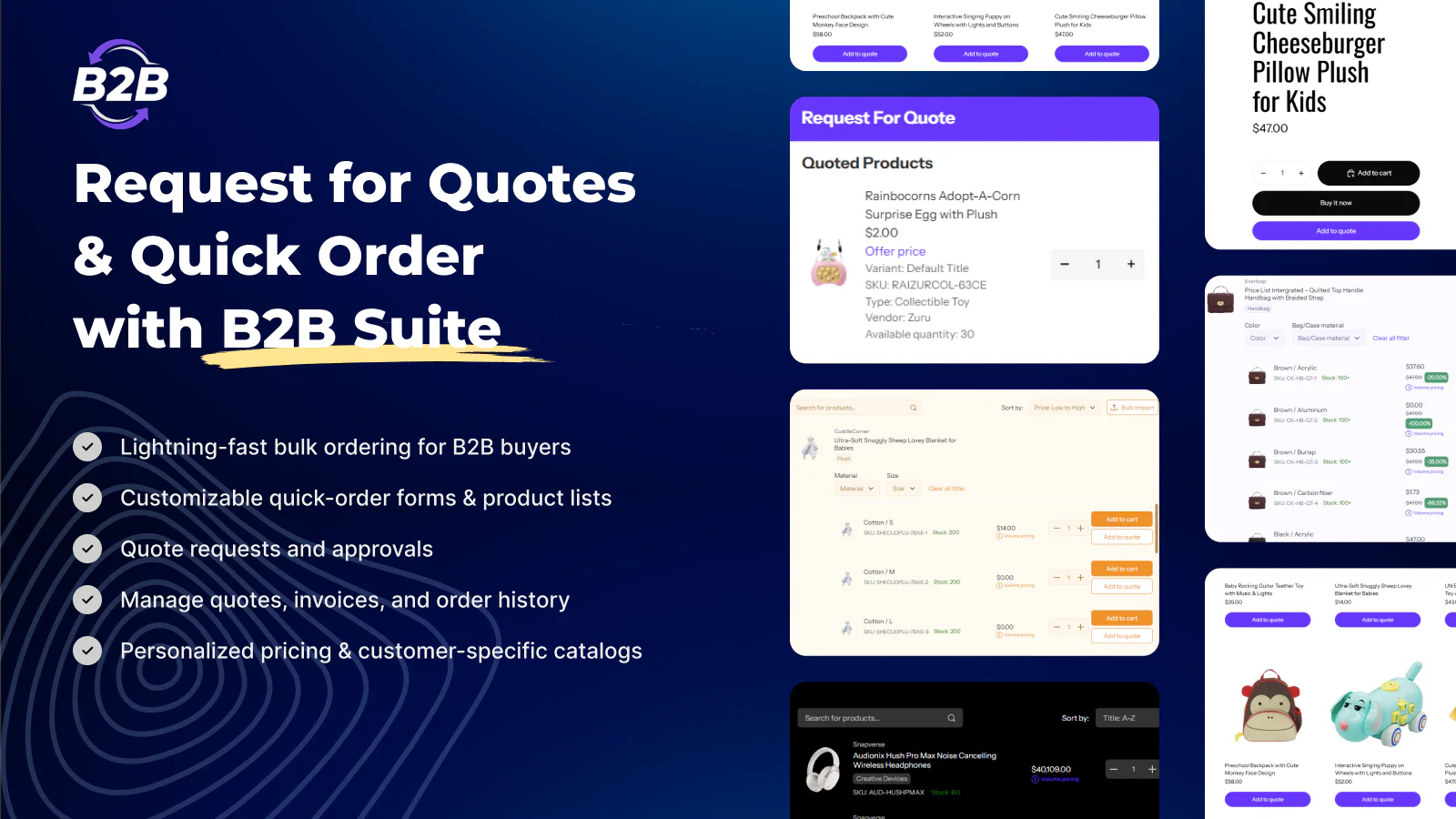
- Fast bulk / quick order forms: important for B2B clients who want to reorder quickly or in bulk.
These capabilities allow merchants to capture high-volume orders and maintain margin even while offering volume or wholesale discounts—without undermining standard consumer pricing.
What Akohub Brings
- AI-driven loyalty, retention flows, and dashboards that show which customers are likely to churn.
- Retargeting, post-purchase flows, VIP tier loyalty, rewards etc.
- Personalized engagement across channels.
Putting Them Together
By combining these tools, merchants can:
- Use B2Bridge to create wholesale customer segments, net payment terms, and volume pricing—so deep discounts are offered only where justified (wholesale, repeat customers), not across the board.
- Use Akohub to incentivize repeat purchases from BFCM customers (both retail and wholesale) via rewards, subscription offerings, loyalty tiers.
- Automate follow-ups: e.g., after a large order (via B2Bridge), trigger Akohub retention campaigns—offer perks, suggest refill or complementary items, etc.
- Improve margin management globally: discounting where it yields volume, but balancing against retention, customer lifetime value, and personalized offerings to preserve overall profitability.
Final Thoughts
Discounts are an important tool in your BFCM toolkit—they drive traffic, urgency, and sales spikes. But they aren’t a sustainable growth strategy alone.
To succeed, especially in a global context, you must build around discounts with retention, personalization, loyalty, and smart automation. The combination of Akohub + B2Bridge gives Shopify merchants:
- The infrastructure to offer wholesale/volume pricing, manage B2B customer groups, streamline ordering, and maintain pricing integrity.
- The marketing and retention engine to turn discounted BFCM shoppers into repeat buyers, subscribers, advocates.
If your BFCM strategy doesn’t plan for what happens after the discount ends, you’re leaving revenue, margin, and customer relationships on the table.
Invest in retention now—and your next BFCM, and the months after it, will show the difference.
Frequently Asked Questions (FAQ)
Below are questions merchants often ask, especially those running Shopify + B2Bridge + Akohub, along with region-aware answers.
1. How much discount is “too much” in different markets?
It depends on your cost structure, customer expectations, and competitive landscape.
– In the U.S., deep discounts (30-50 %) are common, but margin erosion, customer service costs, and shipping/returns can eat into profits.
– In Europe, VAT, duties, and strong return laws mean even moderate discounts (20-30 %) can cost more than expected.
– In APAC and LATAM, shipping, cross-border fees, and local payment processing fees should be factored in; sometimes a smaller discount combined with free shipping/payment promotions performs better.
*Use data: check how past discounts impacted profit after all costs, and combine with retention metrics (repeat purchase rate, churn).
2. What’s the average retention lift I could see by investing in loyalty and post-purchase campaigns?
While results vary, many merchants report a 10-30 % increase in repeat purchase rate within 3-6 months of implementing loyalty + retention flows. In B2B contexts (using B2Bridge), where customers order in bulk or on recurring cycles, retention improvements can be even higher.
3. In territories with strong local festivals (e.g. Diwali in India, Golden Week in China, Singles Day in China, etc.), how should merchants balance those opportunities with BFCM?
– Plan a calendar: map out all major shopping events in your target markets. BFCM is global, but there are local peaks too.
– Use loyalty and subscription tools to engage after local festival spikes, not just BFCM. Customers acquired during festivals are similar to BFCM customers in that they expect deals—so the retention strategy should start immediately.
– Use B2Bridge to offer wholesale or business customer special deals for local festivals, but protect your full-price margins elsewhere.
4. How can small or mid-size Shopify stores use B2Bridge + Akohub without huge overhead?
– Start small: roll out loyalty programs to your retail segment first. Simple point systems or VIP tiers.
– Use B2Bridge features like wholesale registration and customer groups to begin serving small B2B clients or repeat bulk customers without discounting retail customers heavily.
– Use Akohub’s automation to set up a few high-impact campaigns (post-purchase, abandoned cart, VIP drip) rather than trying to do everything at once.
– Monitor costs: shipping/logistics, returns, ad spend. In smaller markets, over-discounting can kill margin; focus on value adds rather than just price cuts.
5. Are subscription models suitable for B2B or wholesale clients?
Yes, but with considerations:
– Some wholesale or business clients already order regularly—offering them subscriptions or scheduled reorders (e.g. monthly, quarterly) can simplify their life and stabilize your revenue.
– Ensure your terms, payment cycles, and shipping are clearly communicated—business customers expect reliability, transparency, and good service.
– Use tools like Akohub to trigger subscription offers intelligently (after repeat orders or when customers express interest).
6. How much should I invest in retention vs. promotion during BFCM?
A common rule: allocate 20-40 % of your BFCM budget toward retention (loyalty programs, post-purchase flows, subscription offers, re-engagement). The rest can go toward customer acquisition and promotional discounting.
In markets with high customer acquisition costs (e.g. U.S., UK, Australia), higher retention investment yields better ROI.
7. What are common pitfalls when implementing loyalty programs across geographies?
– Not adapting rewards to local preferences. What is valuable in one market (free international shipping, certain payment options, service perks) may not matter elsewhere.
– Ignoring payment and regulatory differences. Tax, duties, import/export rules, and payment methods differ by region—ensure your loyalty/subscription tools and B2Bridge’s customer segmentation handle those.
– Overpromising benefits. If loyalty perks are hard to redeem or unclear, trust erodes.
Poor communication: language, clarity, and expectations matter.
8. How can I measure the long-term impact of going “beyond discounts”?
Track metrics such as:
– Repeat Purchase Rate (RPR): How many customers buy again within 30/60/90 days after BFCM.
– Customer Lifetime Value (CLV): Over 6-12 months.
– Churn Rate: How many customers don’t return, especially BFCM first-timers.
– Average Order Value (AOV) for upsell/cross-sell vs baseline.
– Subscription or recurring order revenue (if using subscription or B2B / wholesale models).
– Loyalty Program Engagement: % of customers who join, redeem, and move between tiers.

Finn Nguyen
Finn is a Shopify expert with 5+ years of experience helping new business owners launch and grow online stores. Specializing in store setup, theme selection, and optimization, he provides practical guidance to turn ideas into successful eCommerce businesses