How to Start a Wholesale Business in 2025 (Step-by-step)
If you’ve been thinking about how to start a wholesale business but don’t know where to begin, you’re in the right place. I’ll walk you through everything in simple steps, from understanding how wholesale works, to finding reliable suppliers, to setting up your online store. By the end, you’ll know exactly what to do and how to get started with confidence — even if you’re brand new to B2B.
What Is A Wholesale Business?
A wholesale business is a type of business that involves buying goods in bulk directly from manufacturers or distributors and reselling them to other retailers.
Usually, the purchases are made at lower prices so that the wholesaler can gain profits, and the retailer ultimately sells them to customers at marked-up prices.
In general terms, wholesalers are an intermediary in the supply chain between producers and retailers, handling large volumes of product and distributing them with timely deliveries to customers that depend on that supply.
How Profitable Are Wholesale Businesses?
Wholesale can be profitable, but margins usually stay lower than retail. Most owners focus on high-volume orders and tight cost control rather than big markups.
Typical Profit Margins for Small Wholesalers
Small wholesalers often see 15 to 30% gross margins depending on various factors. Here are some key elements that shape how much profit wholesalers keep:
- Product category: Commodity goods lean toward thinner margins, while niche or value-added products often bring stronger returns.
- Supplier pricing and terms: Better MOQs or payment terms directly lift margins.
- Order volume and frequency: Larger, repeat orders bring stronger efficiency and lower per-unit costs.
- Logistics efficiency: Smooth warehousing, shipping, and inventory control reduce overhead and protect net margin.
Wholesale Market Growth in 2025–2026
The wholesale distribution sector keeps expanding as more B2B buying shifts online. Industry projections show steady growth supported by digital wholesale platforms, global sourcing, and self-serve B2B portals. This shift positions modern wholesalers for healthier margins when operations run efficiently and technology handles routine tasks.
How To Start A Wholesale Business In 7 Steps
Here is the complete road map in detail on how to start a business selling wholesale items.

Step 1: Choose what items you want to sell
The first thing you have to figure out is your product niche. It is probably the most important decision because it affects everything else — your suppliers, pricing, storage, and even the type of retailers you’ll work with.
I recommend focusing on one or two product categories instead of trying to handle a mix of everything. Here are some things I look at when choosing products:
- Seasonality: Some items sell better at certain times of year. For example, swimsuits spike in summer, coats in winter. Knowing the seasonal patterns helps you plan inventory and cash flow.
- Profit margin: You need to know how much you can realistically make per unit. Make sure your margins are high enough for both you and your buyers to make a profit.
- Size and weight: Shipping costs can eat into profits. Small and lightweight items are easier and cheaper to ship, which is great if you’re just starting out.
- Purchase frequency: Products people need regularly — like pet food or printer ink — give you predictable revenue and make inventory planning simpler.
- Competition and gaps: Look at what other wholesalers are offering. If you spot a product no one else carries, that could be your niche.
The key is to mix what you’re knowledgeable about with solid market research. That way, you’re not just guessing, you’re making decisions based on what will sell well and what you can handle.
Step 2: Prepare a basic business plan
When I built my wholesale business, I used a Lean startup plan instead of a long, formal business plan. It is short, simple, and will help you focus on what really matters.
Here’s how to get real value from your plan: don’t just fill in boxes. You should conduct a detailed market analysis, so that your plan is as clear and practical as possible. For example, give an estimation of your cash flow for the first three to six months, figure out how much inventory you need, and how long you can go before getting paid. Your business can run, is what you want to prove in your business plan.
Finally, treat your plan as a living document. As you talk to suppliers, potential retailers, and logistics partners, update your business plan. This keeps your roadmap grounded in reality and helps you make decisions based on real conversations, not guesswork.
Step 3: Register your business and get licenses
Before you start buying inventory or contacting suppliers, you need to make your business official. Getting the right registration and licenses will not only secure your business long-term, but also save you headaches with taxes, suppliers, and retailers.
Generally speaking, you want to apply for a resale or wholesale license. Requirements as well as other details vary by state or country, so check your local government site. In the U.S., most states issue a sales tax permit through the Department of Revenue or equivalent.
You will also need an EIN (Employer Identification Number) from the IRS if you plan to hire employees, open a business bank account, or file taxes as a separate entity.
Again, you should obtain these licenses as early into business operations as possible.
Step 4: Find manufacturers to work with
If you don’t make your own products, building solid relationships with wholesale suppliers is key. Here’s how to find and vet good suppliers, plus some trusted global platforms:
How to pick the right suppliers
- Don’t depend on just one manufacturer. Working with multiple suppliers gives you backup and bargaining power.
- Look for suppliers who deliver on time and have good quality. A sample order helps you test both.
- Negotiate clear agreements: Talk about lead times, quality checks, payment terms, and what happens if something goes wrong.
- Check supplier credibility: Ask for business registration info, certifications, and real contact details. Use Google Street View to verify addresses.
- Use sourcing agents or trusted platforms if you don’t speak the supplier’s language or don’t know local practices.
There are also a few types of suppliers. You can work directly with manufacturers for the best pricing, they are the ones that create products and can ensure consistent quality. Distributors and importers provide easier access to products, smaller quantities, or unique items, but prices may be higher and lead times longer.
Another option is dropshipping manufacturers. They are useful if you don’t want to manage inventory, but wholesalers typically use the dropshipping model to test products rather than depend on it.
Trusted global platforms to source suppliers
Here are some reliable places to start your search:
- IndiaMART — India’s largest wholesale platform, great for textiles, apparel, and home goods.
- Alibaba — massive global B2B marketplace, ideal for sourcing a wide variety of products from Asia.
- ThomasNet — US-focused directory connecting buyers with verified manufacturers and distributors.
- SaleHoo — directory of thousands of verified suppliers.
Step 5: Set up an online wholesale store
You need a platform to sell your products efficiently. Most B2B businesses now operate online.
For most new wholesalers, I recommend Shopify as one of the top B2B ecommerce platforms for new merchants. Setting up an online Shopify wholesale store lets retailers browse your catalog, place orders, and manage accounts much easier:
Design your online store
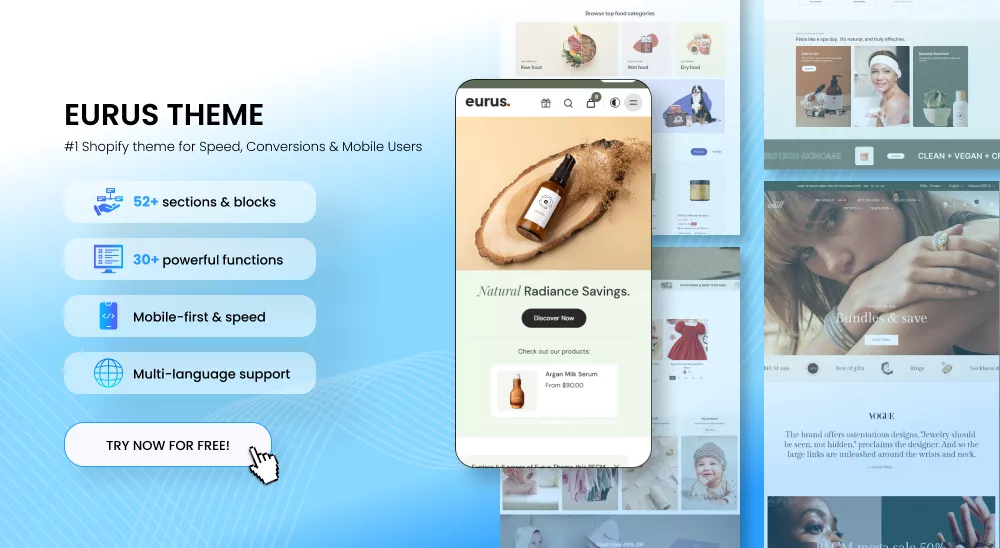
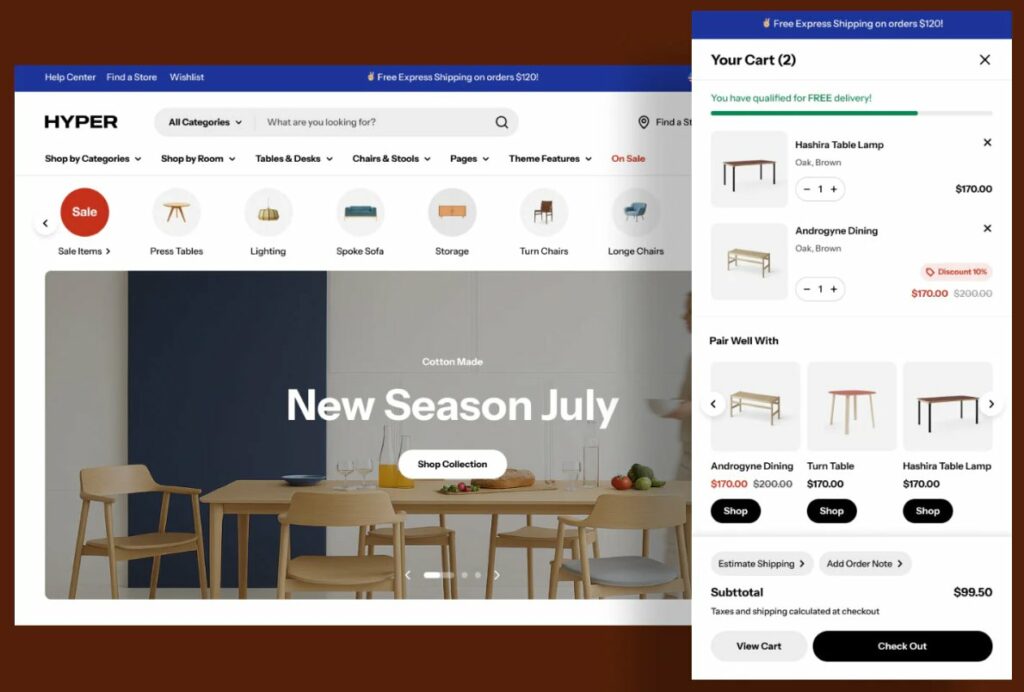
You can customize your storefront without technical or design skills, with Shopify themes and drag-and-drop editor.
Built-in B2B and wholesale features
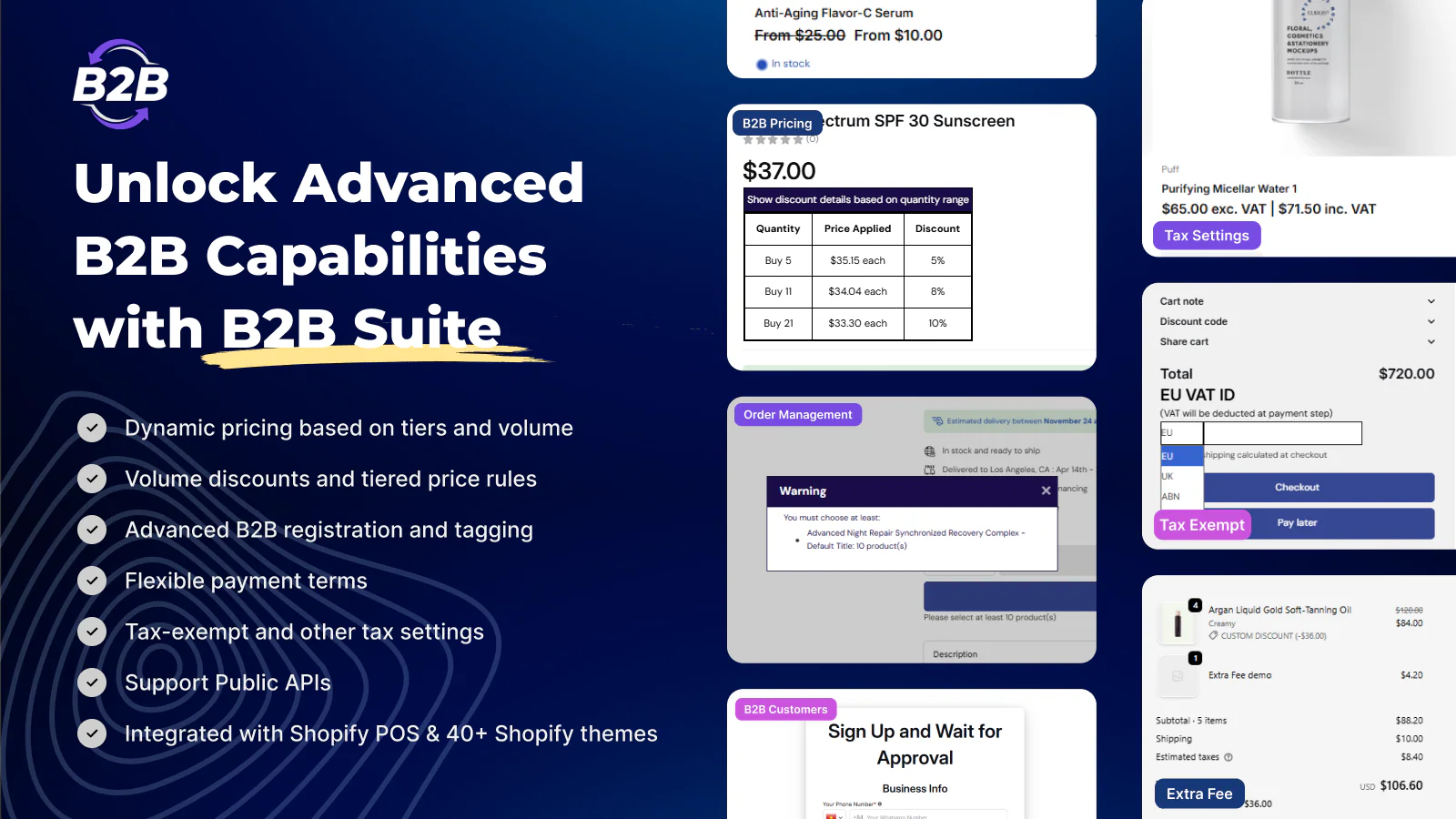
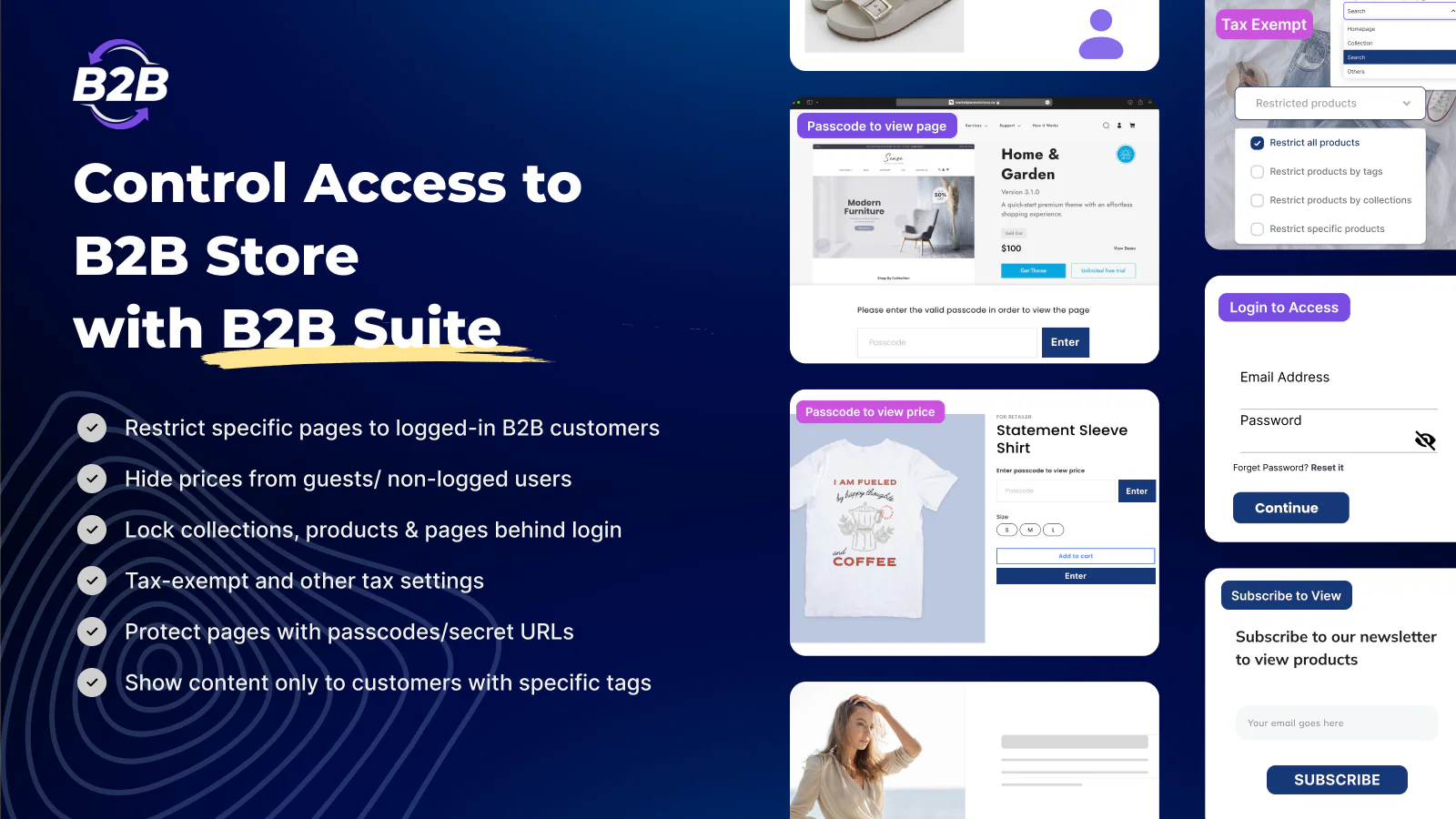
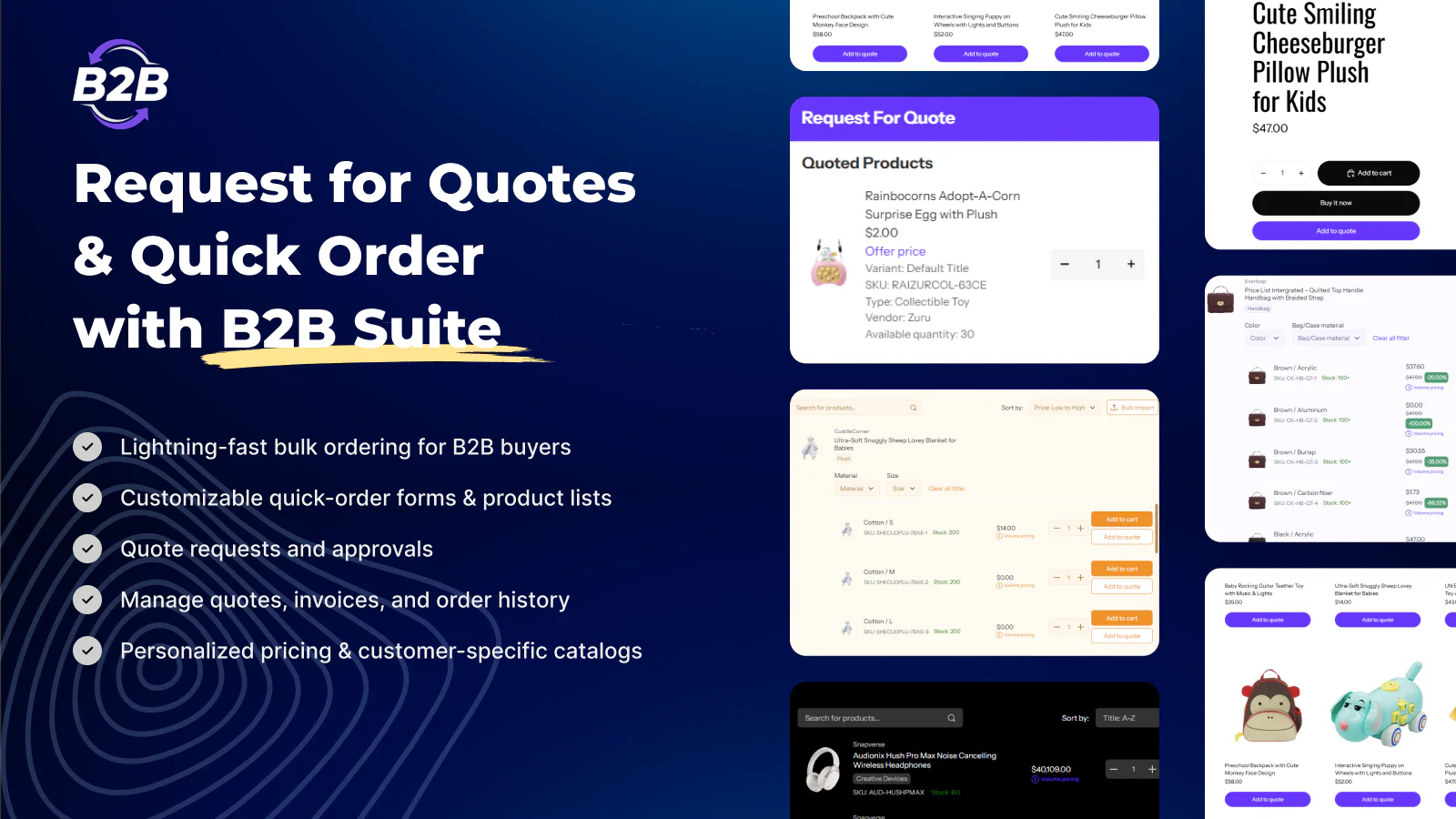
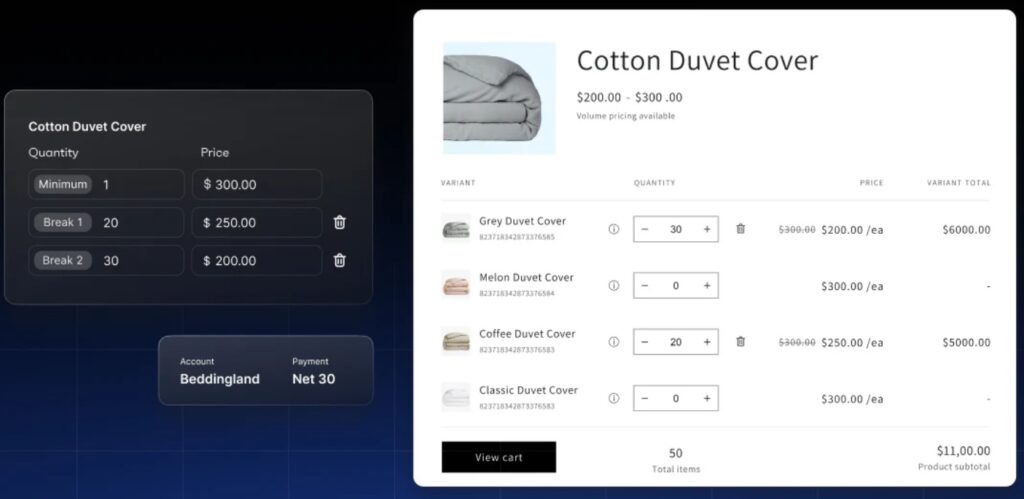
It’s easy to use, fast to launch, and has built-in tools for B2B features like wholesale pricing, order management, and customer account controls.
Robust third-party apps and integrations
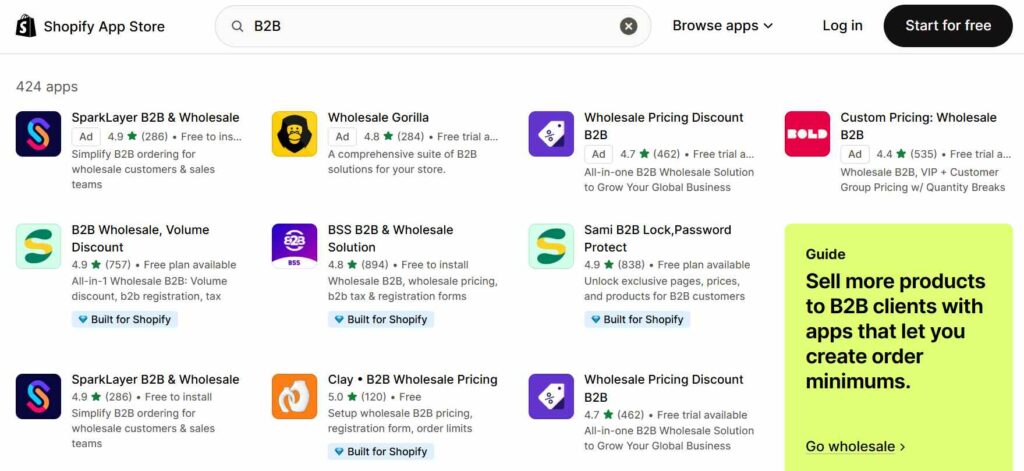
Shopify also supports integrations with wholesale manufacturers, Shopify B2B solution, as well as inventory and shipping apps, which simplifies operations.
As your business grows, Shopify also supports marketing, especially by integrating with omnichannel marketing platforms. Just by using Shopify, you are able to access an ecosystem of advanced B2B tools, which help you scale and keep up with digital transformation.
Step 6: Figure out your wholesale pricing strategy
Pricing is one of the most important parts of running a wholesale business. Get it wrong, and you could sell too cheaply and hurt profits, or price too high and lose customers.
When I started my wholesale operations, I focused on keeping pricing simple. A basic approach is to calculate your cost per unit, then add a reasonable margin that allows retailers to resell profitably.
For example, if an item costs you $5 and retailers typically mark up 50%, your wholesale price might be $7–$8 per unit. You can also offer tiered pricing for larger orders, giving discounts to buyers who purchase in bulk — this encourages bigger orders and builds loyalty.
For beginners, you can use my B2B price lists that are available for free download. These can give a benchmark for common products in your industry and help you understand typical margins and order expectations. Just make sure to adjust for your own costs and market.
[Free Template] 12 B2B price list are available for free download
Close deals faster with 12 ready-to-use pricing template on Google sheets
Step 7: Manage your core business operations & logistics
Once your wholesale business is up and running, managing day-to-day operations efficiently is key to growth. From order processing to inventory management, staying organized keeps retailers happy and ensures you can scale without chaos.
Here’s what I focus on:
- Warehouse & Inventory Management: Keep track of stock levels and reorder points. Tools like Shopify, TradeGecko, or Cin7 help automate inventory updates and reduce errors.
- Customer Management: Maintain detailed records of retailer accounts, order history, and payment terms. A simple CRM or Shopify’s built-in tools make it easy to track and communicate with buyers.
- Supplier & Logistics Coordination: Keep close contact with your suppliers to anticipate delays or shortages. Monitor shipping and fulfillment closely, especially for international orders.
- Growth & Analytics: Track B2B metrics and KPIs such as repeat order rate, average order value, and gross margin. Regular analysis helps you identify trends, adjust pricing, and plan inventory.
Managing these core operations well builds trust with retailers, reduces errors, and frees you to focus on growth and expanding product lines. Automation and simple workflows are your best friends.
Tips for Growing a Wholesale Business
Learning how to set up a wholesale business is only the beginning. To remain competitive and ensure long-term profitability, business owners must continuously evaluate and refine their operations. Below are some practical tips:
Build strong relationships with clients
Relationships with manufacturers and retailers are the foundation of a successful wholesale business.
- Suppliers: Keep in close contact to negotiate better pricing, flexible minimum order quantities, or early access to products. Strong supplier relationships reduce delays and help you secure high-demand items.
- Retailers: Regular updates on stock availability, new products, and order status build loyalty. You can also gather feedback on what sells best, allowing you to refine your offerings.
Marketing
For wholesalers, marketing is crucial to attract new retailers and maintain visibility with existing ones.
- Digital channels: Use email newsletters, social media, and B2B marketplaces
- Content & social proof: Share product demonstrations, case studies, testimonials, and images of your products in retail environments. You can use a background remover to eliminate distracting elements so the product stands out on its own. This helps retailers visualize how your products perform and positions your business as professional and reliable.
- Regularly optimize your website: As a large portion of sales can come from your online website, you would want it to have great performance across devices, and communicate your offerings clearly. This can include website design, SEO improvement, and B2B checkout optimization.
Invest in Technology
Properly applying new technologies to your business process can save time, reduce costs, and increase sales:
- Inventory management: Keep real-time visibility on stock, incoming shipments, and pending orders. Wholesale inventory management software helps prevent overselling and ensures accurate fulfillment.
- Customer management software: Track retailer interactions, store client data, manage leads, and automate reminders. This ensures you don’t miss follow-ups, promotions, or important requests.
- Cloud technology: Access data remotely and manage multiple locations or home-based operations efficiently. Cloud-based systems also allow your team to collaborate in real time.
- Omnichannel operations: Integrate your technology across all sales channels. This means syncing inventory, orders, and customer data across your online store, marketplaces, and direct sales, providing a seamless experience for both your team and your retailers.
By focusing on strong relationships, strategic marketing, and modern technology, your wholesale business can grow reliably and streamline operations across multiple channels.

FAQs about Selling Wholesale
How much money do you need to start a wholesale business?
Startup costs vary based on inventory size, industry, and storage needs. Many small wholesalers can begin with 2,000 to 10,000 USD for initial stock, basic equipment, and platform fees. Businesses dealing in higher-value goods or bulk orders may require more capital. A clear budget for inventory, logistics, and compliance reduces early financial strain and improves long-term stability.
Which wholesale business is most profitable?
Profitability depends on demand, supplier relationships, and margins. Categories like electronics accessories, beauty products, home goods, and B2B consumables often yield strong returns because of steady repeat orders. Niches with low competition and high perceived value usually perform best. Conducting market research and securing reliable suppliers helps maximize margins and reduce risk.
Do I need a license to sell wholesale?
Yes, most regions require basic registrations such as a business license, tax ID, or reseller permit. These allow wholesalers to buy goods tax-free and sell legally to retailers. Requirements vary by country and state, so checking local regulations is essential. Following compliance rules builds trust with suppliers and protects your business from penalties.
What are the risks of wholesale business?
Common risks include overstocking, fluctuating demand, supplier delays, and thin margins that can pressure cash flow. Wholesalers also face competition from global suppliers and need strong logistics to avoid fulfillment issues. Conducting demand forecasting, vetting suppliers, and maintaining healthy cash reserves can reduce operational and financial risks.
The Final Words
Whether you’re just beginning to explore how to start a wholesale business or you’re ready to scale an existing operation, the right strategy and tools can make all the difference. From building a different product portfolio to optimizing your marketing and technology stack, decisions lead to growth that is sustainable for the long term.
At BSS Commerce Shopify, we specialize in creating robust B2B solutions that serve wholesale businesses from beginning to end. Your industry growth will be smart and competitive with the establishment of the right foundation and operational tools.

Finn Nguyen
Finn is a Shopify expert with 5+ years of experience helping new business owners launch and grow online stores. Specializing in store setup, theme selection, and optimization, he provides practical guidance to turn ideas into successful eCommerce businesses