


Paws Gourmet Bakery is a US dog-treat bakery that sells to shoppers and to independent pet retailers from one Shopify store. Every visitor sees retail prices. Approved wholesale partners log in and see partner pricing automatically. BSS B2B Solution runs the application form, the price switch by customer tag and net payment terms.
Key facts from the public storefront
- Model: hybrid. Retail shoppers and wholesale retailers use the same store and the same product pages.
- Price display: prices shown before login are retail MSRP. Approved wholesale accounts see wholesale pricing once logged in.
- Approval: the store says most wholesale applications are approved within 1 to 2 business days.
- Channel rules: partners may sell Paws products in stores and on their own websites, but not on mass-market marketplaces.
- Payment: the merchant’s review says BSS B2B Solution lets the shop set up net-terms customers.
About Paws Gourmet Bakery
Paws Gourmet Bakery makes handcrafted, small-batch dog treats in the United States. According to its About page the story began in 2006 in the Seattle area, when a couple founded Paws Gourmet Inc. In 2017 a family that owned two independent natural pet food stores took over the business, renamed it Paws Gourmet Bakery and kept the focus on simple ingredients, environmental responsibility and independent pet retailers.
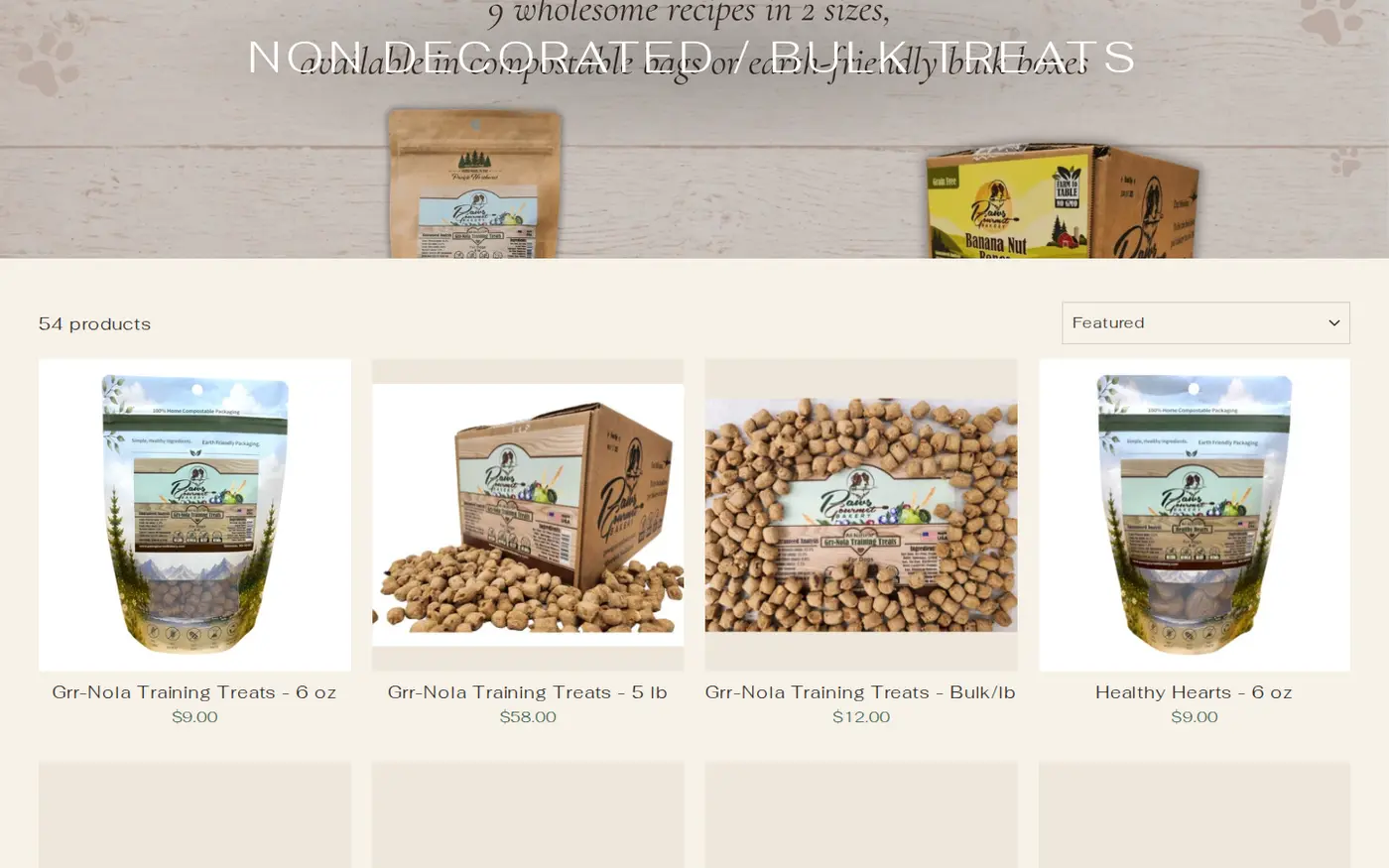
The range is wide for a small bakery. The navigation lists everyday favorites, seasonal and holiday collections, pastries, beverages, gift packages and custom treats, plus a bulk treats line that comes in home-compostable bags or 5-pound recycled bulk boxes. The brand says it uses grain-inclusive and grain-free recipes and never uses corn, wheat, soy, artificial preservatives or fillers.
Two details of the public shipping page matter for a wholesale story. Wholesale shipping uses a zoned flat-rate program based on order value and delivery region, with the rate shown at checkout. Consumer orders ship for a flat $15, and orders over $100 ship free. Many decorated treats are baked to order, so the page quotes 7 to 10 business days before shipping. Buyers get realistic expectations before they place a large order.
Paws’ B2B model: one store, two prices
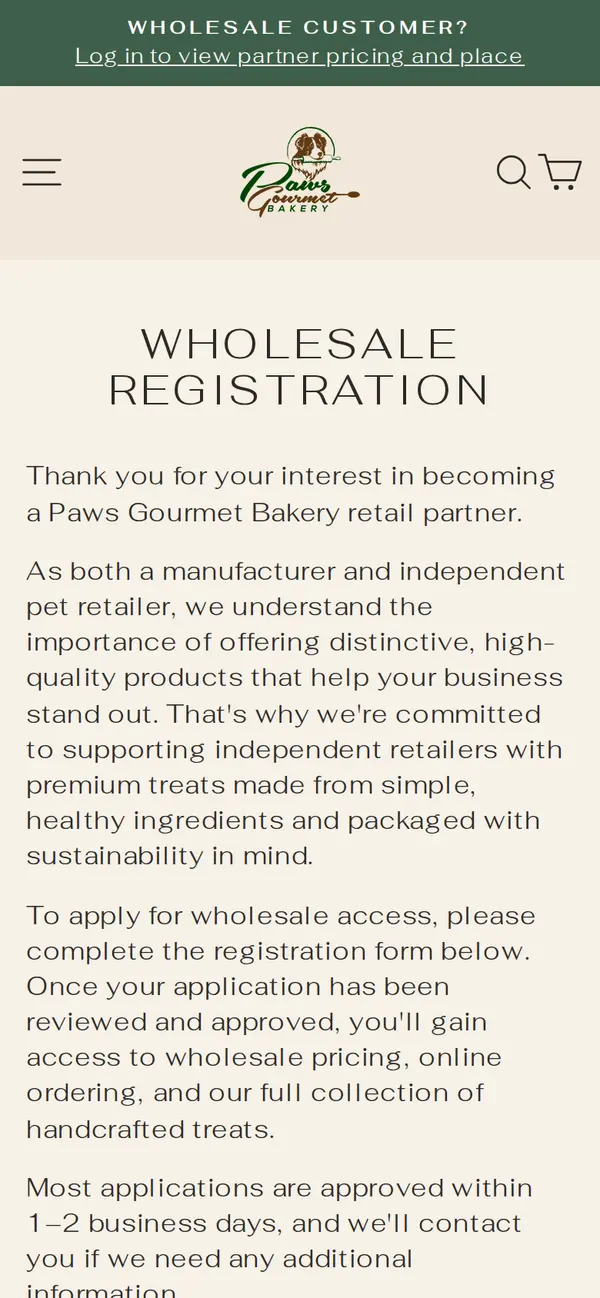
Paws is a hybrid store. It sells directly to dog owners and it supplies independent retailers, and it has chosen to do both on the same Shopify storefront instead of building a separate wholesale site. The wholesale page states the rule plainly: product prices displayed before login reflect retail MSRP, and approved wholesale accounts automatically see wholesale pricing once logged in.
Who can apply
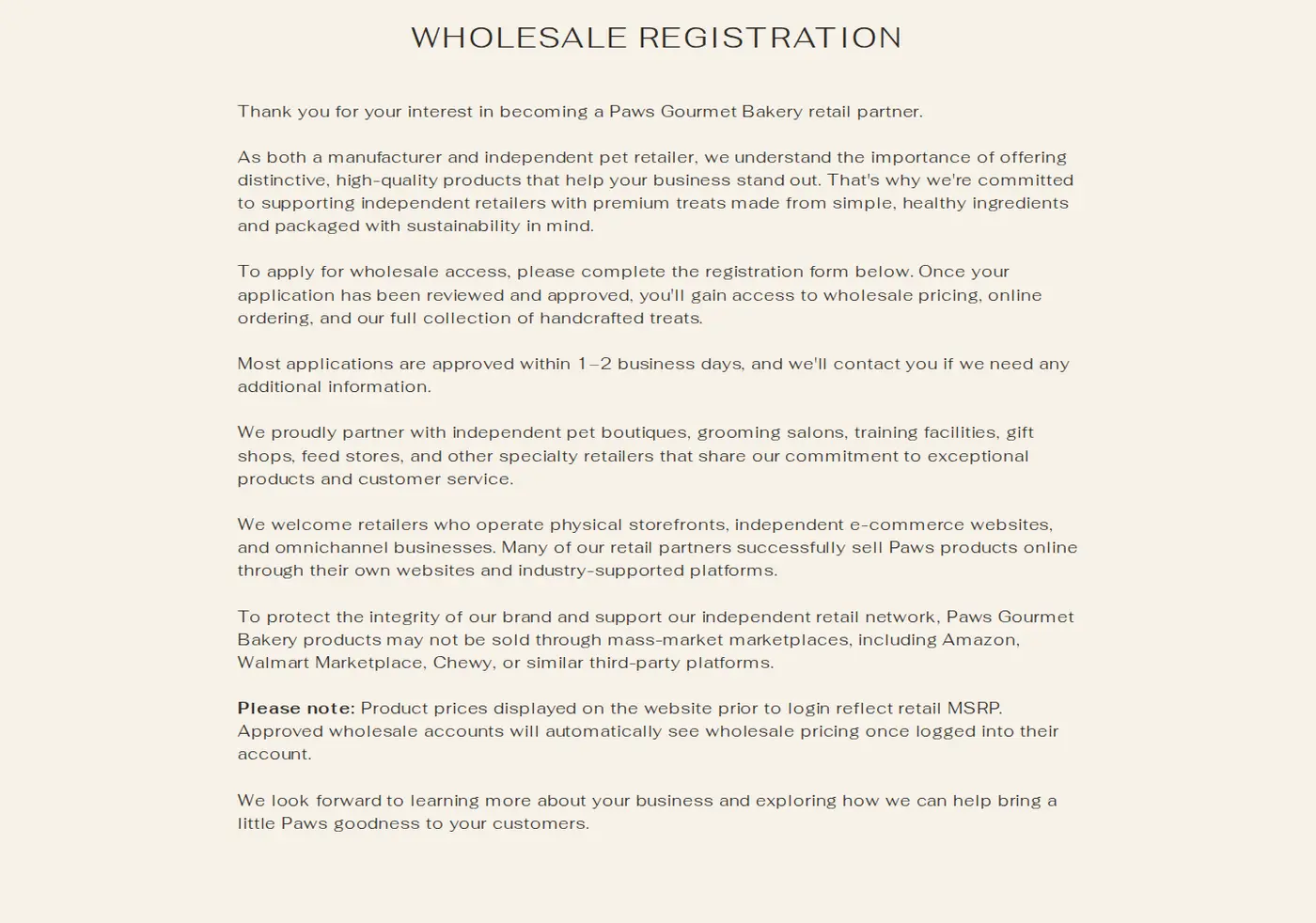
The registration page says the bakery partners with independent pet boutiques, grooming salons, training facilities, gift shops, feed stores and other specialty retailers. It welcomes physical stores, independent e-commerce websites and omnichannel businesses. It also sets a clear boundary: Paws products may not be sold through mass-market marketplaces such as Amazon, Walmart Marketplace or Chewy. Both the audience and the exclusions are written down before a retailer fills in a single field.
How the application works
A retailer completes the registration form. The page says applications are reviewed, that most are approved within 1 to 2 business days, and that the team will get in touch if it needs more information. Retailers who already had an account on the previous website do not need to apply again. They log in with their email address and receive a login code. This is a sign-in method that Shopify’s customer accounts support.
What happens to the channel
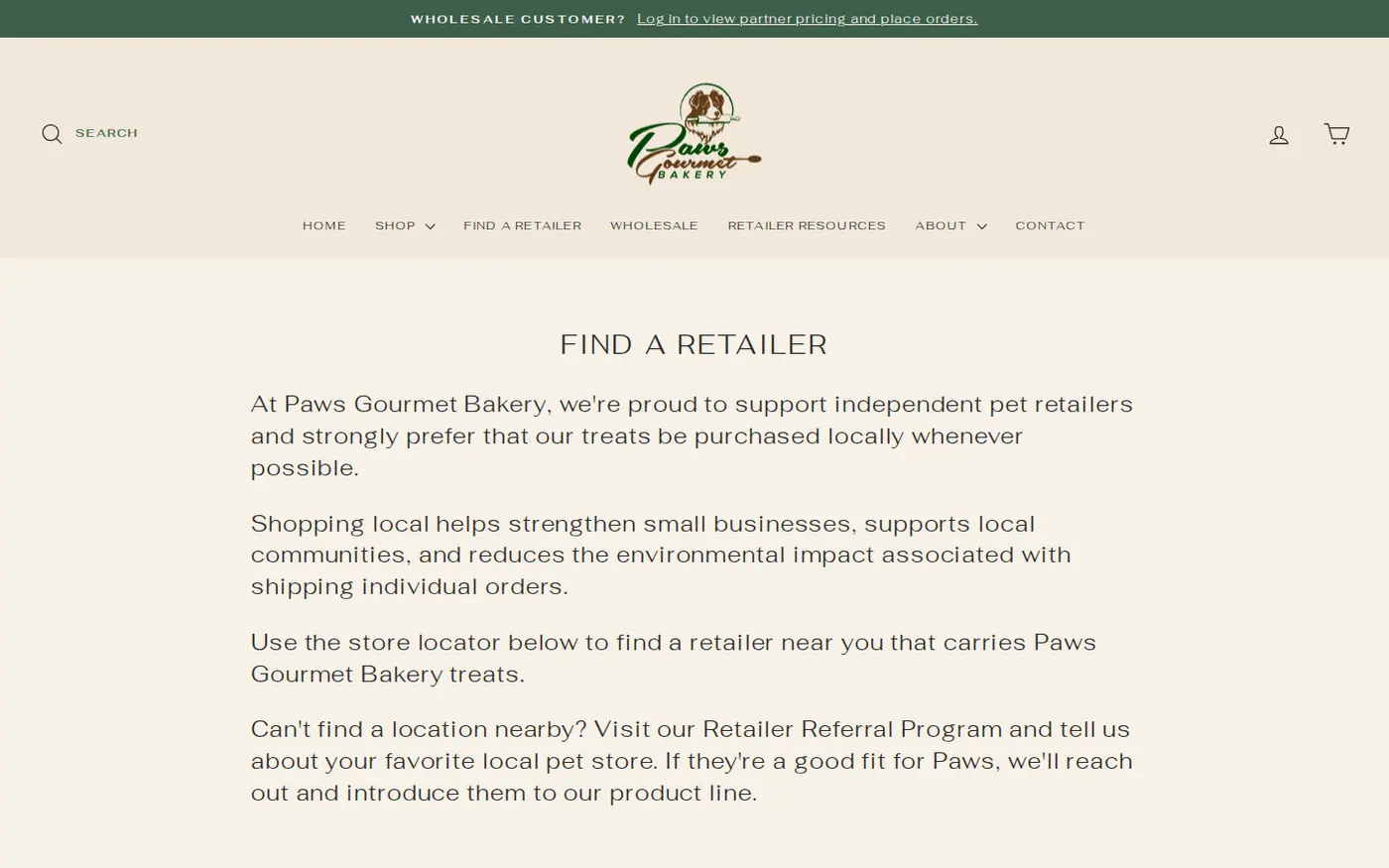
The bakery pairs wholesale with a “Find a Retailer” page. Shoppers are asked to buy locally where possible, and a retailer referral program lets customers name a favorite local pet store that Paws then approaches. Pairing wholesale with a store locator keeps the retailer network visible to shoppers and gives retailers a reason to carry the brand.
| Topic | Guest or consumer | Approved wholesale account |
|---|---|---|
| Prices | Retail MSRP on every page | Wholesale pricing once logged in (stated on the registration page) |
| Sign-in | Not needed to browse the catalog | Required to see partner pricing and place orders (stated in the site banner) |
| Payment | Standard checkout and Shop Pay installments | Net terms for set-up customers (stated in the merchant’s review) |
| Shipping | Flat $15, free over $100 | Zoned flat-rate program by order value and region |
| Where to buy | Online, or from a local retailer | Online, or through a third-party wholesale marketplace |
The table is built only from statements on the public pages and in the review. What an approved account actually sees after login is not visible from outside.
How the storefront handles wholesale
1. A banner that speaks to wholesale customers
A green bar at the top of every page reads “Wholesale customer? Log in to view partner pricing and place orders.” The main navigation adds Find a Retailer, Wholesale and Retailer Resources next to the usual shop menu. A retailer who lands on the homepage from a search engine finds the way in without scrolling.
2. A registration page that explains the deal
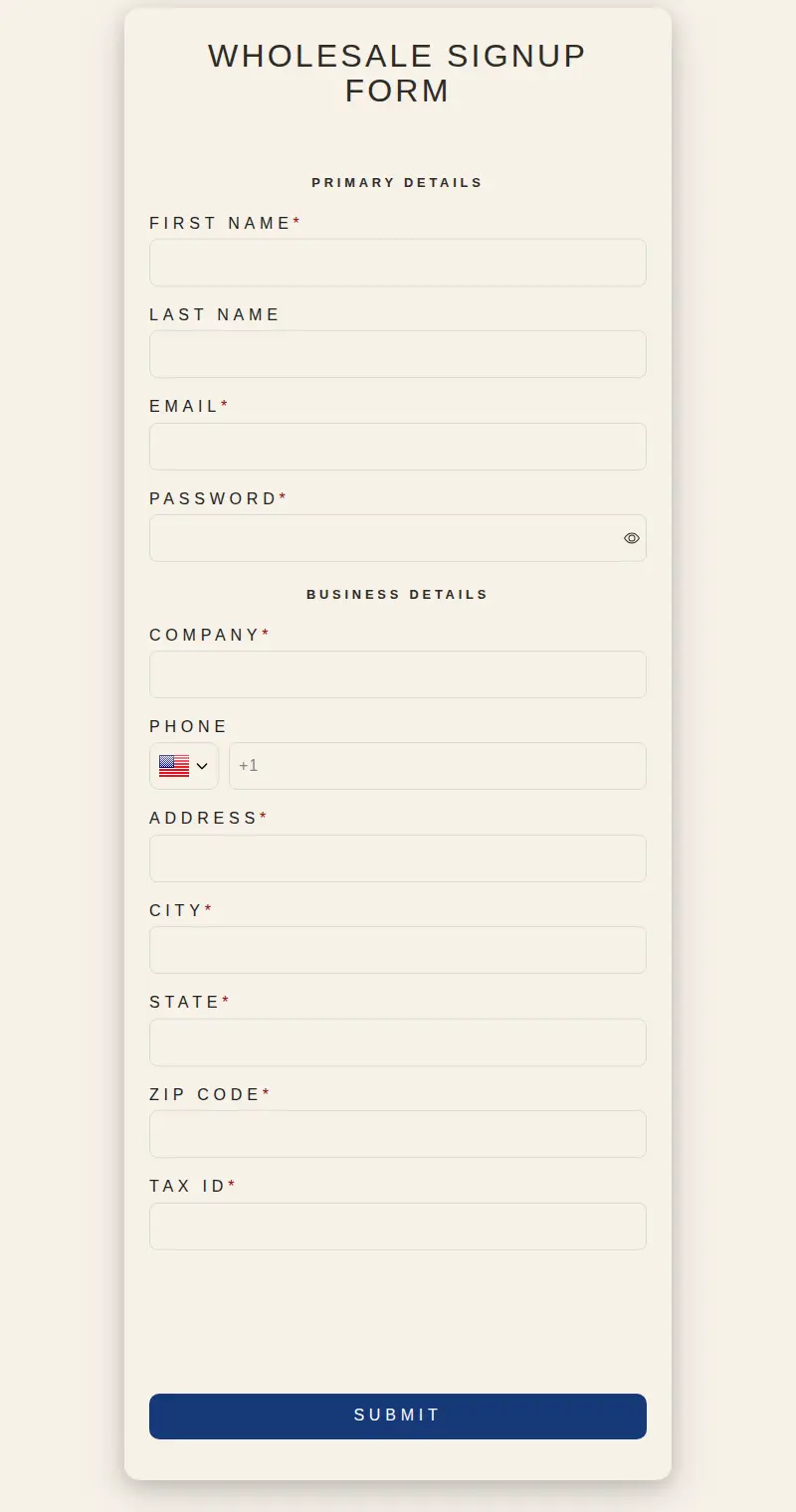
The page is mostly text. Before the form it explains who can apply, how long approval takes, which sales channels are allowed and what a visitor will see before login. The form itself asks for the usual business details and is protected against spam. A page like this can save a store owner from answering the same questions by email.
3. Retail prices that stay public
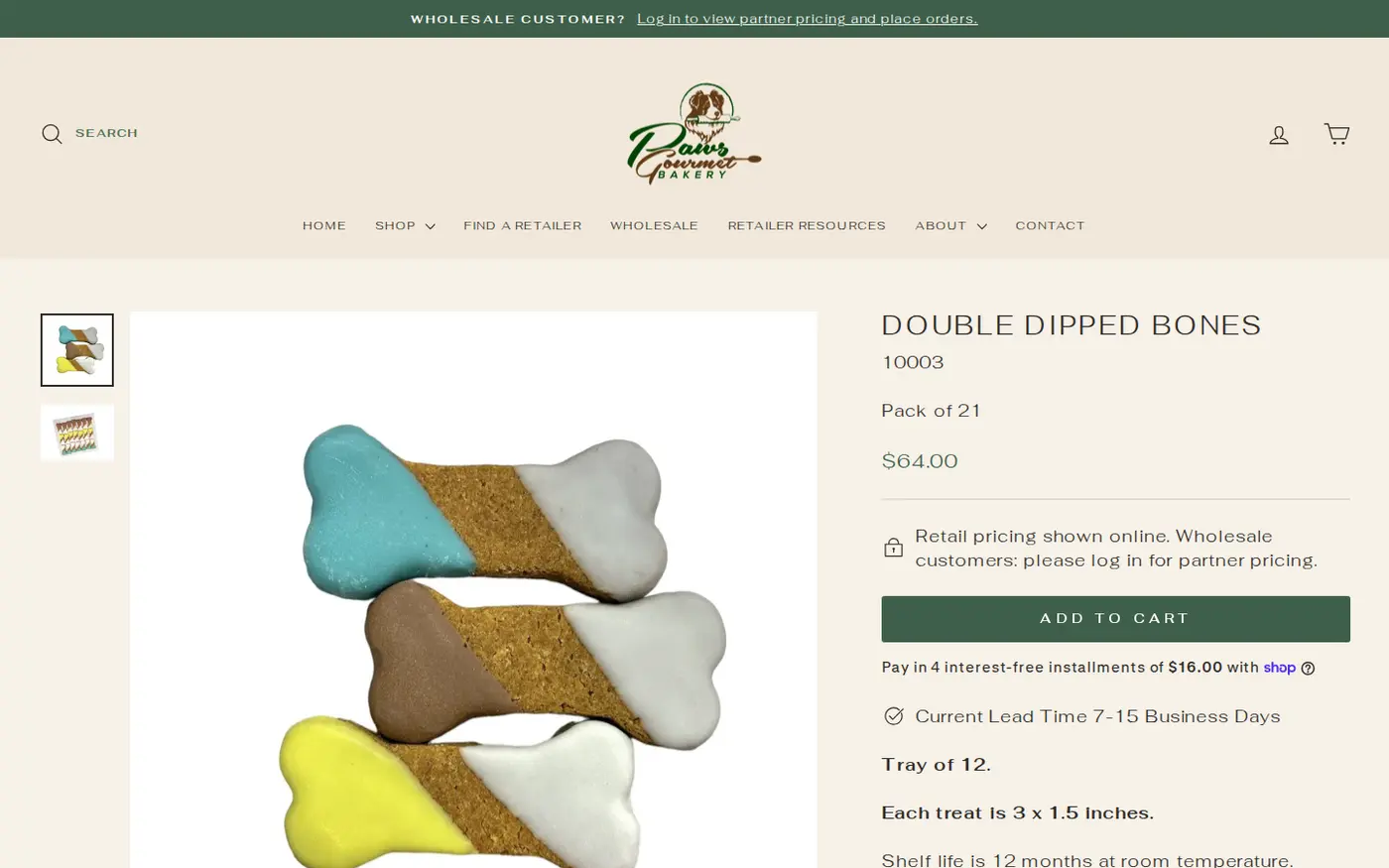
Product and collection pages show normal retail prices to guests. On the product page we opened, a line directly under the price says “Retail pricing shown online. Wholesale customers: please log in for partner pricing.” The same page shows the retail price, a Shop Pay installment note and the current lead time. Keeping the catalog public makes it easy to share, lets consumers buy without an account and lets a retailer check a product before applying. Wholesale prices appear only after login for approved customers, and we cannot see that view from the public side.
4. Lead times and shipping stated up front
Because many products are baked to order, the store tells every buyer how long production takes. The product page we opened shows a “Current Lead Time 7-15 Business Days” line, and the shipping page explains that decorated treats usually ship within 7 to 10 business days while non-decorated orders ship in 3 to 10. Wholesale shipping is a zoned flat rate based on order value and delivery region, and the rate appears at checkout. A retailer planning a seasonal reorder can work out the timing before applying.
Which BSS features power it
Paws installed BSS B2B Solution in February 2026 on the Advanced plan. Its review is for that app only, and the storefront shows no other BSS lock or quote surface. From the app configuration we could verify the following:
- Customer-tag pricing. The store has an active custom pricing rule that targets customers by tag, with some products excluded. Tagged retailers receive their wholesale price instead of MSRP at login. See set unique prices for wholesale customers and give tagged wholesale customers special prices.
- Net terms. Two net terms rules are active, one keyed to customer tags and one to chosen customers. The review says it “allows us to set up Net customers”. See set up net terms and Net 30 and other payment terms.
- Registration form with tagging. The active form has spam protection, tax exemption handling, tagging of new customers and email notifications switched on, and an auto-tag rule is active. See wholesale registration form with approval and onboard tax-exempt buyers with net terms.
The review also says the team helped make some features work with the shop’s theme. That is a normal part of a hybrid store, because the theme decides where prices, messages and buttons appear. The Solution documentation explains how custom prices appear to customers.
What the app does and what the theme does
It helps to separate the two layers. The banner for wholesale customers, the note under the price on the product page and the Find a Retailer page are content in the store’s theme. The switch from MSRP to partner pricing, the net terms and the tagging of approved buyers are app configuration. Paws’ review says the team helped make some features work with the theme, which is the glue between the two.
What this spotlight cannot show
We looked at the public store only. We did not see a logged-in view, an order, a customer list or any sales data, so we make no claim about prices, discounts, order sizes or results. The configuration facts above come from the app’s settings and are reported as categories.
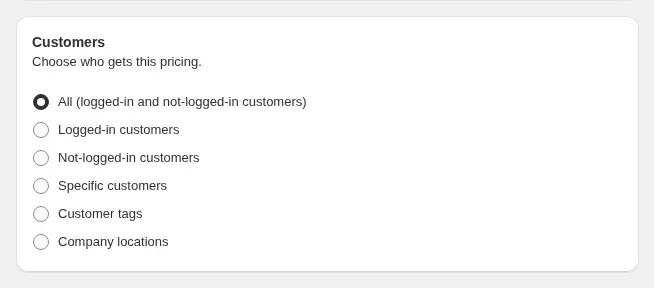
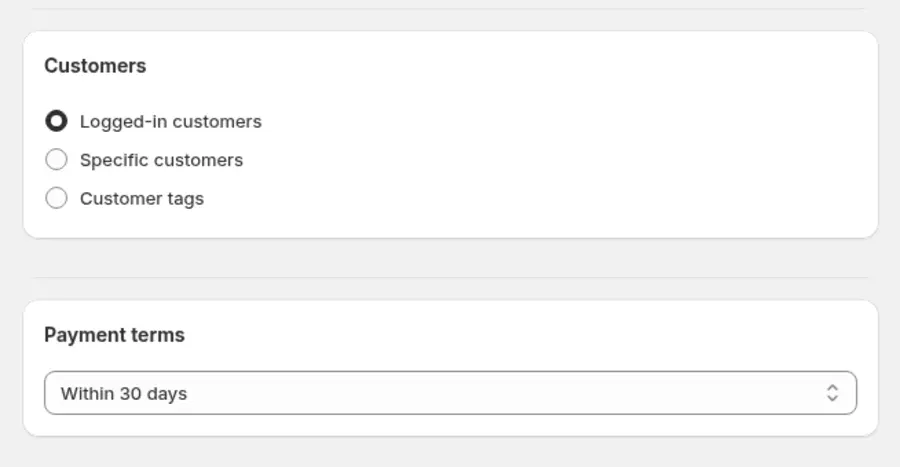
These two images show how the options look in the BSS admin. They are examples from the user guide, not Paws Gourmet Bakery’s own settings.
What other merchants can copy
- Keep one catalog. Use customer tags to switch prices, so product pages, reviews and photos stay in one place.
- Write the rules on the registration page. Audience, excluded channels, approval time and price display belong above the form.
- State an approval time and keep it. “1 to 2 business days” sets expectations and cuts follow-up emails.
- Protect your channel. A line about marketplaces and a Find a Retailer page support the retailers who carry you.
- Say what visitors see before login. Telling buyers the public price is MSRP avoids the question “why is the price different?”
- Offer net terms to approved accounts only. Keep payment terms tied to tags so they follow the buyer, not the product.
- Plan for returning customers. If you move from another platform, tell old accounts how to log in without re-applying.
The use case sell B2B and B2C from one Shopify store explains the trade-offs of a blended store in more detail.
The merchant’s review
We started using the BSS B2B Wholesale Solutions app to allow us to change our pricing for our wholesale customers at log in and it works great. It also allows us to set up Net customers, which is a convenient tool that we were excited to not have to work around.
Paws Gourmet Bakery, United States, review on the Shopify App Store, 5 of 5 stars, June 1, 2026, after three months of use
FAQ
Can I show retail prices to everyone and wholesale prices only to approved buyers on Shopify?
Yes. Paws does it with customer tags. Guests see retail prices, and a pricing rule gives tagged wholesale customers their own price after login. The approach is described in give tagged wholesale customers special prices.
Do I need a separate wholesale store?
Not necessarily. A single store works when your products are the same for both audiences and the price is the main difference, as with Paws. A separate store is easier if wholesale has a different catalog, language or checkout, or if you do not want retail prices anywhere near wholesale buyers. Many brands start with one store and split later.
How fast should I approve wholesale applications?
Paws tells applicants most are approved within 1 to 2 business days. Pick a number you can keep, publish it and use email notifications so the buyer is not left waiting. See approve, reject and notify wholesale applicants.
What are net terms on Shopify?
Net terms let an approved buyer pay an invoice after delivery, for example 30 days later. They apply to selected customers only, which is why tags help. See the net terms guide.
Does this story show results?
No. It reports no sales or customer numbers, because we have none from the merchant. It describes public storefront behavior, configuration facts and the merchant’s own public review.
This store spotlight is based on Paws Gourmet Bakery’s public website and its public review on the Shopify App Store, as of 2026-10-05. Screenshots show the public storefront. Admin images are labelled examples from the BSS user guide.