


Aria Vetri, a US supplier of glazing hardware for shower enclosures and commercial doors, tells every visitor to log in for pricing. Its Shopify store shows the full catalog with a Login for pricing link instead of a price, and a Register New Account link leads to a business registration form. This spotlight shows how the storefront works and which BSS features sit behind it.
Key takeaways
- Aria Vetri’s catalog is public, but prices are not: a bar at the top of every page says Log in to your account for pricing.
- The business policy page states that all customers must register for an account to make purchases.
- The registration form asks for a company role and a sales tax exempt number, which fits a trade supplier selling to contractors and fabricators.
- The merchant’s public App Store review names custom pricing and customer registration as the features it uses.
About Aria Vetri
Aria Vetri presents itself as a glazing hardware supply business. The catalog is organised into four main ranges: Shower, Commercial, Casma and Glazing Supplies, with 57 collections underneath, from clamps, hinges and pivots to door closers, locks, patch fittings and channels. The Commercial range alone lists more than two hundred products and the Casma range nearly two hundred.
The product copy is technical and specific. One sliding door kit, for example, is described as heavy duty and supporting glass weighing up to 660 pounds, with ball-bearing rollers and frontal height adjustment. Another product page lists a spindle size, door weight and width limits. That is how a trade supplier writes: a buyer is an installer or a fabricator who needs to know the load rating before ordering.
The store also tells you where the company is physically present. A homepage banner announces a new branch location with will-call pickup in Fairfax, Virginia, and a product page offers pickup in Baltimore, Maryland. For a supplier of heavy hardware, a will-call counter is part of the service, and it is a reason a buyer would register an account rather than check out as a guest.
Aria Vetri’s B2B model: a public catalog and a private price list
The Business Policies page opens with the rule that frames the whole store: all customers must register for an account to make purchases. Customers may pay with a major credit card or on an open account. New accounts are set up with terms to pay by credit card, and new customers may request credit using a credit application. Once an open account is approved, buyers get a single monthly payment covering their purchases, payable by ACH, wire transfer or check.
This suggests a store built for contractors, glaziers and fabricators who buy repeatedly and pay on terms. A guest cannot buy, but a guest can browse the catalog and read specifications, so a buyer can prepare a quote before they apply. The rule that keeps the price list private is repeated in the header on every page.

How the storefront handles wholesale
A pricing notice on every page
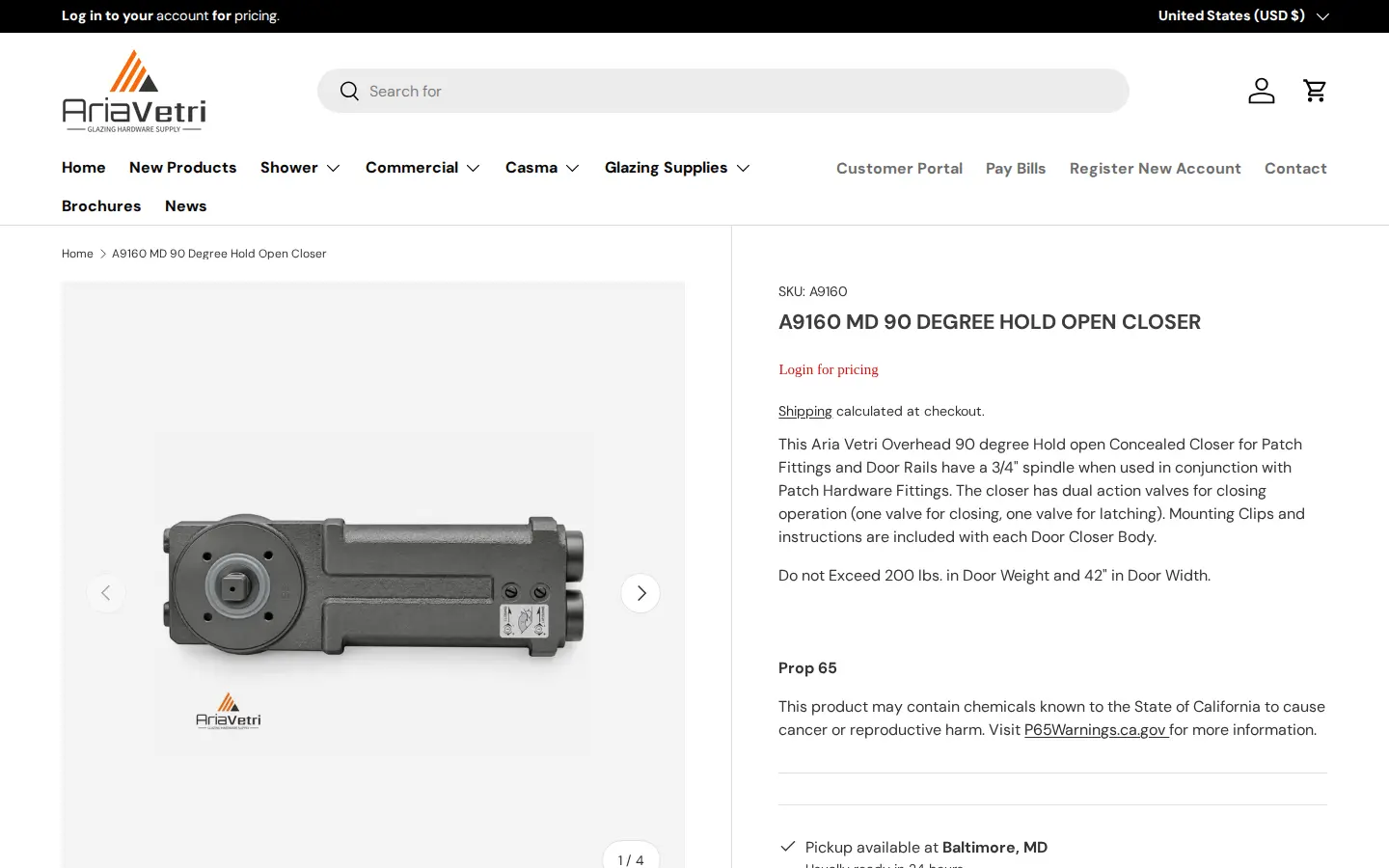
A black bar at the top of the store reads Log in to your account for pricing. It is the first thing a visitor sees, so nobody has to guess why a price is missing. Next to it, the menu offers four account links: Customer Portal, Pay Bills, Register New Account and Contact. Register New Account is the link for a new buyer, while Customer Portal and Pay Bills serve existing customers.
Login for pricing on collections and products
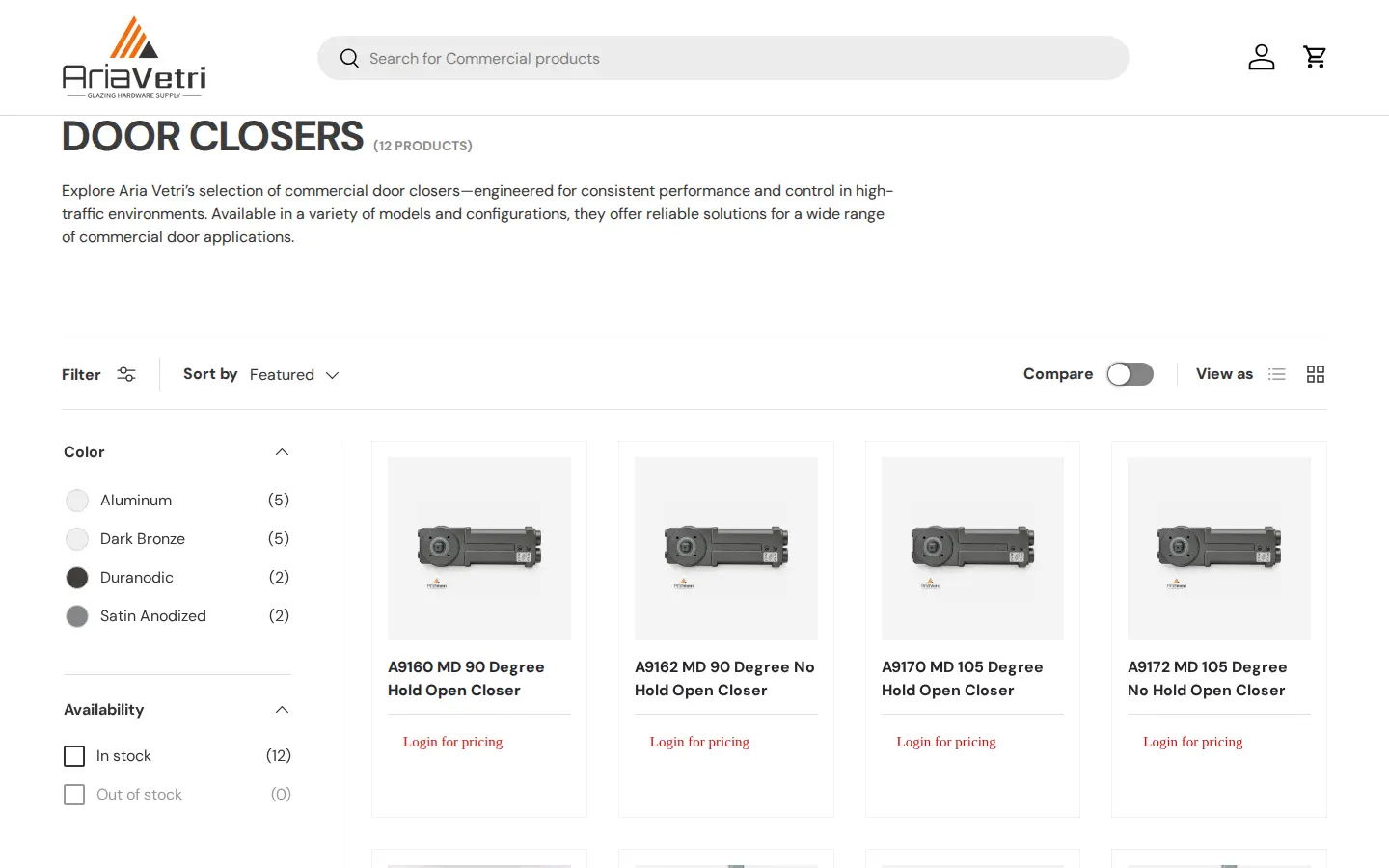
On a collection page, each product card shows the image, the name and a Login for pricing link in place of the price. Filters by colour and availability still work, so a buyer can narrow twelve door closers to the finish they need before they log in.
On a product page, the pattern continues. The SKU, the description, load limits and fitting notes are public. The price position holds a Login for pricing link, which points to the account login with a return to the product.
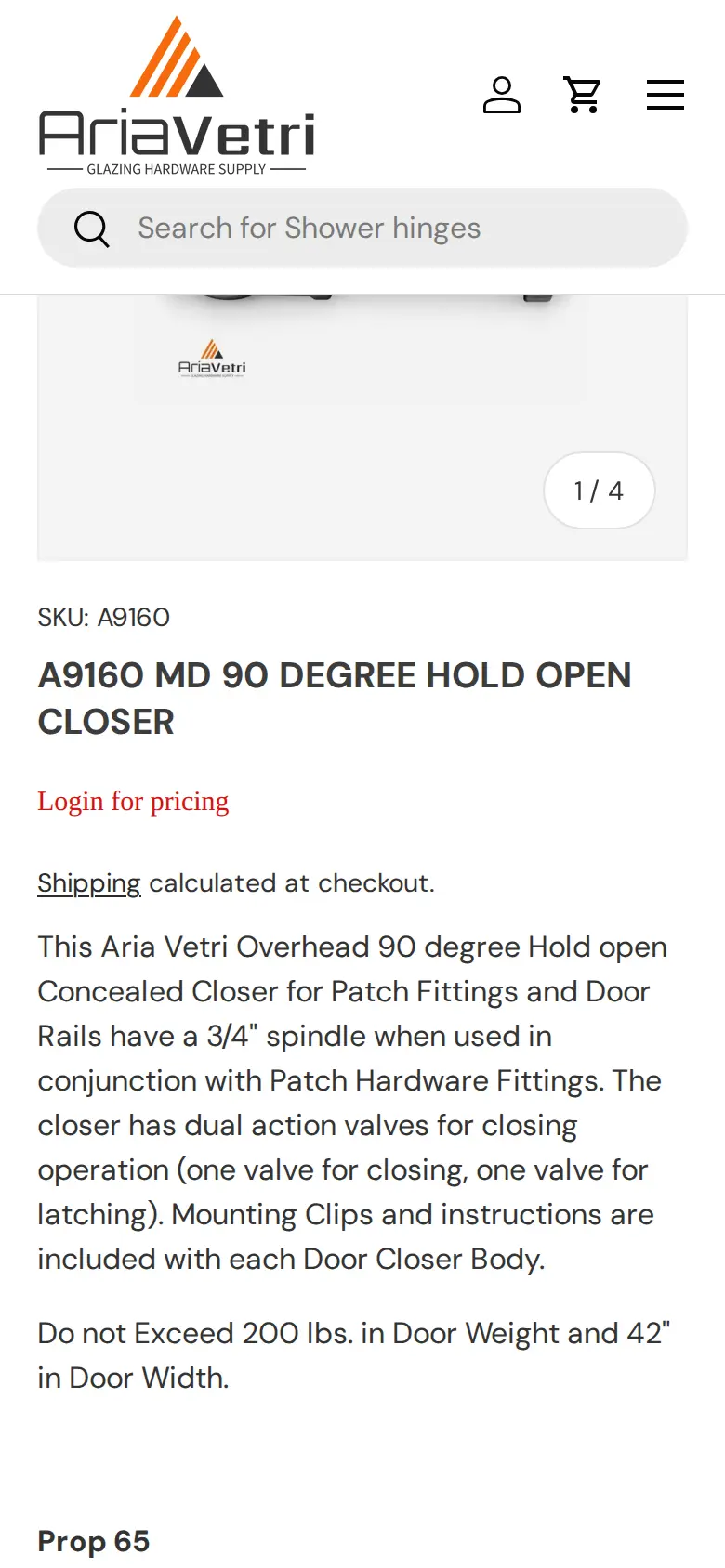
The mobile view keeps the same order. The pricing notice sits at the top, and the link sits under the title and SKU.
A business registration form
The Register New Account link opens a form titled Business registration. It asks for first name, last name, email and password, then company name, phone, website and a field called Your company function, where the buyer chooses a role such as procurement manager, buyer, estimator or project manager, owner or president, or sales manager. After that come country, street, city and zip code, and then three tax-related fields: a sales tax exempt number, a W-9 or EIN, and a resale certificate, with a note that sales tax applies if the certificate is not on file.
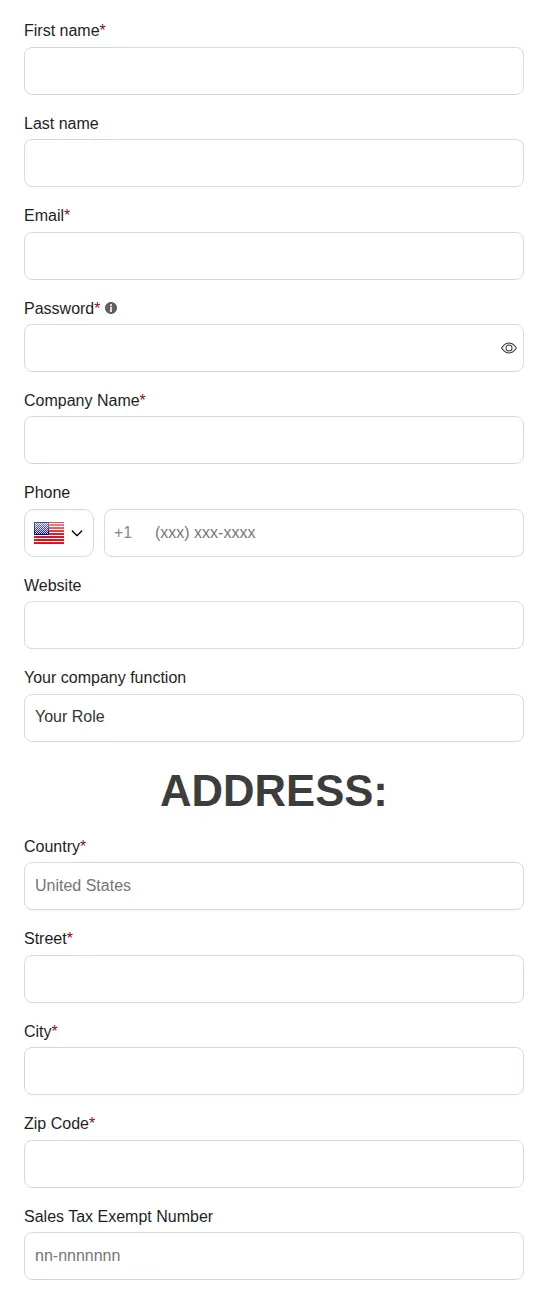
The role question is the most interesting. It tells the sales team who is applying, whether a purchasing manager or a project estimator, and it helps them decide who to call. The tax fields serve a different goal: a supplier that sells to contractors needs to know whether to charge sales tax, and a resale certificate on file settles that before the first order.
For the steps behind a form like this, see the BSS guide on building a wholesale registration form and the use case on an industrial spare parts B2B store. The registration also ties in with onboarding tax-exempt buyers with net terms.
A customer portal for company accounts
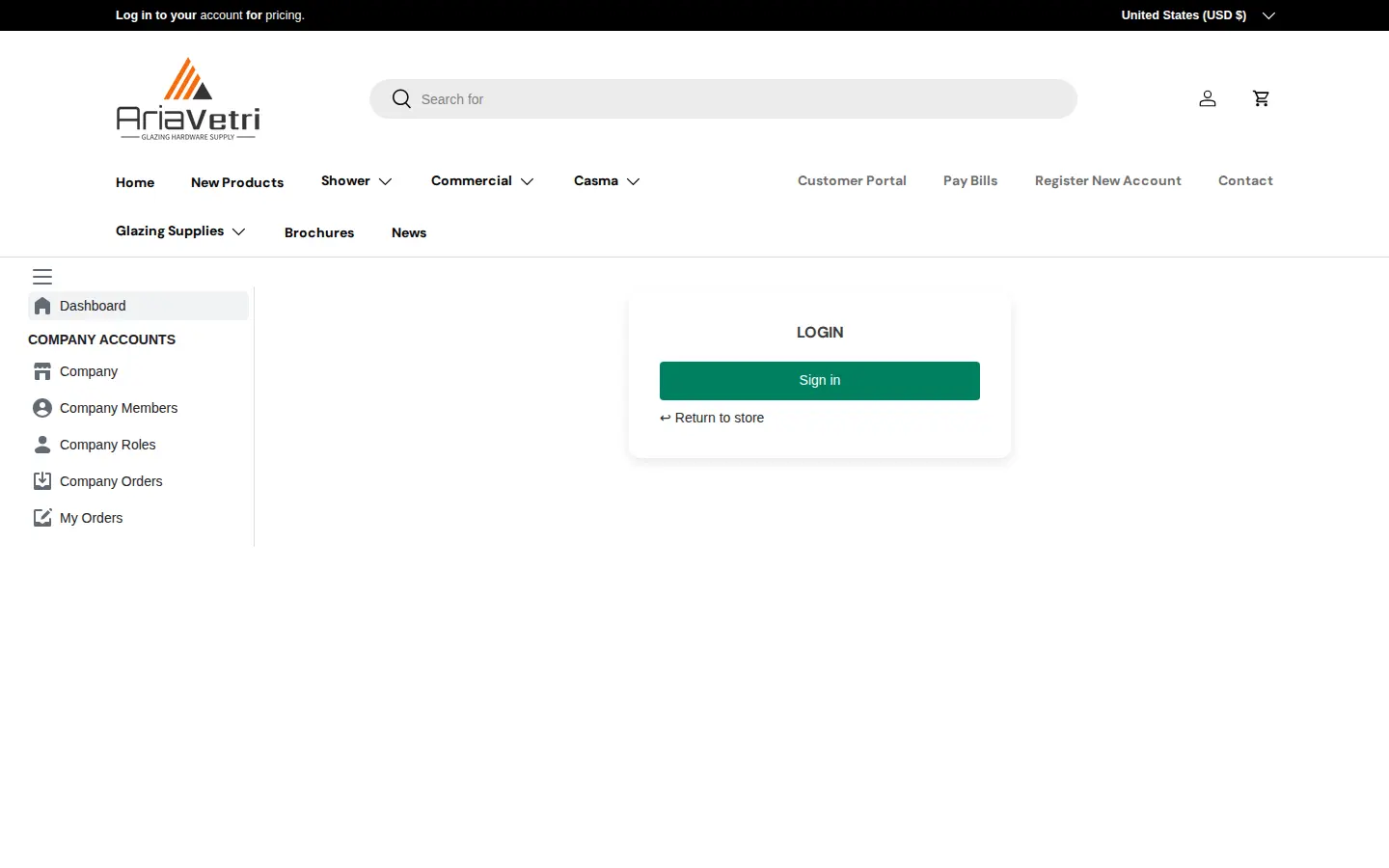
The Customer Portal link opens a page with a company accounts menu: Company, Company Members, Company Roles, Company Orders and My Orders. A guest sees only a Sign in button. This is a sign that Aria Vetri thinks in terms of company accounts, where several people at a contractor each have a login and a role. We do not know which app powers the portal, so we do not attribute it.
Which BSS features power it
Aria Vetri’s domain could not be matched to a BSS production record by store name, so we could not read configuration flags for it. What follows comes from the storefront source and from the merchant’s own review.
| What buyers see | BSS feature | How we know |
|---|---|---|
| Login for pricing on collections and product pages | BSS B2B Lock (price lock) | The links carry a BSS B2B Lock login-required marker in the page source |
| Business registration form with role and tax fields | Registration form (BSS B2B Solution) | The form uses the BSS form container, and the merchant’s review names customer registration |
| Special prices for approved customers | Custom Pricing | The merchant’s review names the custom pricing feature; BSS custom-price scripts load on the storefront |
BSS B2B Lock: the Login for pricing link
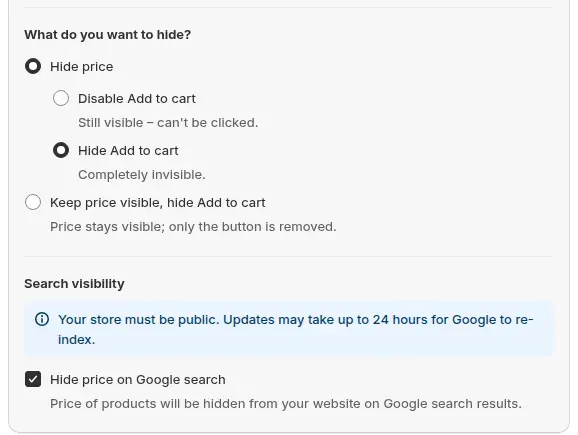
The Login for pricing link is a price lock. In BSS B2B Lock you choose whether to hide the price, the Add to cart button or both, and which products the lock applies to. Aria Vetri shows a link that takes the visitor to the login page and then back to the product, which is the shortest path from curiosity to a priced page. BSS B2B Lock is a storefront control, so it is best seen as a way to manage what visitors see and not as a guarantee that a price can never be found.
See the use case on hiding wholesale prices from guest visitors and the BSS guide on hiding prices from guest users.
Registration forms
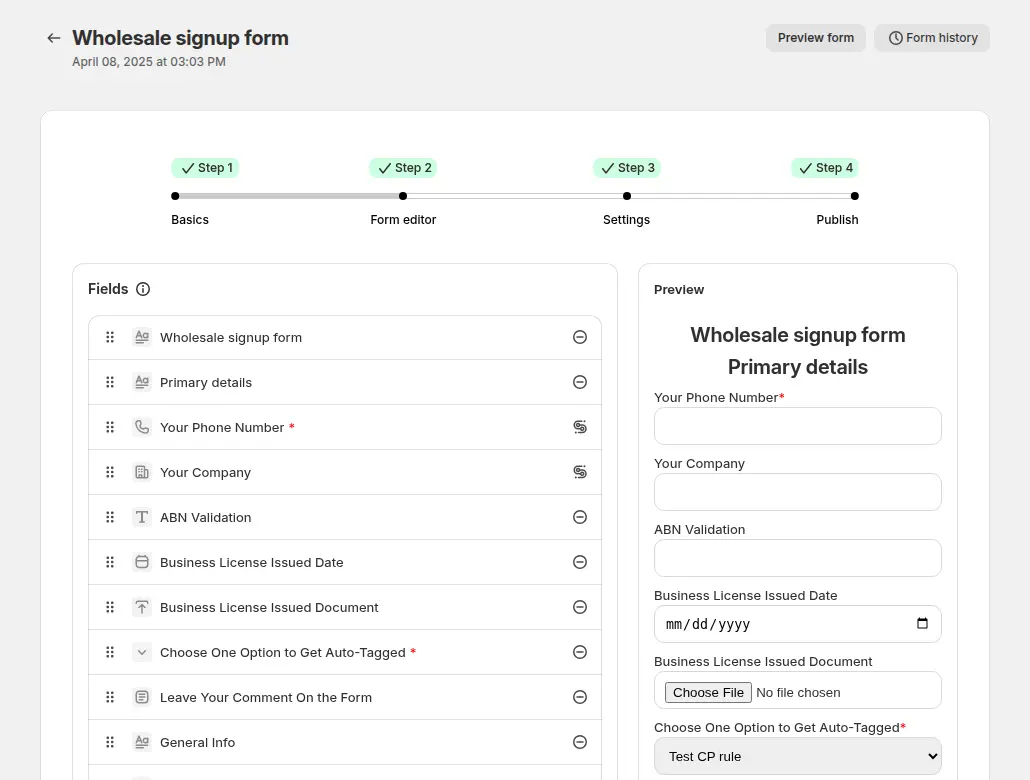
The review says the merchant uses customer registration. A BSS registration form can include text, dropdown, checkbox, file upload and tax ID fields, so a form like Aria Vetri’s company-function dropdown and certificate fields can be built in the form editor. A store can approve applicants manually, so the team can check a resale certificate before it opens an account.
Custom pricing
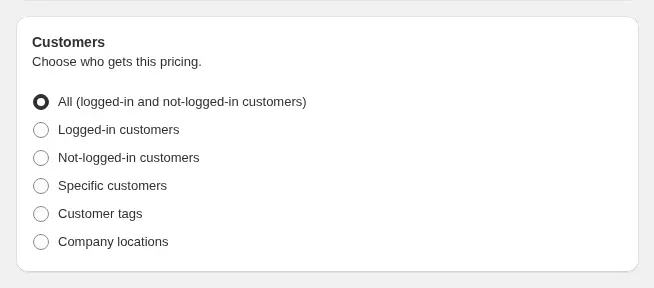
Custom Pricing is the other feature the review names. A rule gives a chosen group a chosen price: all customers, logged-in customers, guests, specific customers, customer tags or company locations. For a supplier with contractor accounts, a rule that targets a customer tag or a specific customer is the usual way to give each trade account its own price level.
See wholesale price by customer tag, personalized B2B wholesale pricing and the BSS guide to setting unique prices for wholesale customers.
What other merchants can copy
- Say why the price is missing. A notice at the top of every page, such as Log in to your account for pricing, saves a support email.
- Keep specifications public. Load ratings, sizes and fitting notes help a buyer decide on a product before they register.
- Ask for a role. A company-function dropdown tells your sales team who is applying and how to reach them.
- Collect tax documents at sign-up. A sales tax exempt number or resale certificate on file removes a manual step from the first order.
- Publish your credit policy. If you offer open accounts, say how a buyer applies and how payment works.
- Offer a portal for company accounts. Contractors want several people on one account.
If you are building a trade store from scratch, read a wholesale store from scratch on Shopify or start from the Shopify B2B guide.
Aria Vetri’s review
Aria Vetri’s public review of BSS B2B Wholesale Pricing, the App Store name of BSS B2B Solution, is a five-star review with an edited date of March 8, 2025, from a merchant who had used the app for over a year. We quote it in full.
This is a great add on to Shopify. The custom pricing feature as well as customer registration is what I’ve used. It enables us to setup B2B functionality for our store. The support has been great and quick to address the issues as they have come up. Overall a good app.
Aria Vetri Hardware Supply (United States), 5-star review of BSS B2B Solution (listed as BSS B2B Wholesale Pricing), March 8, 2025 (edited), over 1 year using the app. Read it on the Shopify App Store
The review lists two features and one outcome: custom pricing and customer registration give the store B2B functionality. It also credits support for being quick when issues came up, which matters for a store where pricing is the core of the business.
FAQ
How can a Shopify store require login to see prices?
Use a price lock that replaces the price with a login link and sends the buyer back to the product after sign-in. Aria Vetri uses a Login for pricing link on collections and product pages, plus a notice at the top of every page. In BSS B2B Lock you can hide the price, the Add to cart button or both.
What should a trade supplier ask for on a registration form?
Ask for the company, a contact role and a tax document. Aria Vetri asks for a company function, a sales tax exempt number, a W-9 or EIN and a resale certificate. A BSS form can include dropdowns, text fields and file uploads for this.
Can I keep specifications public and prices private?
Yes. Aria Vetri shows SKUs, descriptions and load limits to everyone and hides the price until login. Public specifications help buyers choose and help your catalog be found, and the price lock keeps the number for approved accounts.
How do I offer open account terms to some buyers?
Publish a credit policy and a credit application, as Aria Vetri does. In BSS B2B Solution, Net Terms can offer payment terms to selected customers by tag, and a Custom Pricing rule can set each account’s price level.
Do I need a separate portal for company accounts?
If several people at a contractor need to order, a company accounts area with members and roles helps. Aria Vetri links a Customer Portal with company, members, roles and orders in its menu.
This store spotlight is based on Aria Vetri’s public website and its public review on the Shopify App Store, as of 2026-10-05. Screenshots show the public storefront. Images labelled Example configuration in BSS B2B Solution come from the BSS user guide and are not the merchant’s admin.