

The Yellow Bells is an Indian brand from Bhuj, Kutch, that sells handmade ethnic wear to shoppers and runs a reseller program for business buyers. It offers three reseller routes (marketplace sellers, dropshippers and boutique owners), a wholesale registration form that asks for business proof, and BSS B2B Solution rules that give tagged resellers their own prices.
Key takeaways
- A handmade-goods brand can serve several kinds of resellers by naming them: online sellers, dropshippers and home boutiques each get a clear description.
- The registration form asks the applicant to pick Reseller or Wholesaler and to upload business proof, which pre-qualifies the lead.
- Both enabled Custom Pricing rules (100%) target customers by tag, and a value-based volume rule rewards bigger baskets.
- The store was set up in August 2026, so this spotlight shows what a fresh B2B launch can look like within days.
About The Yellow Bells
The Yellow Bells describes itself, in its page title, as an online shop for ethnic wear and Kutchi work dresses from Bhuj in Kutch, Gujarat. The catalog focuses on handmade and handcrafted pieces: mirror work and patch work tops, kurtis, kaftans, shirts, jackets, co-ord sets, men’s kurtas and shirts, kids’ wear, accessories (bags, pouches, keychains and neck pieces) and home decor. Collections follow the season, for example a Navratri edition on the homepage.
Pricing and shipping are written for both domestic and international buyers. Prices are shown in Indian rupees with a country and currency selector, the top banner offers cash on delivery in India and free shipping above 3,000 rupees, and a second banner offers free worldwide shipping above 200 US dollars. The announcement bar also says “International & Wholesale Orders: Contact Us”, which tells a business buyer where to go. The homepage hero reads “Best artisanal wonders, handmade with love”.
The B2B model: three kinds of resellers
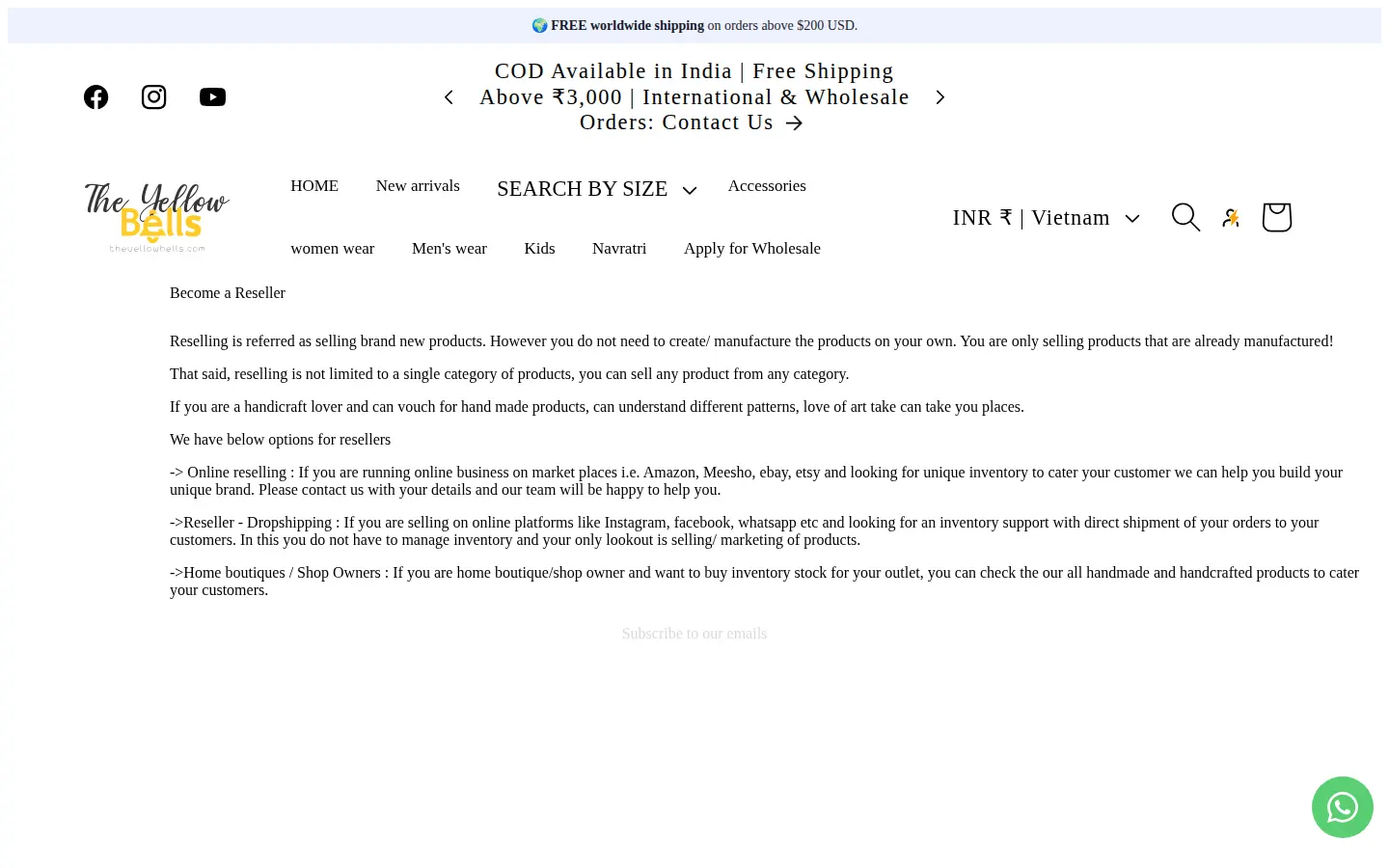
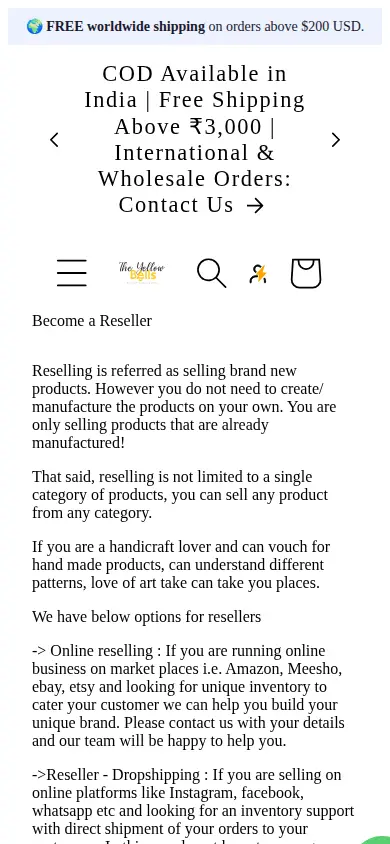
The “Become a Reseller” page is the clearest explanation of the model. It first defines reselling in simple terms (you sell brand new products that are already manufactured), then lists the options the brand offers:
- Online reselling. For sellers on marketplaces such as Amazon, Meesho, eBay or Etsy who want unique inventory and a brand of their own.
- Reseller and dropshipping. For people selling on Instagram, Facebook or WhatsApp who want inventory support with direct shipment to their customers, so they only handle selling and marketing.
- Home boutiques and shop owners. For stockists who want to buy inventory for a physical outlet.
The footer adds two more doors, “Become a Franchisee” and “B2B Login”, under a “Partner with us” heading, and the header has an “Apply for Wholesale” item. A reseller can read about the options, then apply, then log in, all from the same navigation.
| Route | Who it is for | What the store needs to give them |
|---|---|---|
| Online reselling | Marketplace sellers on Amazon, Meesho, eBay or Etsy | Unique inventory, a trade price and a clear minimum order |
| Reseller and dropshipping | Social sellers on Instagram, Facebook or WhatsApp | Direct shipment to their customers and no stock to hold |
| Home boutiques and shop owners | Stockists buying for an outlet | Volume-based prices on a mixed basket of styles |
How the storefront handles wholesale
1. The application form
The “Wholesale Customer Registration” page is a BSS B2B Solution registration form with two groups of fields. Primary details cover first name, last name and email. Business details start with a required “Business Type” choice between Reseller and Wholesaler, followed by a required “Business Proof” file upload, then company, phone, address, city, country and zip code. A link below the form, “Already have an account – Login”, sends existing partners to the login page.
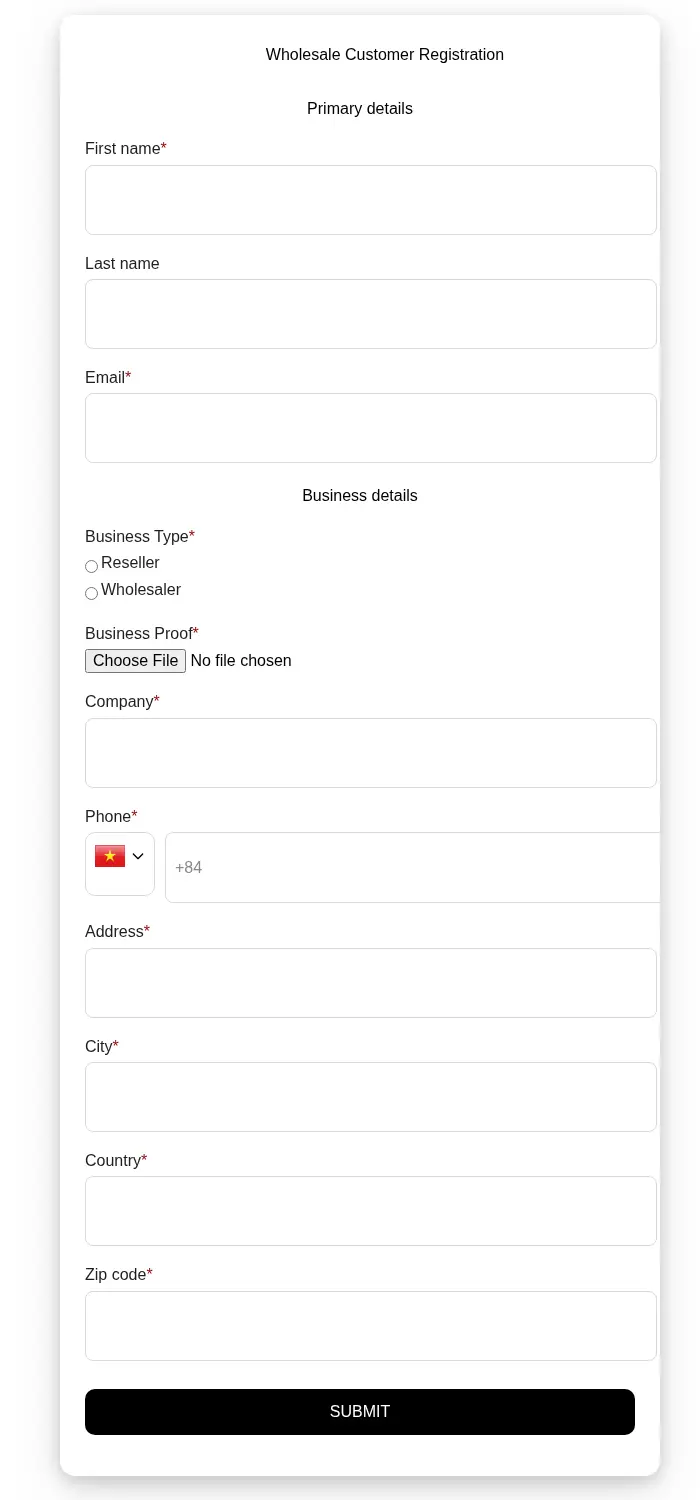
The Business Type question is a smart choice for a brand with several routes. It tells the team whether the applicant is buying to resell or to supply others, so the first reply can be specific. The Business Proof upload turns the form into a screening step: a document or a picture of the business is far more informative than a company name typed into a box.
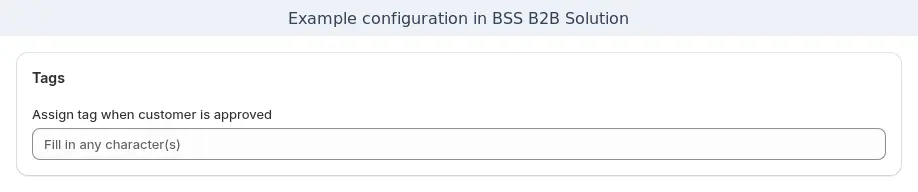
In the store’s configuration the form is active, assigns a customer tag when an applicant is approved and sends notification emails. A conditional logic rule exists but is switched off, which is a common state for a new store: build the simple form first, add logic later. See our use cases on a wholesale registration form with approval and on approving and notifying applicants.
2. Mobile
Resellers often browse from a phone, so the Become a Reseller page matters on a small screen too. The page is plain text with the retail header above it, which keeps it fast to load and easy to read.
3. Retail stays public, reseller prices follow the tag
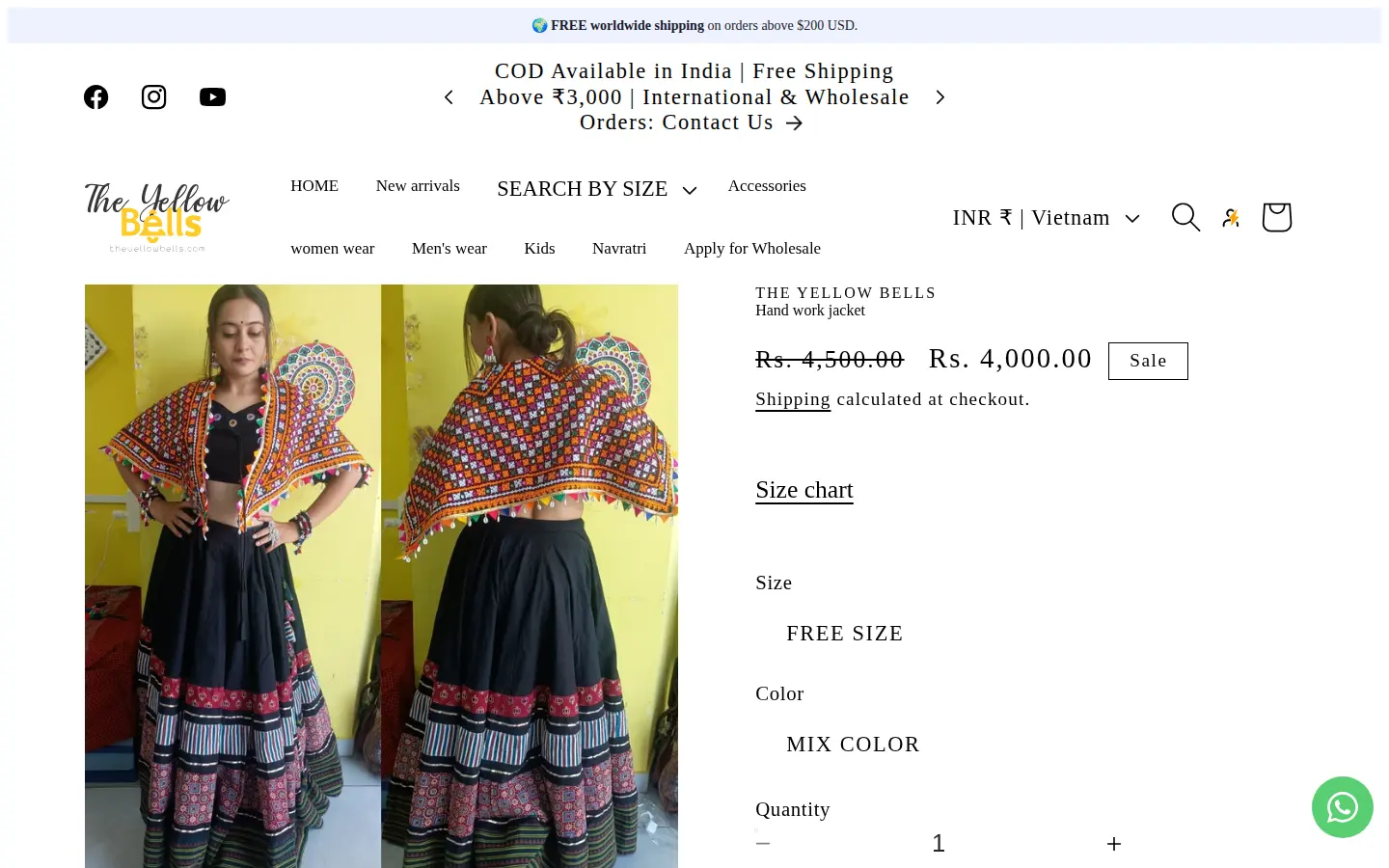
Retail prices are public: a hand work jacket, for example, shows its rupee price to every visitor, with customer reviews underneath. The reseller price is not a second listing. It is the same product with a different price for the customer who is logged in and tagged. That is why the store can use a single catalog for shoppers, marketplace sellers and boutiques, and why a new collection is available to resellers the day it is published.
4. Prices that depend on the customer
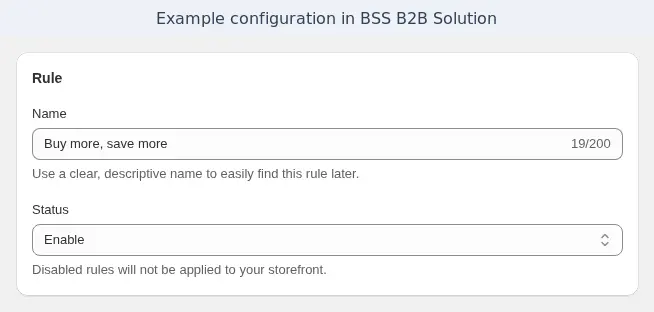
After approval, tag-based rules apply. The store has two enabled Custom Pricing rules, both targeting customers by tag and both using a percentage discount across all products. Because the rules target tags, a reseller group can be given one rate and a wholesaler group another, without changing a single product price.
Which BSS features power it
- Registration form: one active form with business type, business proof upload, tag on approval and notification emails.
- Custom Pricing: two enabled percentage rules for tagged customers, covering all products (100% tag-based). See wholesale prices by customer tag.
- Volume pricing: one enabled rule for tagged customers that works on order value rather than quantity, so the discount grows with the size of the basket. See tiered pricing and quantity breaks and combining custom and volume pricing.
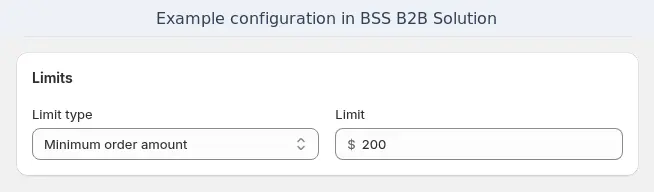
- Order limits: one enabled minimum order amount rule. See minimum order quantity and value.
- Auto tags: two enabled rules that tag customers automatically. See auto-tagging customers.
The reviewer also mentions “layered discounts”, which in BSS terms means that custom pricing and volume pricing apply one after the other: the volume discount is calculated on the price after the custom rule. Our guide on rule priority explains the order.
The reseller’s journey, step by step
- A visitor reads the Become a Reseller page and decides which route fits.
- They open the wholesale registration form, choose Reseller or Wholesaler and upload business proof.
- The team reviews the proof. On approval, the app assigns a customer tag and sends notification emails.
- At the next login, tag-based percentage rules apply to every product, and the minimum order amount applies at the cart.
- As the reseller buys more, a value-based volume rule increases the discount, and auto-tag rules can move the account between groups.
None of these steps needs a developer once the rules exist. The same configuration will keep working as the store adds new collections for each festival season.
What other merchants can copy
- Name your reseller types. Explaining marketplace sellers, dropshippers and boutiques on one page helps each visitor see where they fit.
- Ask for the business type and proof. A dropdown or radio plus a file upload is the cheapest form of lead qualification.
- Use a value-based volume rule for mixed baskets. When resellers buy many different styles, a discount on order value is fairer than a per-style quantity break.
- Set a minimum order amount. For handmade goods with high handling cost per order, a minimum protects margin.
- Launch simple, then add logic. The Yellow Bells has a conditional logic rule ready but switched off.
- Put the B2B login in the footer. Returning partners should not have to find the retail account page.
Start from the guides, or book a call and we will map your reseller types, tags and rules.
Book a 30 min call Browse use casesWhat The Yellow Bells says about it
The Yellow Bells posted a public App Store review for BSS B2B Solution on August 31, 2026, rated 5 out of 5, after four days of use. An excerpt:
Wonderful support, all my problems solved for b2b customers and layered discounts, excited to explore new opportunities with wonderful support. […]
The Yellow Bells, 5 stars, August 31, 2026, BSS B2B Solution reviews on the Shopify App Store (excerpt, quoted verbatim, shortened with […])
A four-day-old review is not a long-term result, and we do not present it as one. It is useful for another reason: it shows what a merchant cares about on day four, which is getting B2B customers and layered discounts working. The longer-term picture will come with time.
The Yellow Bells wholesale: frequently asked questions
How can a handmade brand screen reseller applications?
Add a business type choice and a file upload for business proof to the registration form. The Yellow Bells asks applicants to choose Reseller or Wholesaler and to upload proof before the team approves them.
Can I offer different rates to resellers and wholesalers?
Yes. Tag each group on approval and target one pricing rule to each tag. The Yellow Bells has two tag-based percentage rules for this purpose.
What is a value-based volume discount?
It is a quantity break measured by the amount in the cart instead of the number of units. BSS B2B Solution supports both. The Yellow Bells has one enabled value-based rule for tagged customers.
Do resellers need a separate product catalog?
No. Resellers see the same products as retail shoppers, with prices changed by rules that target their customer tag. This keeps product data in one place.
Does a store need to be in the US or Europe to use these features?
No. This store sells in Indian rupees from India and serves international buyers. The apps work on any Shopify store, and the registration form can use country-specific phone codes.
Can I show prices in rupees to local resellers and in dollars to others?
Display depends on your Shopify Markets and currency settings. BSS B2B Solution can show converted prices at the Shopify exchange rate on its supported plans, but it does not set fixed prices per currency.
This store spotlight is based on The Yellow Bells’ public website and its public review on the Shopify App Store, as of October 5, 2026. Screenshots show the public storefront and example BSS B2B configuration screens, which are not The Yellow Bells’ admin. The Yellow Bells has not been interviewed and this is not a partnership announcement.
Talk to our team and discover how BSS B2B Solutions simplifies your B2B workflow.
Book a 30 min call