

Gohobi, a London homeware and tea brand, offers wholesale to boutiques, tea shops and hospitality businesses through a direct sign-up form. Approved partners get tag-based pricing, shipping rules and payment terms set up in BSS B2B Solution. This store spotlight walks through the public pages and what sits behind them.
Key takeaways
- Gohobi gives wholesale buyers two routes: an external wholesale marketplace or a direct sign-up form.
- The direct route comes with 30-day sample returns for UK buyers, free-shipping thresholds and custom orders.
- The store’s embedded pricing configuration keys off a Wholesale Approved customer tag, with separate UK and overseas groups.
- The merchant’s public review praises the live chat support during a first B2B build.
About Gohobi
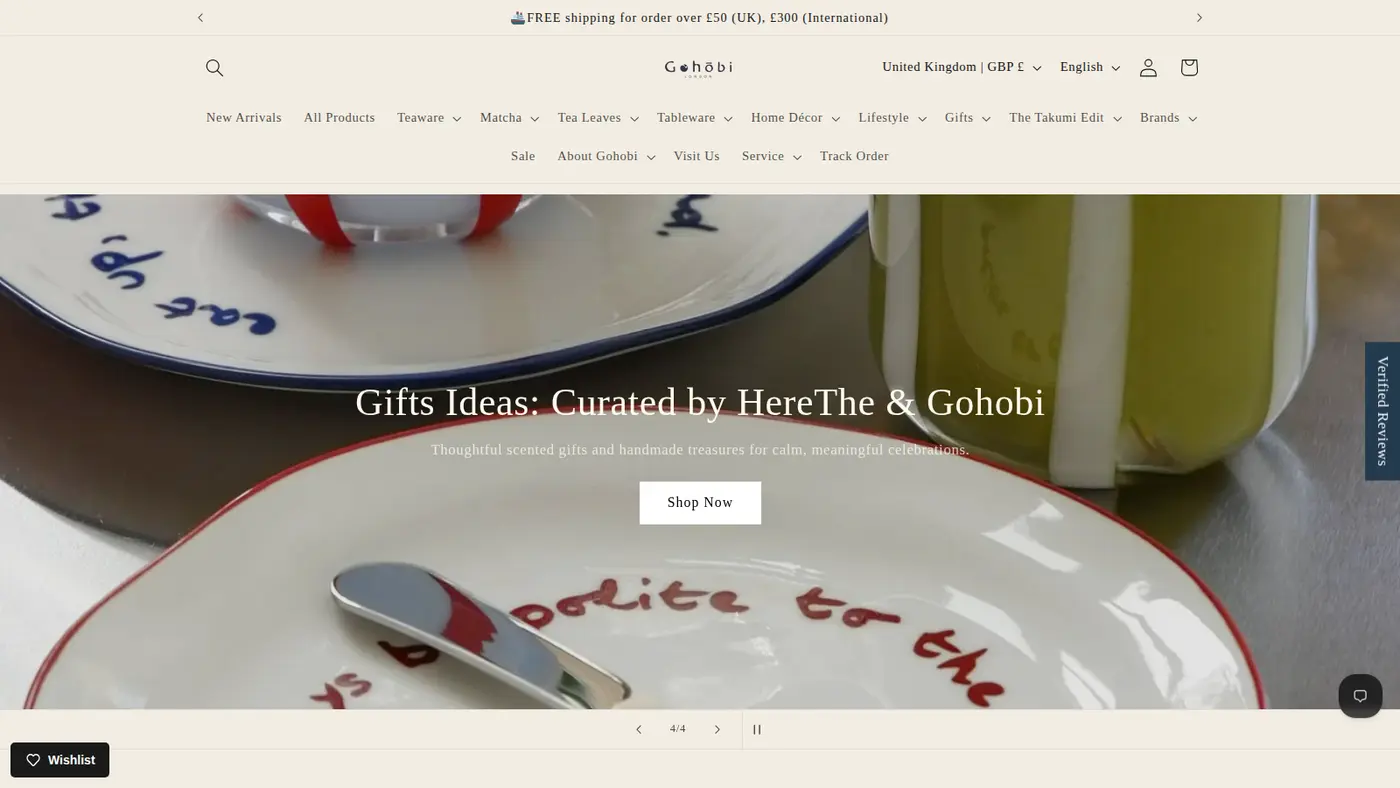
Gohobi, written Gohōbi on the site, is a London-based homeware and lifestyle brand founded in 2020. Its About page describes a collection curated from artists, independent makers, specialist workshops and selected manufacturers across East Asia and beyond. The mix is deliberate: some pieces come from small studios using traditional techniques, others from experienced workshops that can make well-designed objects at a more accessible price. The brand’s stated philosophy is Buy Less, Buy Better.
The main navigation reads like a lifestyle boutique: New Arrivals, Teaware, Matcha, Tea Leaves, Tableware, Home Decor, Lifestyle, Gifts, a Brands menu, and a Takumi Edit. Services include gift boxes, kintsugi repair, events and product tailoring. The catalog is large; the wholesale page links to a collection of more than 2,100 products, from incense holders and chopstick rests to ceramics, aprons and matcha.
That breadth explains the wholesale offer. A tea shop, a gift boutique or a restaurant does not buy one product. It buys a curated selection, often with a custom element such as branded packaging, and it wants a clear route to repeat orders. The store is well suited to a hybrid model, with retail prices in pounds for everyone and wholesale terms for approved partners.
Gohobi’s B2B model: two wholesale routes and a direct partner program
The Wholesale entry in the menu opens a short text block, Wholesale at Gohobi: bring the beauty of tea culture to your shop or business, with a curated selection of teaware and homeware, perfect for boutiques, tea shops and hospitality spaces. It lists three reasons to partner: authentic craftsmanship, cultural connection and flexible options, including bulk orders, brand collaborations and personal support.
Then it offers a choice. A buyer can order through an external wholesale marketplace, or sign up for direct wholesale with Gohobi. The dedicated wholesale page leads with the marketplace and then turns to the direct route under the heading Prefer to order directly from us? That is a sensible way to keep both audiences: some buyers like the marketplace’s checkout and payment terms, others want a relationship with the brand.
| Question | What the storefront says or shows |
|---|---|
| Who is it for? | Boutiques, tea shops and hospitality spaces |
| How do buyers start? | Order through a wholesale marketplace, or sign up directly with the wholesale form |
| Samples? | UK customers can order samples and return them within 30 days |
| Shipping? | Free UK shipping over 300 pounds, free international shipping over 1,500 pounds (default ocean freight) |
| Custom work? | Custom designs and packaging tailored to a buyer’s brand |
How the Gohobi storefront handles wholesale
1. A direct route that explains what you get
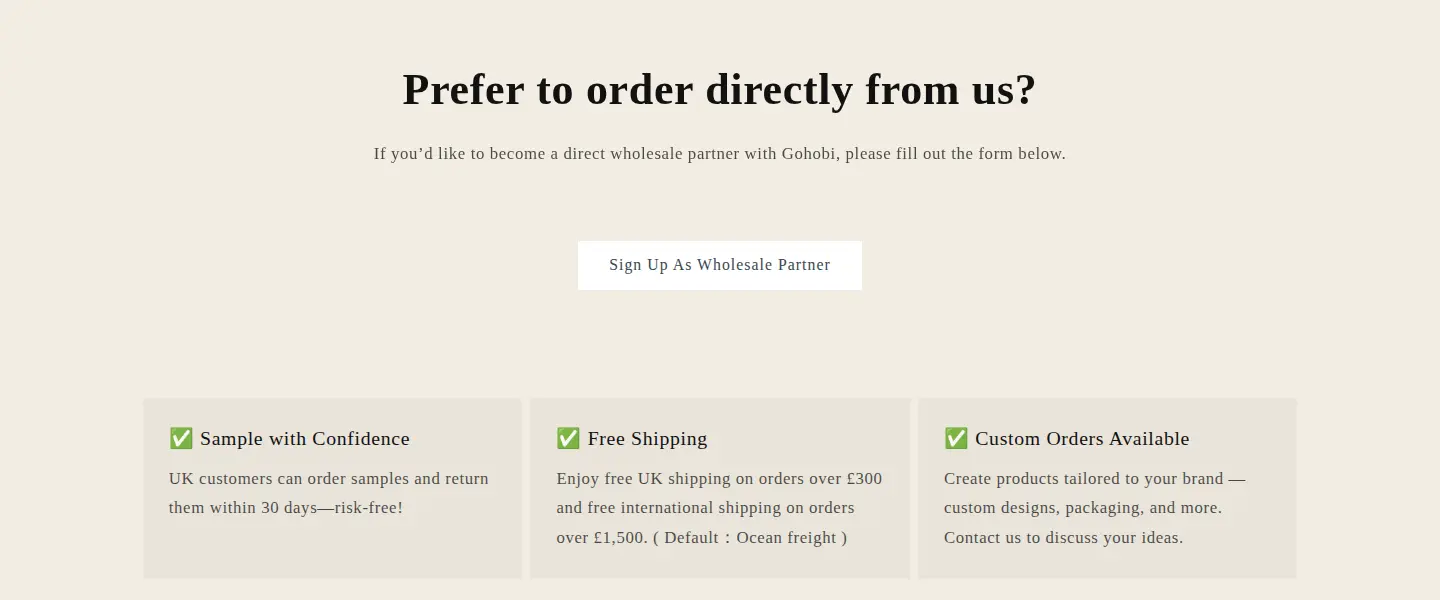
The direct section is short and specific. Below a Sign Up As Wholesale Partner button sit three benefit cards: Sample with Confidence, Free Shipping and Custom Orders Available. For a new retailer, those answer the real questions. Can I try before I commit? What will freight cost? Can you make this for my brand? Notice that the page makes no promise about discounts; the benefit is a relationship and a service level.
2. A wholesale form that asks for business proof
The sign-up form is a standard BSS B2B Solution registration form. It asks for first name, last name, email and a password, then company, phone, address, city, country and zip code. Three fields carry the vetting: Business Website (required), Business Instagram and Business Type (required), followed by EU VAT Validation and a newsletter checkbox.
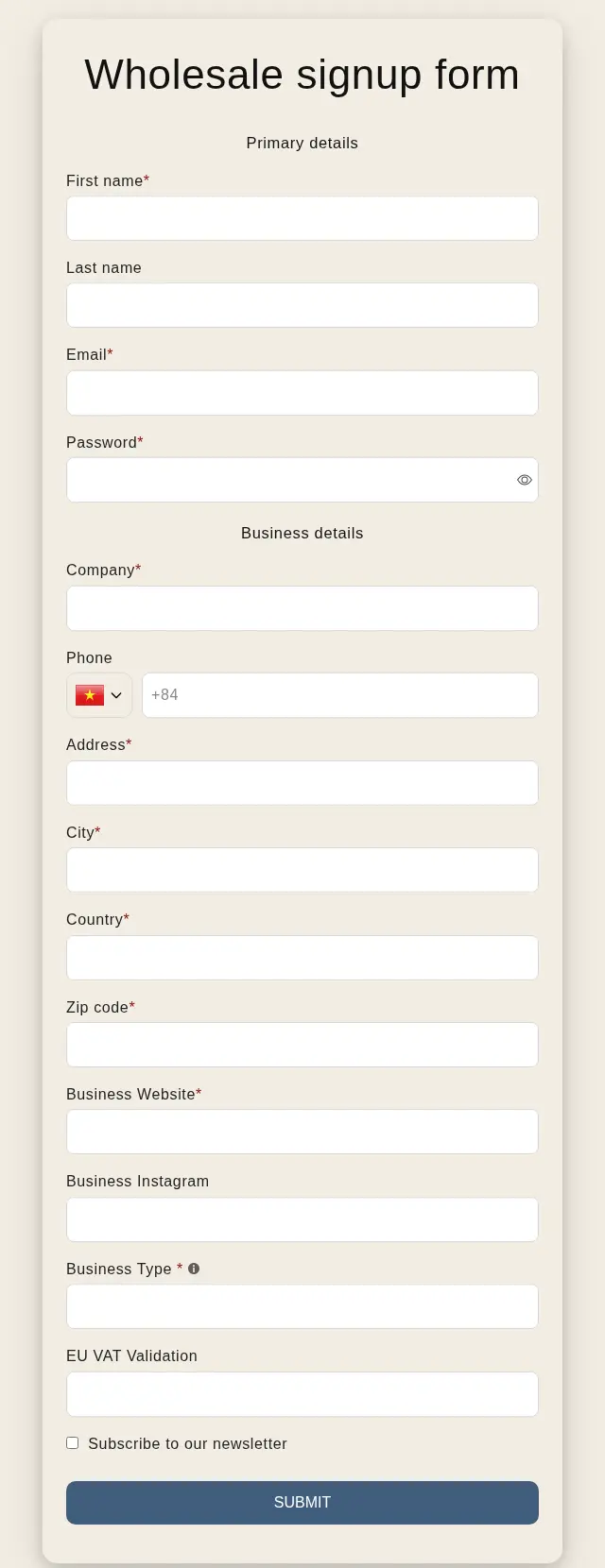
For a gift or lifestyle brand, a website and an Instagram handle are the fastest way to see whether an applicant is a real shop. Business type tells staff which stockist category to use. The stockist page even filters by Home Decor Store, Gift Store, Cafe or Restaurant, and Florist or Garden Store, which matches the audiences on the wholesale page. A tax ID field with live validation is available in BSS forms; see verify a business tax ID at registration.
3. Retail stays open, with prices in the visitor’s currency
Wholesale does not hide the shop. A guest sees the same product page as a consumer: price in pounds, size and colour options, Add to cart and Buy it now. Prices are shown with tax included and shipping calculated at checkout. A country and language selector sits in the header, and the free-shipping bar quotes thresholds for the UK and international orders.
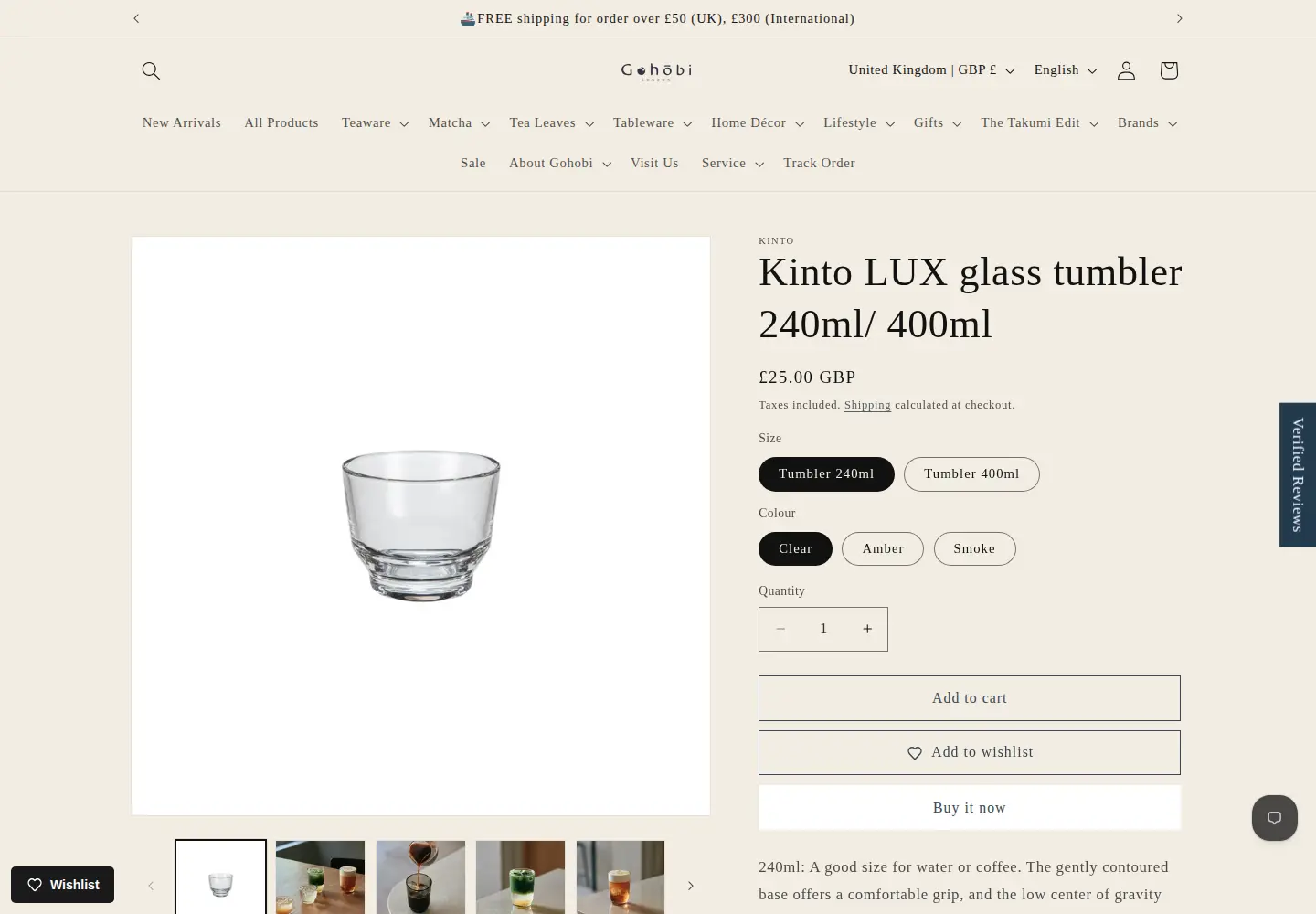
4. The pricing rules are visible in the page source
The store embeds its B2B configuration in the page, as many apps do. Reading it shows rules that target a customer tag called Wholesale Approved, with separate groups tagged UK customer and Overseas customer, and rules that include or exclude whole collections. We use it only to describe the structure: approval adds a tag, and the tag decides which price and shipping rules apply. That pattern is what lets a UK boutique and an overseas distributor get different terms from one store.
Read the related guides to build the same thing: tag-based wholesale prices, discounts by collection or vendor and auto-tagging customers by spend or order count.
Which BSS features power the Gohobi setup
Aggregated configuration data from the BSS B2B Solution backend, as of October 5, 2026, shows the app on a paid plan with these modules active:
- Custom Pricing. Three active percentage rules target customer tags: two apply by product collection, and one applies to all products except selected collections.
- Net Terms. One active rule applies to logged-in customers, so approved buyers can be offered payment terms.
- Shipping Rate. Two active rules target customer tags, which lets shipping cost differ by group.
- Auto-tagging. Two automatic tagging rules are on.
- Registration form. One form is active; it assigns a tag and sends an email.
BSS B2B Lock and BSS B2B Quote are not part of this story. The merchant’s public review is for BSS B2B Solution only.
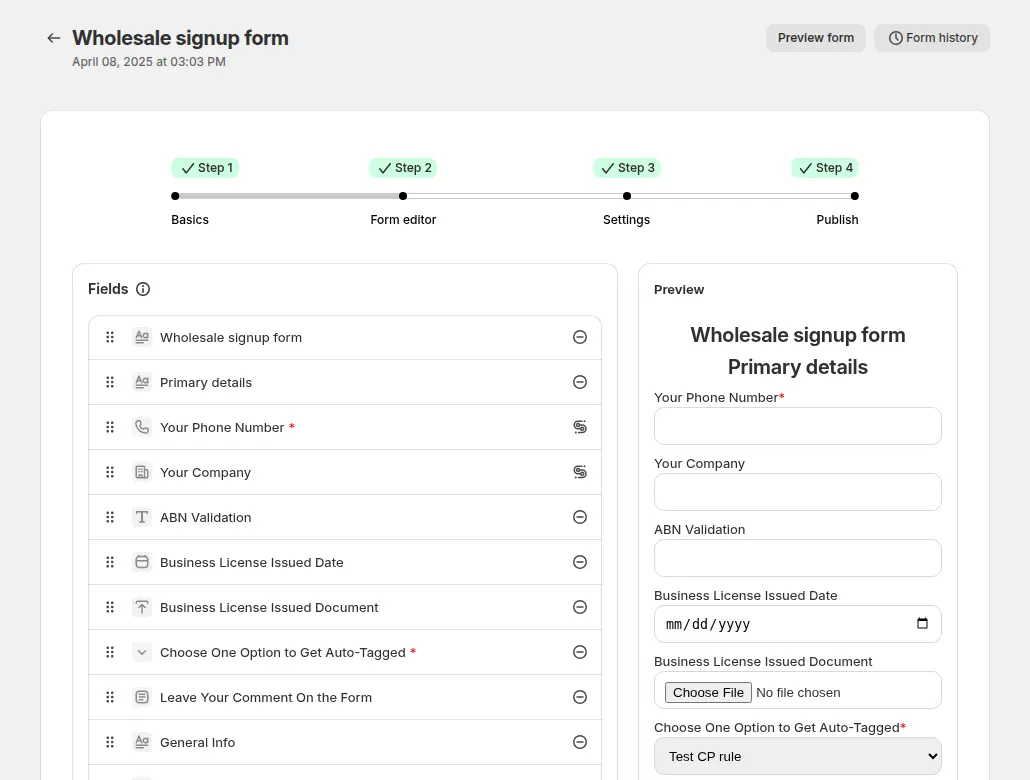
The form editor is where Gohobi’s fields live. You choose from text, number, date, file, dropdown, checkbox, radio and header fields, plus a tax ID field, then preview the form. The tag assigned on approval is what connects registration to pricing. See wholesale registration form with approval and approve, reject and notify wholesale applicants.
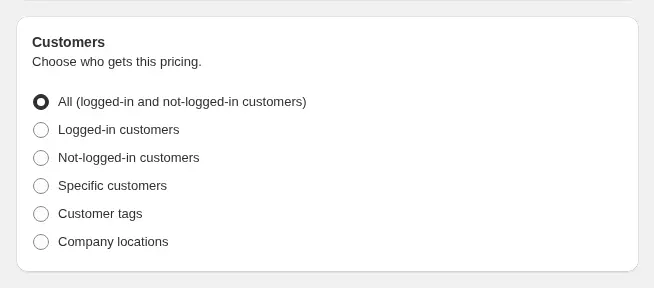
A pricing rule can apply to all customers, logged-in customers, specific customers, customer tags or company locations. With tags, every approved partner picks up the rule as soon as they are tagged. When two rules overlap, the lower priority number wins within the same module; see how rule priority works.
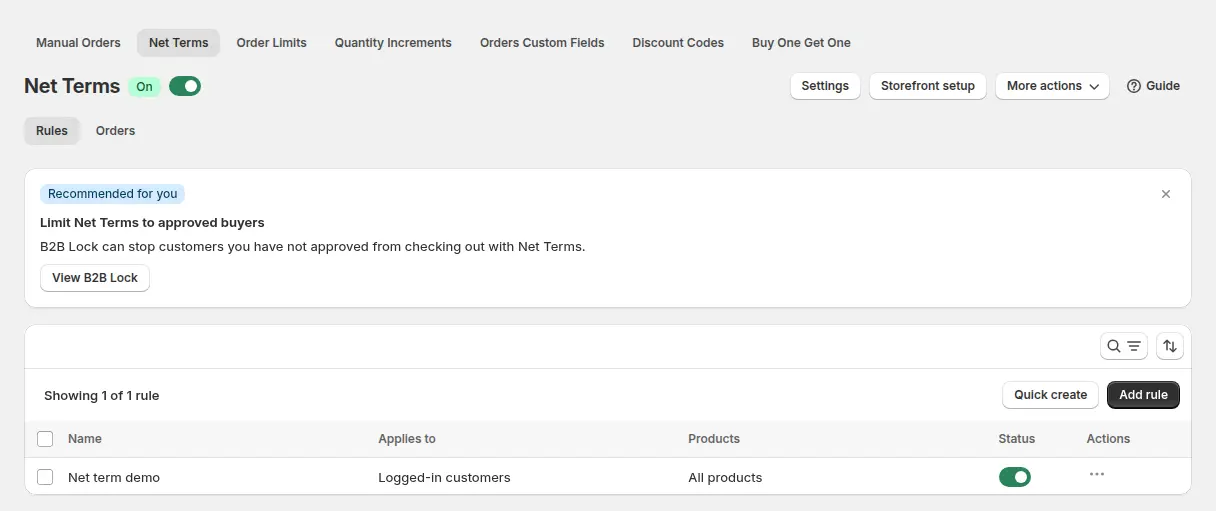
Net Terms let approved buyers pay after delivery instead of at checkout, under terms the merchant sets. The feature is covered in offer Net 30 and other payment terms to wholesale buyers.
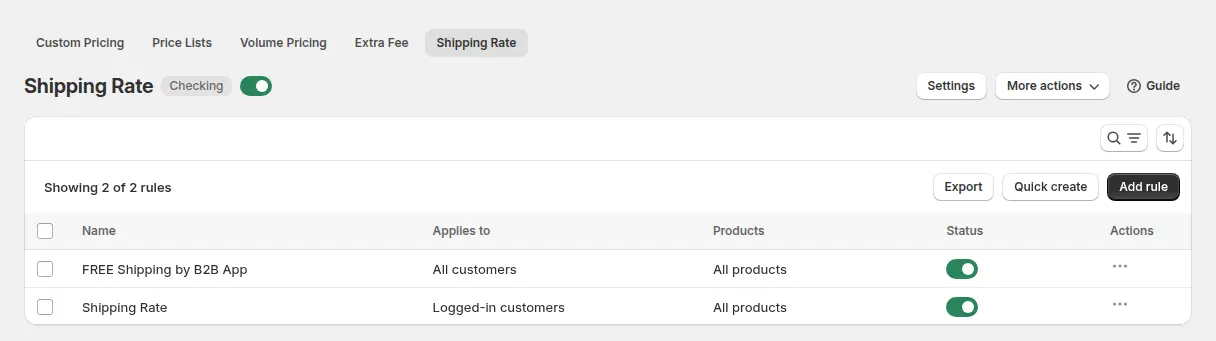
Shipping Rate rules change what shipping costs for the audience they target, which suits free-shipping thresholds that differ for UK and overseas partners. See charge handling fees and custom shipping rates.
What other merchants can copy from Gohobi
- Offer more than one route. A marketplace for convenience and a direct form for relationships serve different buyers.
- Spell out the service, not just the price. Sample returns, free-shipping thresholds and custom orders reduce risk for a new stockist.
- Ask for a website and Instagram. Two fields are often enough to confirm a real shop.
- Tag by approval and by region. A Wholesale Approved tag plus UK and overseas tags lets one store serve both.
- Keep retail simple. Public prices and a normal checkout keep consumers out of the wholesale flow.
- Plan on a learning curve. The review below says the first B2B build took some learning, and support helped.
If you are starting from scratch, see set up a wholesale store from scratch and sell B2B and B2C from one Shopify store.
The merchant’s review
Gohobi’s public review of BSS B2B Solution on the Shopify App Store is five stars, dated February 25, 2025, after 14 days of use. We quote it verbatim:
This was our first time building a B2B Shopify store using the BSS B2B app, and while it was a learning curve at first, the live chat support team made the process so much smoother. Selina and Emma have been incredibly helpful, resolving our issues efficiently and providing excellent support every step of the way. We couldn’t recommend the app enough!
Gohobi, United Kingdom, 5 stars, February 25, 2025. Read the review on the Shopify App Store
The review is candid about the start: a learning curve, then a smoother process thanks to live chat. That matches the structure above, where a form, tag rules, net terms and shipping rules all have to agree. Plan some time for the first setup, and use support early.
FAQ: offering wholesale on a lifestyle brand’s Shopify store
Can I offer both a wholesale marketplace and a direct wholesale form?
Yes. Gohobi’s wholesale page presents a marketplace route first and a direct partner sign-up second. The direct route uses a BSS B2B Solution registration form, so approved partners get tag-based pricing and terms on your own store.
What should I ask on a wholesale form to confirm a real shop?
A business website, a business Instagram or social profile, a business type and, for EU sales, a VAT number. Gohobi’s form asks for all of these. Required fields are enforced by the form; whether you approve by hand or automatically is your choice.
How do I give UK and overseas buyers different terms?
Assign different customer tags, such as one for UK customers and one for overseas customers, and target them with separate pricing, shipping rate or net terms rules. See handling fees and custom shipping for wholesale.
Can approved buyers pay on payment terms?
Yes. A Net Terms rule can offer payment terms to a chosen audience, such as logged-in or tagged customers. See the net terms guide.
Do I need to hide prices from consumers?
Not necessarily. Gohobi shows consumer prices publicly and applies wholesale terms to tagged accounts. If you do want to hide prices, BSS B2B Lock can do it; see hide wholesale prices from guest visitors.
Want a similar setup? Start with the BSS B2B Solution page and its pricing.
This store spotlight is based on Gohobi’s public website and its public review on the Shopify App Store, as of October 5, 2026. Screenshots show the public storefront, with a business email address masked. Images labelled Example configuration come from our documentation and are not Gohobi’s admin.