

Vasconcellos Studio is a design studio whose showroom is in São Paulo and whose English-language Shopify store sells contemporary Brazilian furniture. Retail prices are public. Architects and interior designers apply to a Trade Program, and once approved they see trade prices in their account. BSS B2B Solution runs the application and the tagging.
Key facts from the public storefront
- Audience: architects and interior designers who specify the studio’s pieces for client projects.
- Model: hybrid. Retail prices are visible to everyone, trade prices appear after approval.
- Application: a long form with job title, company, address, a professional certification and tax questions.
- Qualification: applicants certify they are an architect or interior designer and answer a US resale certificate question and an EU VAT question.
- Review: the reviewer calls BSS B2B Solution “a very complete solution for different types of B2B businesses”.
About Vasconcellos Studio
Vasconcellos Studio presents itself as a design studio rather than a furniture retailer. The main navigation reads Projects, Pieces, About, Press, Store and Trade Program, so a visitor can browse finished interiors, individual pieces and press coverage before ever seeing a price. The footer lists a showroom in São Paulo, Brazil, which can be visited by appointment, and the Trade Program page says the studio also offers private showroom visits.
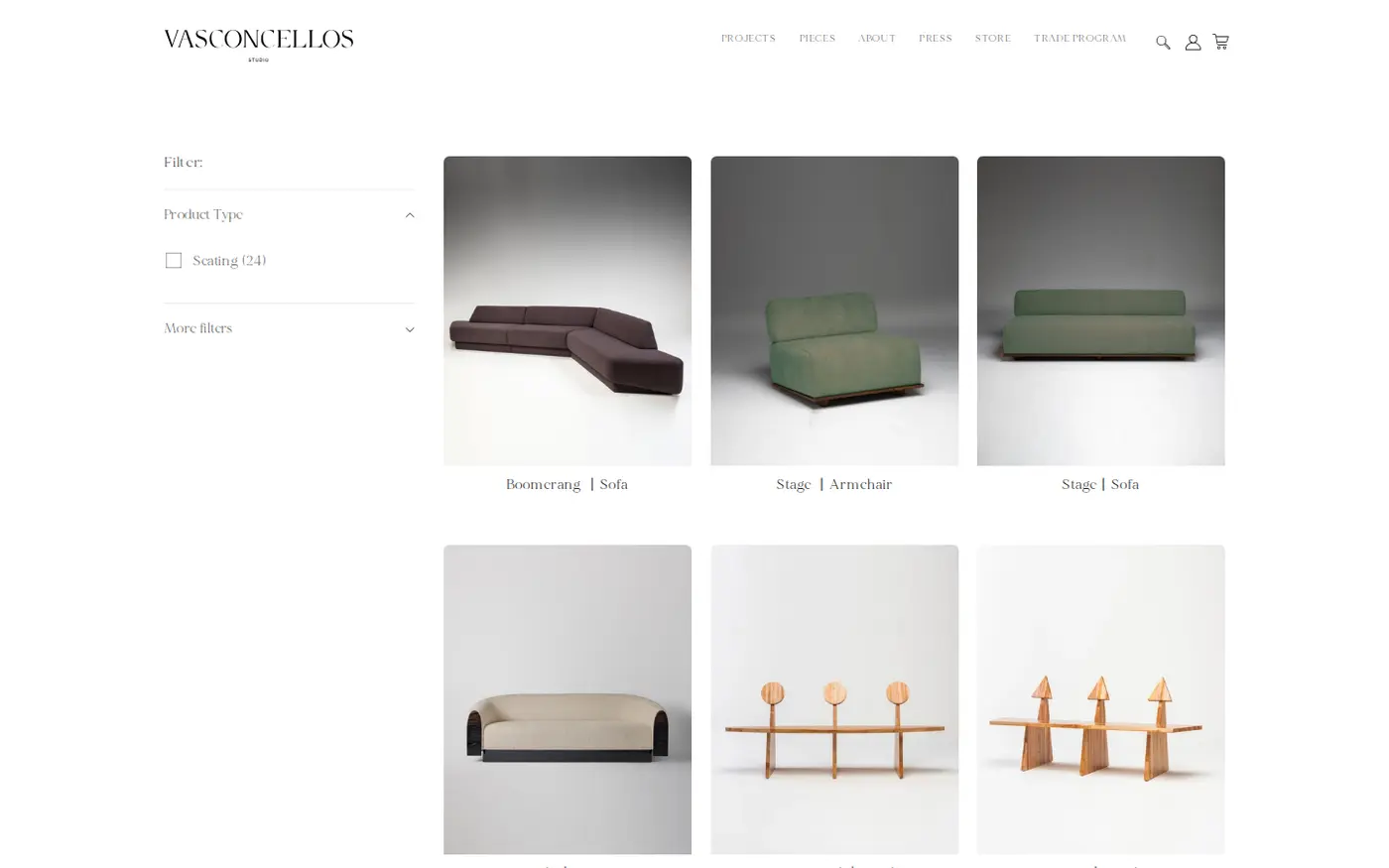
The Shopify store is labelled “EN”, which tells us it serves English-speaking buyers. On the Shopify App Store the store is listed under the United States, while the showroom is in Brazil, so we describe it as a São Paulo studio with an English store for the international market. The collections cover seating (24 pieces in the seating collection when we looked), tables, rugs and storage. The homepage hero shows a chair photographed on a workshop floor.
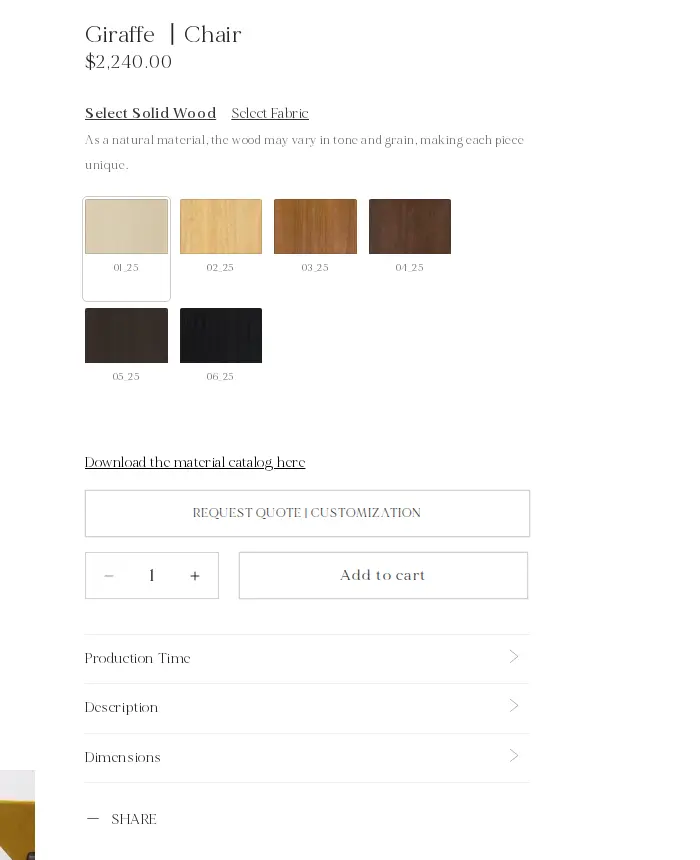
A single product page shows how the studio works. The Giraffe Chair has a public price in US dollars, a choice of fabric and solid wood, a link to download the material catalog and a “Request Quote | Customization” button. The page also says the piece is part of the permanent collections of two museums. Specification and finishes are the main decisions, so the store gives buyers tools to explore them.
Vasconcellos Studio’s B2B model: a trade program
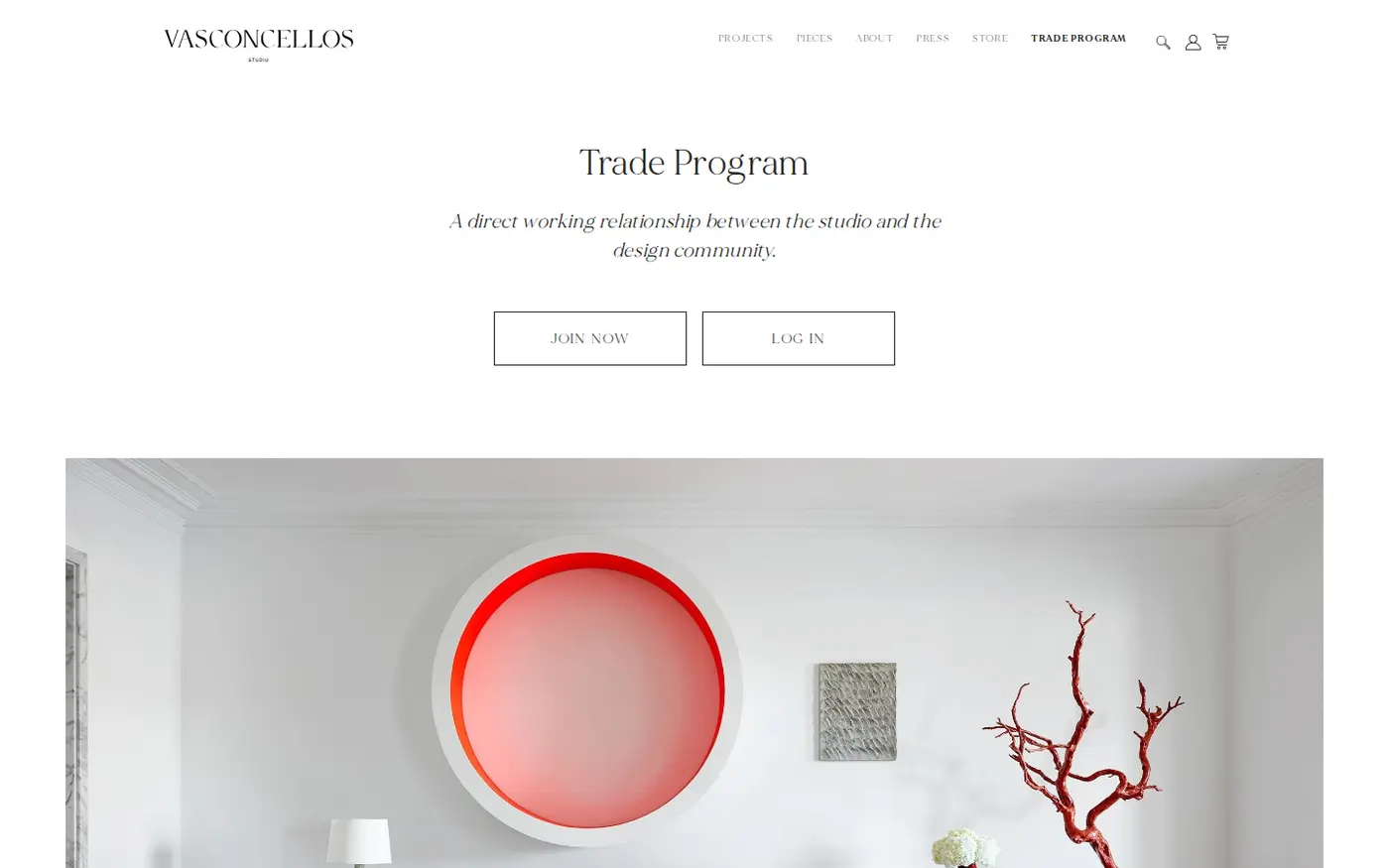
Furniture studios rarely sell “wholesale” in the same way a food or beauty brand does. Their business buyers are designers who specify pieces for clients. Vasconcellos handles this with a Trade Program: “a direct working relationship between the studio and the design community.” It is open to architects and interior designers specifying Vasconcellos Studio pieces for their projects.
What members get
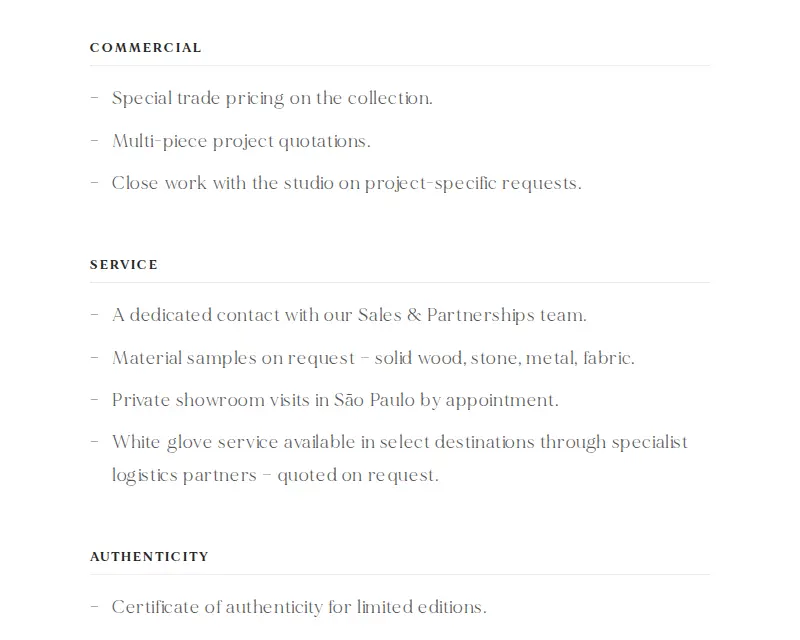
The landing page groups the benefits under three headings. Under commercial: special trade pricing on the collection, multi-piece project quotations and close work with the studio on project-specific requests. Under service: a dedicated contact in the Sales and Partnerships team, material samples on request (solid wood, stone, metal and fabric), private showroom visits in São Paulo and white-glove delivery in select destinations through specialist logistics partners, quoted on request. Under authenticity: a certificate of authenticity for limited editions.
How a designer joins
There are two buttons, “Join now” and “Log in”, repeated halfway down the page under “Apply for trade access”. The sentence beside them sets the expectation: once approved, you will see trade prices in your account and work directly with the Sales and Partnerships team. The studio keeps the public price on the product page, so the discount is a reward for approval, not a hidden number.
How the storefront handles wholesale
1. An application that qualifies the buyer
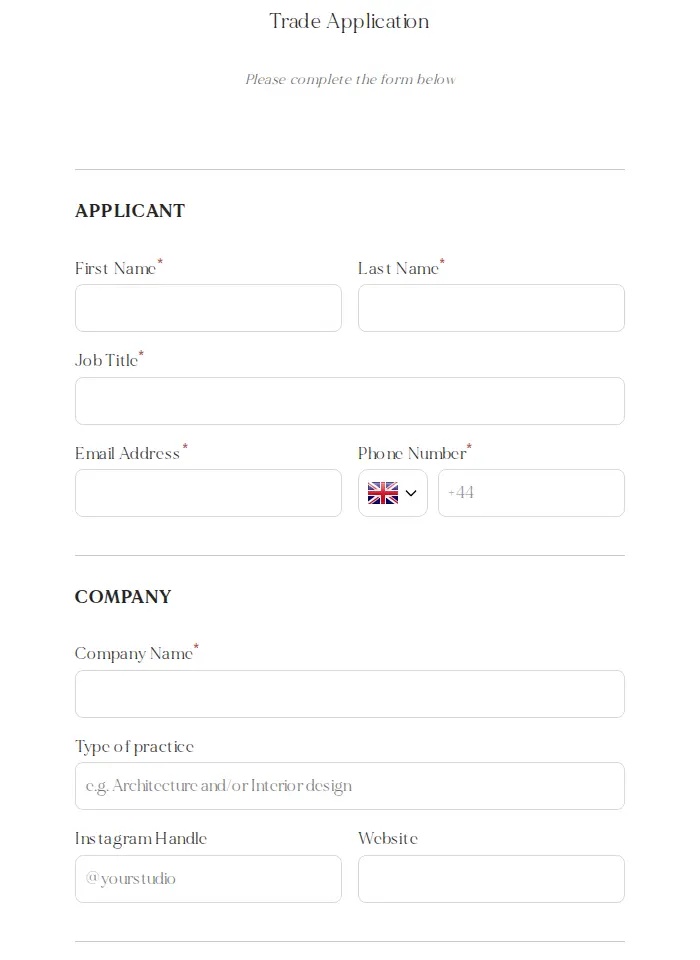
The “Trade Application” is organized into short sections. Applicant asks for first name, last name, job title, email and phone, with a country selector on the phone field. Company asks for company name, type of practice, Instagram handle and website. Business address collects street, city, state, postal code and country. Account asks for a password and explains that it will be used to access the trade account once approved. A small instruction like that matters, because the applicant would otherwise assume the account works immediately.
2. Qualification questions that match the audience
The last block, “Qualification”, is where the form stops being generic. The applicant ticks “I certify that I am an Architect or an Interior Designer”, answers Yes or No to “Do you have a Resale Certificate in USA?” and Yes or No to “Are you Registered for VAT in Europe?”, and can add an EU VAT number below. The two tax questions let the studio route each applicant to the right tax treatment, one for US buyers who resell and one for European businesses, without a second round of emails.
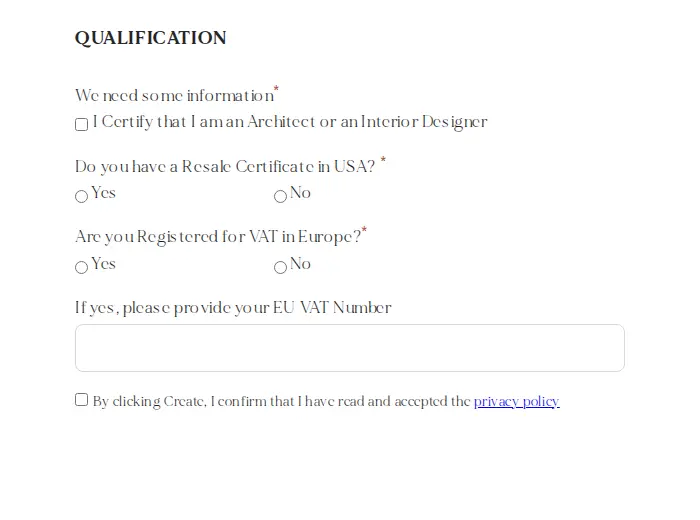
A confirmation box says that by pressing Create the applicant accepts the privacy policy. Those details give the studio a way to decide who is a professional and which tax treatment may apply, before a human reviews the application.
3. Retail prices for everyone, trade prices after approval
The product page keeps the “Regular price” visible to anyone. The studio does not hide the catalog from the public, which suits a brand whose pieces are also shown in editorial and project pages. According to the Trade Program page, approved designers see trade prices in their account. We cannot see that view from the public side.
Which BSS features power it
Vasconcellos installed BSS B2B Solution in August 2025 on the Advanced plan, and its public review is for that app. The storefront shows no BSS Lock or Quote surface. The app configuration we could verify contains:
- A registration form with qualification questions. The active form has spam protection, tagging of new customers, email notifications and a privacy-policy consent switched on, and it was last edited in May 2026. See the registration form guide and wholesale registration form with approval.
- Auto-tagging on registration. An active auto-tag rule runs on registration events and tags the customer, so the rest of the store can key off that tag. See automatically tag orders and customers.
- Tag-based trade pricing. One active custom pricing rule targets customers by tag, which matches the promise of “special trade pricing on the collection”. See give tagged wholesale customers special prices.
The review adds a useful detail: after eleven months the reviewer had a call with a BSS specialist, who demonstrated the setup and introduced modules the store does not use yet. A studio that already has a registration form, tags and a trade price can later add quantity breaks, order limits or net terms without changing the storefront. The use case furniture and home decor: trade pricing, quotes and order limits describes that growth path.
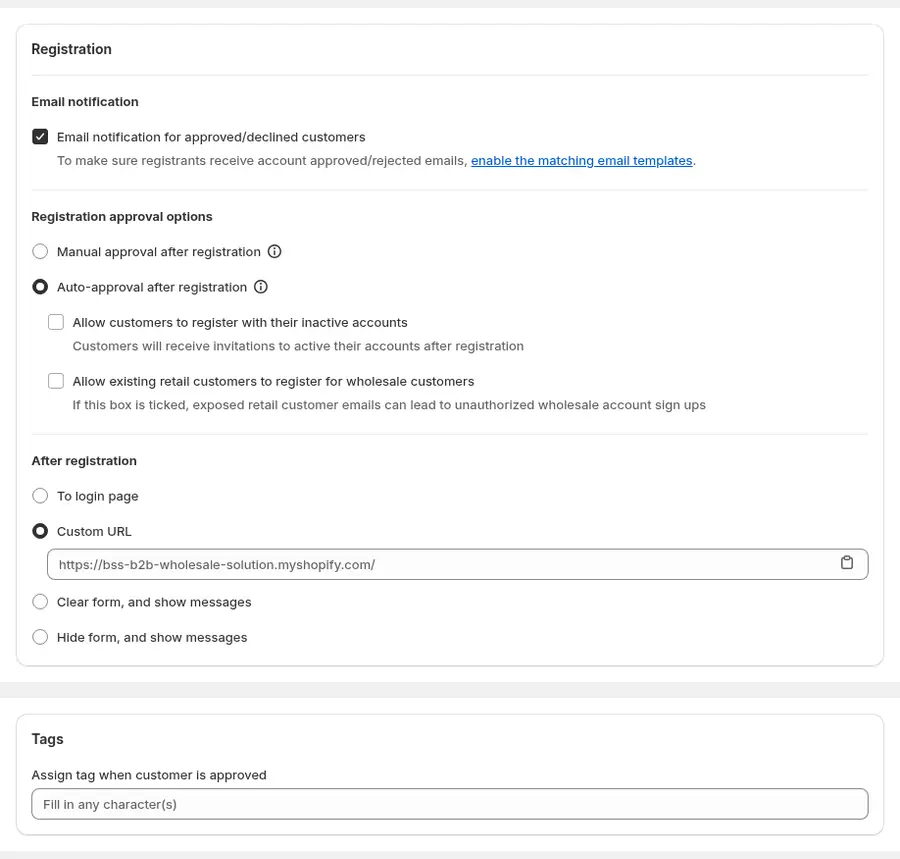
This image shows how approval options look in the BSS admin. It is an example from the user guide, not Vasconcellos Studio’s own settings.
How to build a trade program like this
A trade program is mostly a content and process decision, with a small amount of configuration. This is the order we would follow.
- Name the audience and the promise. Write one sentence for who the program is for and one for what they get. Vasconcellos uses “architects and interior designers specifying our pieces” and “special trade pricing, project quotations and a dedicated contact”.
- Decide what proves a professional. A certification checkbox, a company website or a resale certificate are all options. Pick the one you can verify.
- Build the application in short sections. Applicant, company, address, account and qualification keep a long form readable. See set up a multi-step registration form if you prefer one step at a time.
- Tag approved designers. One tag, such as trade, is enough. Set it to be assigned on approval. See manage, approve and notify your wholesale customers.
- Write the trade price rule. Target the tag, choose a percentage off retail and apply it to the collection you want to open. See give tagged wholesale customers special prices.
- Give custom work a quote route. Pieces with custom finishes rarely have a fixed price. A quote request lets the studio answer one project at a time. See approve a quote and turn it into a draft order.
- Test as a designer. Apply, approve your own test account and check that the trade price shows on the product page and in the cart.
Mistakes to avoid
- Making the benefits list only about price. Samples, a named contact and project support are what make a trade program feel professional.
- Asking for documents you do not read. Every field should feed a decision.
- Forgetting to explain what happens after submitting. A line such as “once approved, you will see trade prices in your account” answers the first question every applicant has.
What other merchants can copy
- Name the program for your audience. “Trade Program” fits designers better than “Wholesale”.
- List the benefits, not only the discount. Samples, a dedicated contact and project quotations explain why a buyer should apply.
- Qualify in the form. A certification checkbox and a resale or VAT question help you decide who is a professional.
- Ask the tax questions up front. A resale certificate and an EU VAT question tell you how to treat each buyer before you approve them.
- Tell applicants what happens next. The line about using the password “once approved” avoids confusion.
- Keep a public price if the catalog is public. A visible retail price keeps the trade price meaningful.
- Offer a quote route for custom work. A “Request Quote | Customization” button covers pieces that are not standard.
For the full workflow, see wholesale registration form with approval and approve, reject and notify wholesale applicants.
The merchant’s review
The app is a very complete solution for different types of B2B businesses. The customer support team’s availability is excellent.
Vasconcellos Studio EN, United States on the App Store, review on the Shopify App Store, 5 of 5 stars, July 16, 2026, after 11 months of use
The same review says the team has constant access to online support through chat and the reviewer plans to book a new meeting to go over specific questions after reviewing the setup.
FAQ
Can a furniture or design brand run a trade program on Shopify?
Yes. A trade program is a wholesale program with a different audience. You need an application form, a way to approve applicants and a tag that unlocks trade prices. Vasconcellos Studio does this with BSS B2B Solution and a public landing page.
How do you qualify architects and designers?
Ask for a certification, a company name, a website or social profile and, if relevant, a resale certificate or VAT number. A reviewer then approves the application. See verify a business tax ID before approving.
Should trade prices be visible to the public?
Not necessarily. Vasconcellos shows a public retail price and promises trade prices after approval. If you would rather keep every price private, see hide wholesale prices from guest visitors.
What should a trade application ask for?
Enough to decide whether the applicant is a professional and how to treat them for tax: a job title, a company, a website or social profile, a certification and, where relevant, a resale certificate or VAT number. See verify a business tax ID before approving.
Does this story show business results?
No. It reports no sales, order or customer numbers, because we have none from the merchant. It describes the public storefront, the configuration facts we could verify and the merchant’s public review.
This store spotlight is based on Vasconcellos Studio’s public website and its public review on the Shopify App Store, as of 2026-10-05. Screenshots show the public storefront. Admin images are labelled examples from the BSS user guide.